




The $10 Bolt That Saves $15,000: What We Learned Building Equipment Too Simple to Break
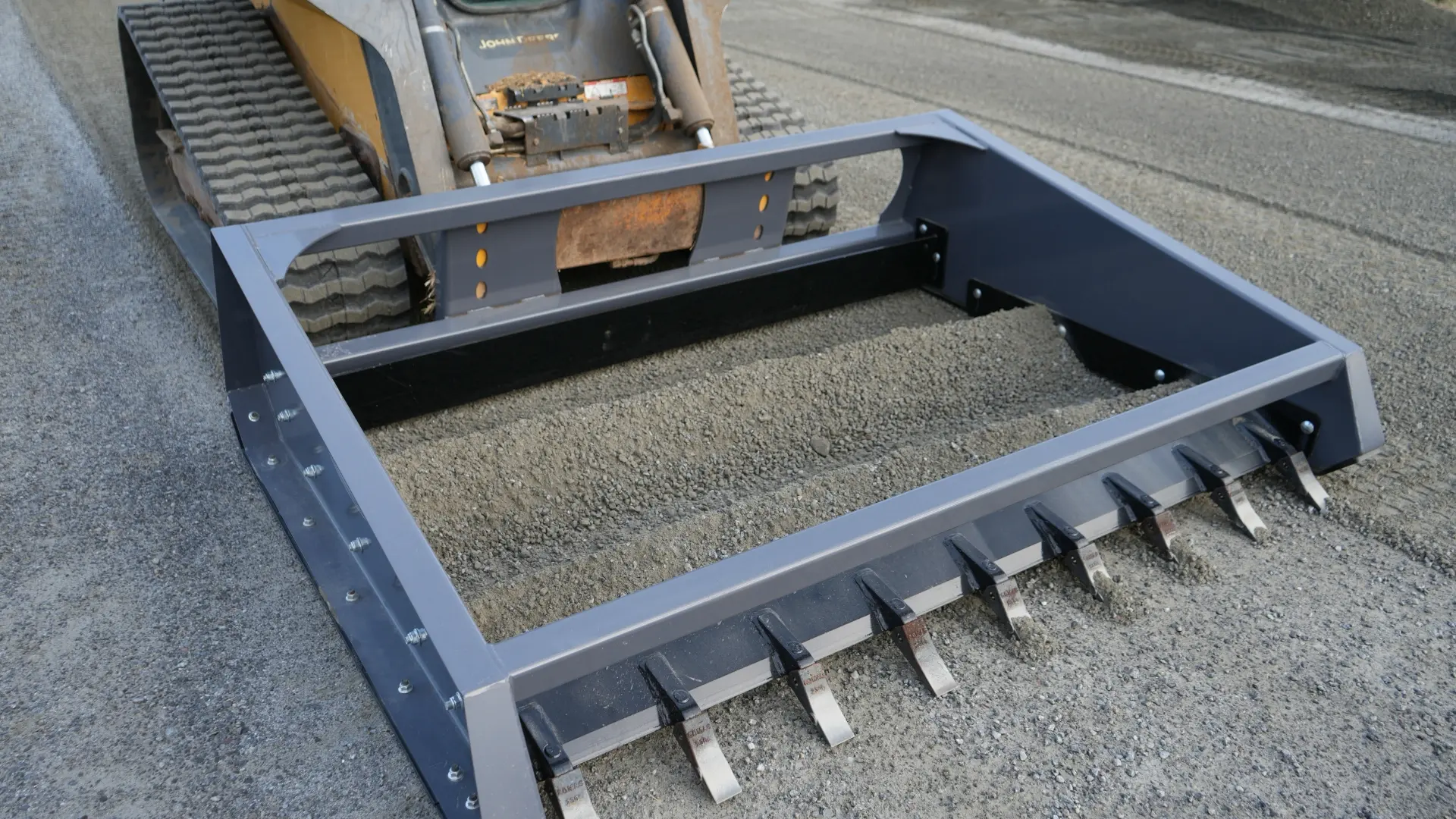
A local contractor once told us our custom cold planer looked like a boat anchor, not a precision tool.
He was right. It did look simple. Almost primitive compared to the complex, adjustment-heavy equipment he'd been using.
But that "boat anchor" eliminated twelve moving parts, four hydraulic leak points, and two hours of daily calibration. More importantly, it ran ten-hour shifts without requiring a single wrench.
We've spent years building custom metal fabrications for contractors and operators who learned the expensive way that standard equipment isn't always the budget-friendly choice. The pattern is consistent: someone saves $1,800 on a standard attachment, then loses $20,000 when it fails at the worst possible moment.
The math doesn't make sense until you see what actually breaks down on a job site.
When Light-Gauge Steel Meets Hidden Concrete
The grading contractor didn't know there was a concrete footer buried in the residential development site. His budget-friendly imported land plane didn't survive the encounter.
The thin-gauge mounting plate sheared right off the frame. His three-man crew went idle immediately. The loader sat useless in the mud while he called welding shops, only to discover they were backed up for days. The replacement part had to ship from overseas.
Six days of waiting. Nearly $7,000 in unproductive wages and overhead.
Then the general contractor invoked the "time is of the essence" clause and brought in a competitor to finish the phase. The contractor didn't just lose his $1,800 savings. He lost the remaining $12,000 on that contract and a long-standing relationship with a major developer.
A week of downtime in a sequenced job site can sink an entire season's profit.
This scenario plays out more often than most people realize. Equipment downtime costs construction companies between $5,000 and $15,000 per day in lost productivity alone, before repair bills arrive. Companies with 50 machines experiencing 30% unplanned downtime lose approximately $2 million annually.
The contractor came back to us asking different questions. He stopped asking about price. He started asking about reinforced steel.
The Question That Changes After Equipment Fails
We've noticed a pattern in how contractors talk to us before and after catastrophic equipment failure.
Before: "What's your price?"
After: "Where's the reinforced steel?"
They stop shopping for a tool. They start shopping for insurance against downtime. They demand to know the specific grade of plate steel, the thickness of the gussets, the exact engineering of the impact geometry.
Their focus shifts to identifying the mechanical "fuses" that protect their expensive base machine from shock loads. They want to ensure that when they hit a hidden obstacle, the metal at the end of the arms wins the physics battle instead of folding under pressure.
A mechanical fuse is a sacrificial component designed to fail at a specific stress level to prevent energy from traveling back into expensive parts like hydraulic pumps or lift arms.
In our fabrication, the primary fuse is often a hardened shear bolt or calibrated slip clutch integrated into the drive line. It physically disconnects the attachment's rotation the millisecond a blade strikes an immovable object.
Beyond the drive line, we engineer mounting plate gussets and tapered stress-relief cuts in the frame to act as structural fuses. They absorb and distribute sudden impact energy through controlled flexing of high-strength T1 steel rather than snapping or transferring a rigid shockwave into the machine's quick-attach pins.
By tuning the metal to give just enough under extreme load, we ensure that if something has to break, it's a $10 bolt or replaceable wear part, not a $15,000 hydrostatic transmission.
Hydraulic failures represent 45% of all major excavator breakdowns, costing an average of $95,000 per incident when complete system replacement becomes necessary. Emergency hydraulic repairs carry 150-200% cost premiums versus planned maintenance.
The Land-Clearing Contract That Changed Our Design Philosophy
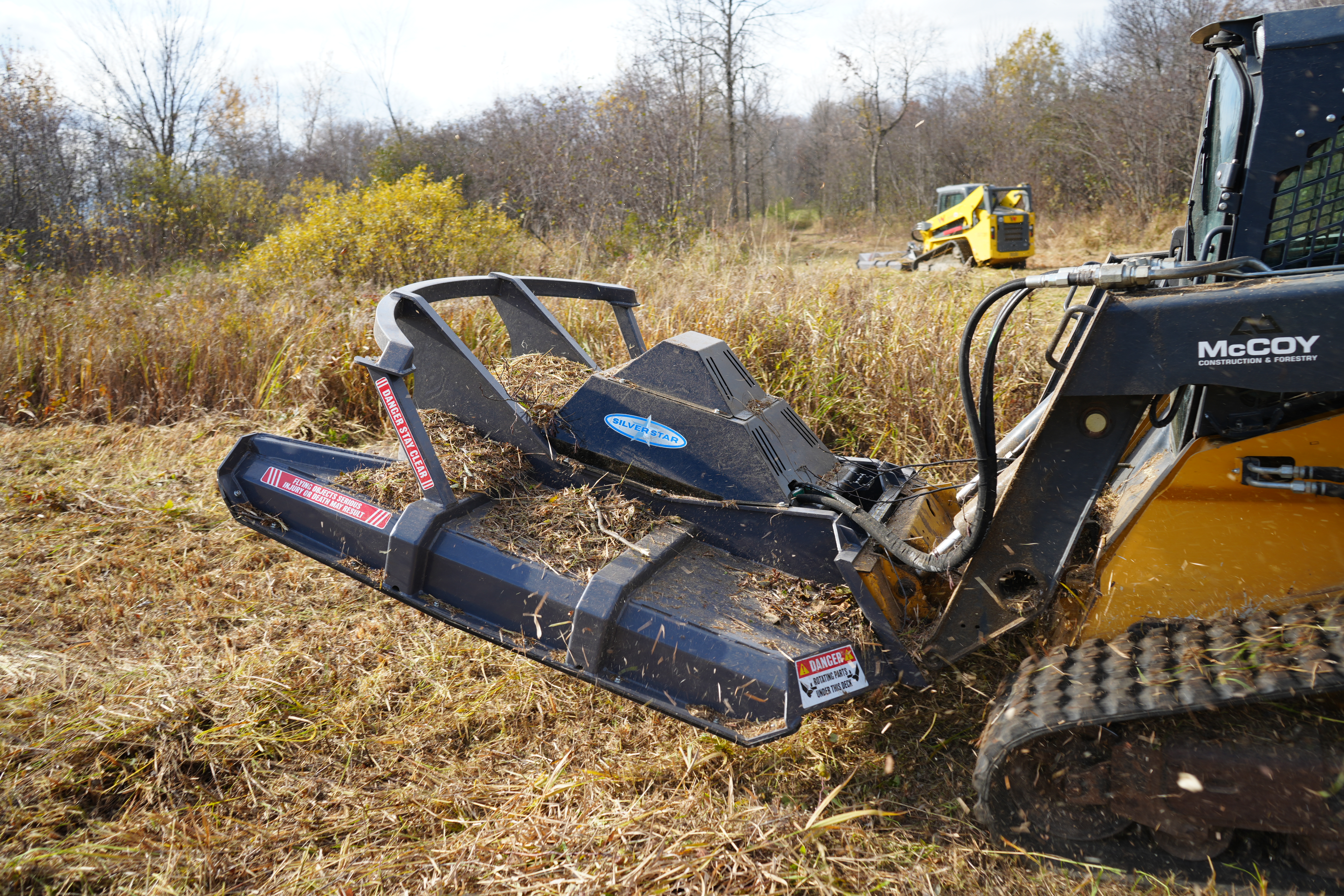
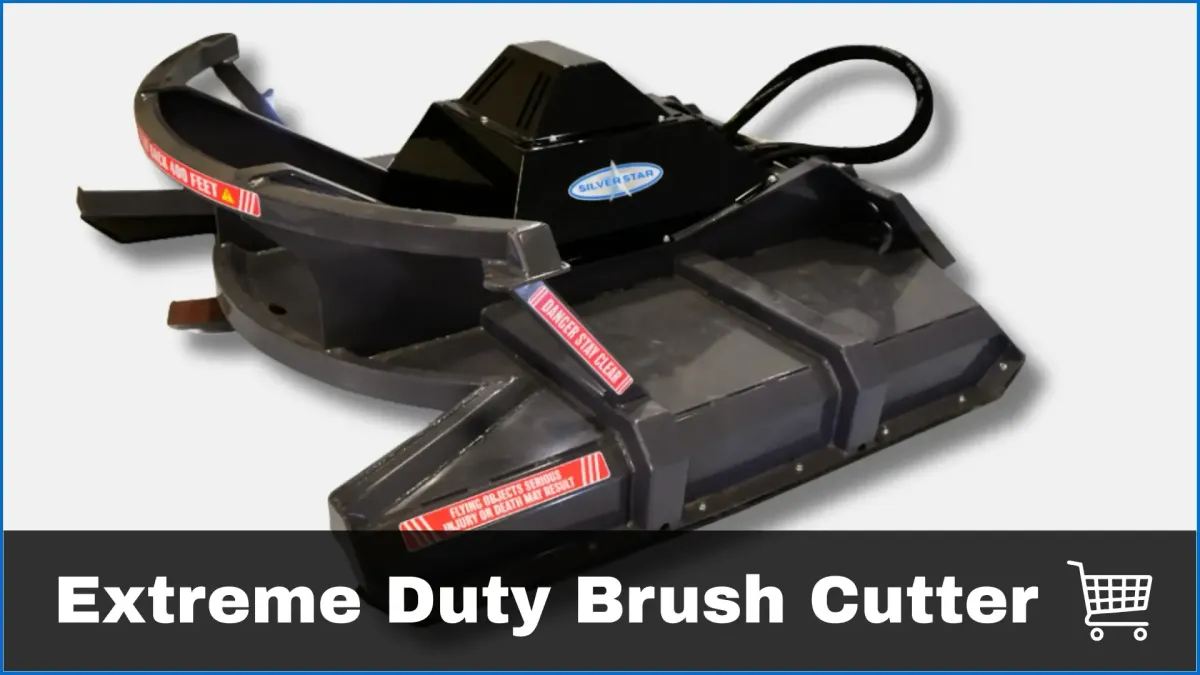
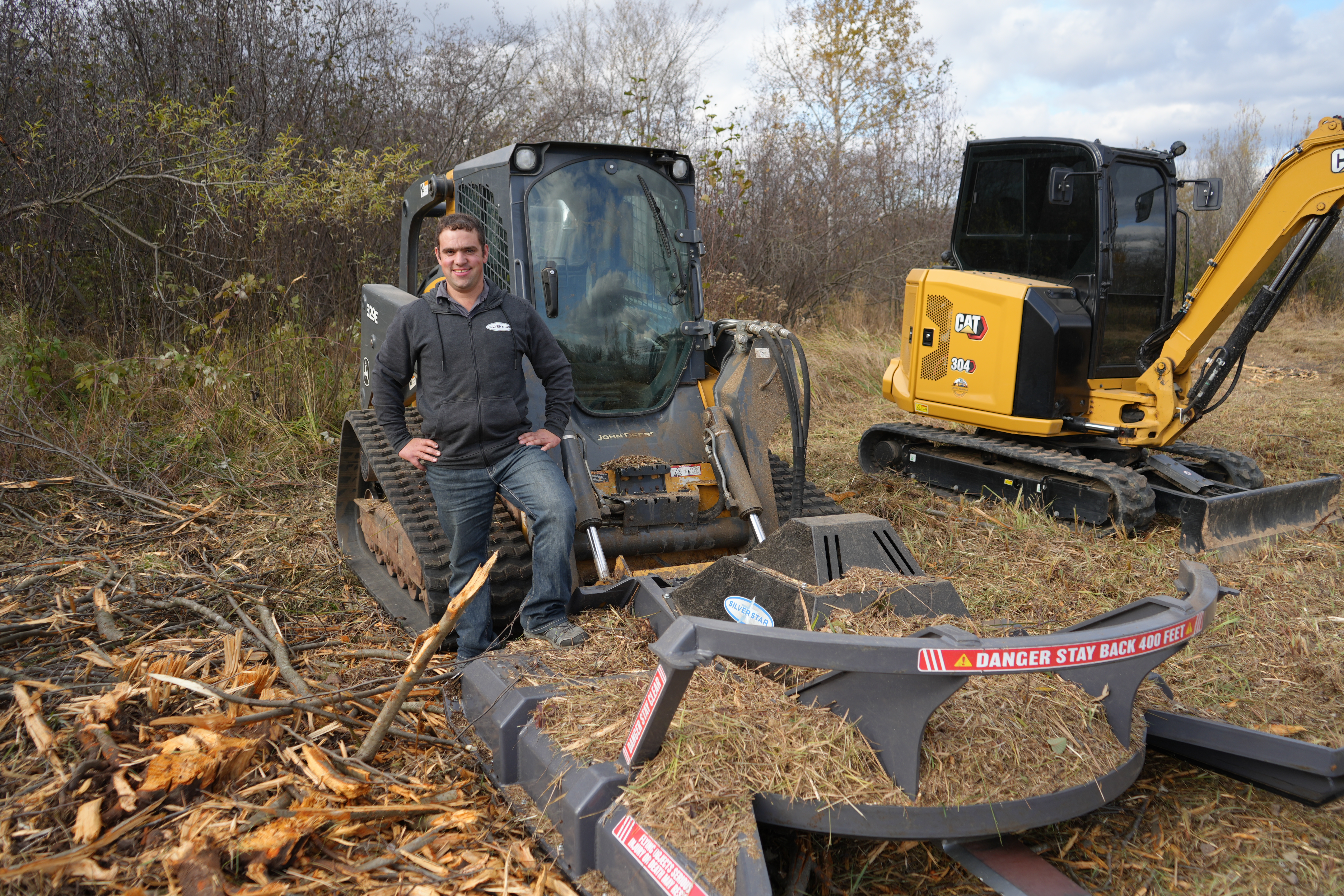
The contractor was falling behind on a massive land-clearing job. His standard-issue brush cutters kept choking on the dense, stringy vegetation typical of the region.
The machines constantly overheated because the generic attachments weren't engineered with proper hydraulic cooling or the blade tip speed necessary to process high-volume organic material without creating a bottleneck at the motor.
He burned through fuel trying to keep the loaders from throwing thermal codes. But the real failure came when the light-gauge steel of the rental units buckled after hitting a hidden rock that reinforced American-made steel would have deflected.
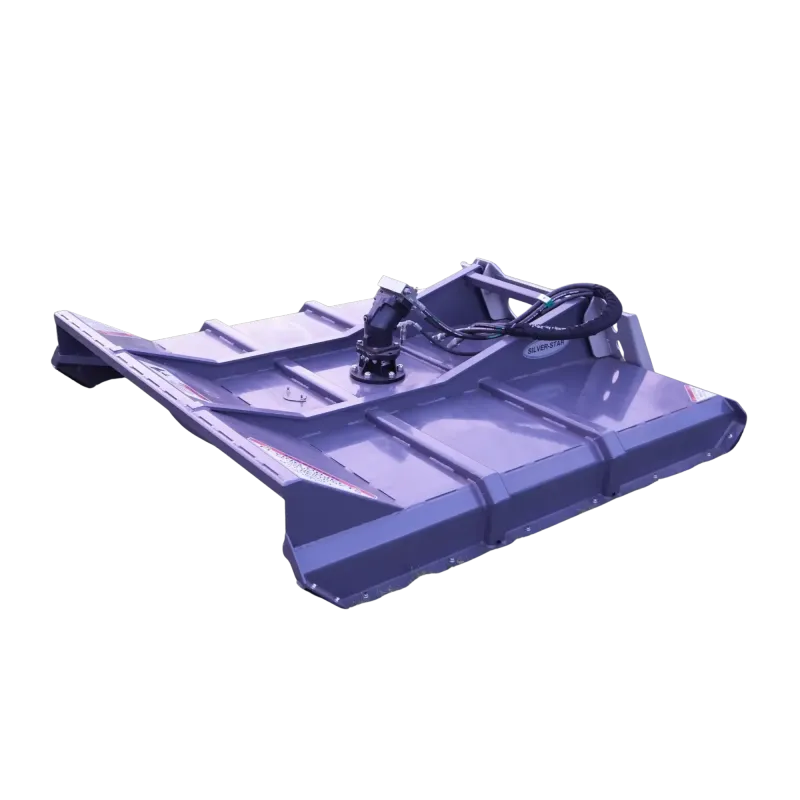
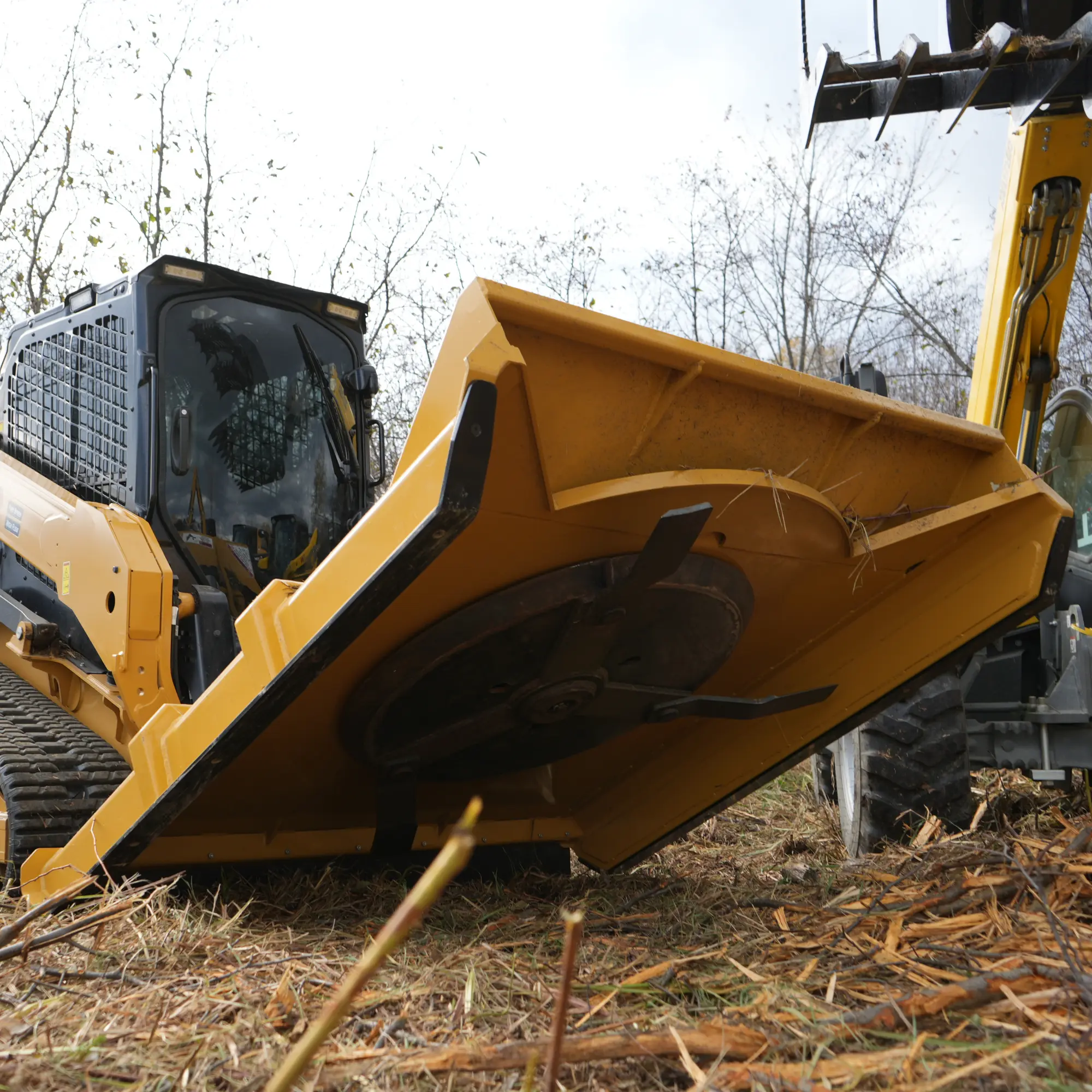
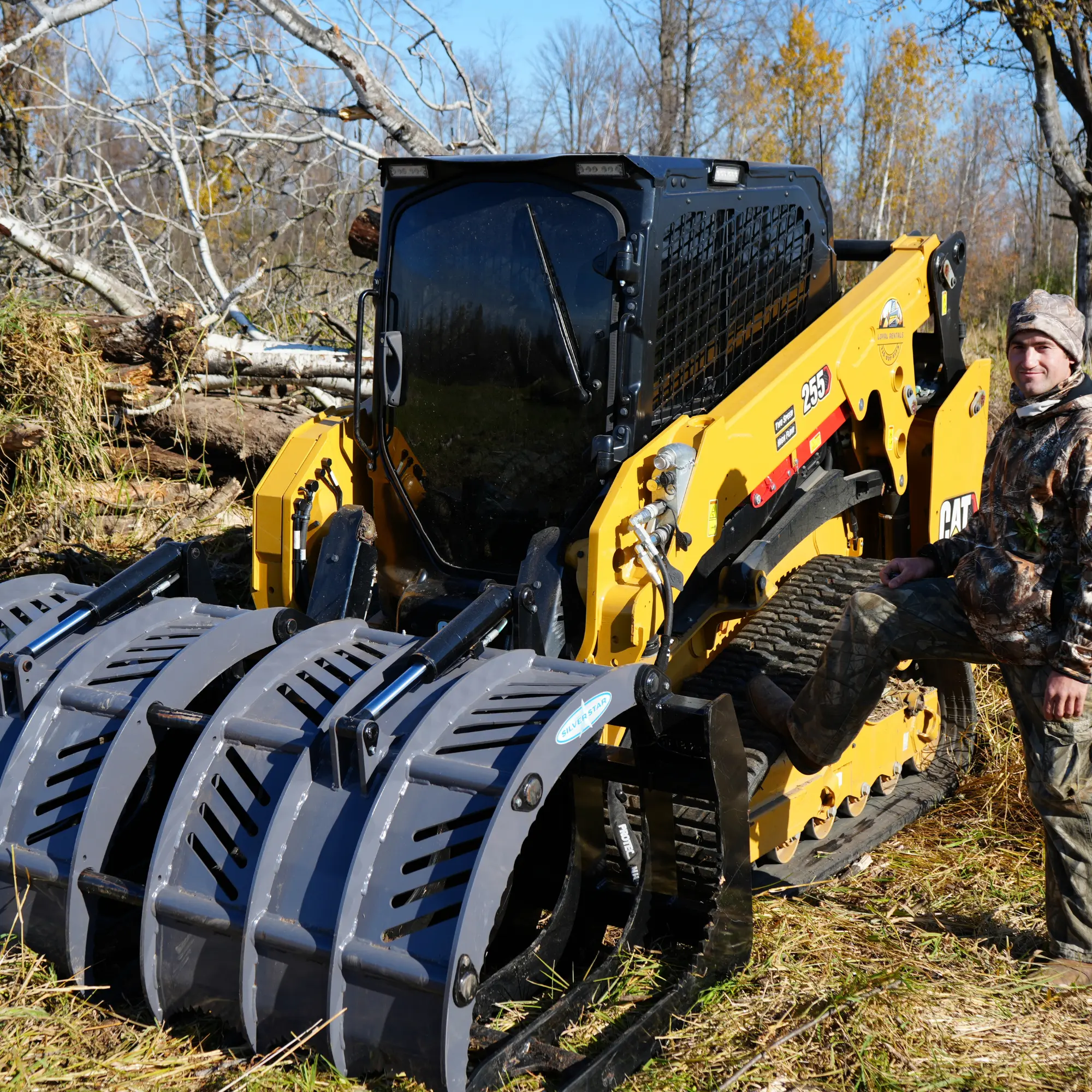
We stepped in with a high-torque,heavy-duty brush cutterdesigned with a 1-inch thick solid steel blade carrier and a direct-drive motor that could actually inhale debris rather than just batting it around.
The results: He went from clearing two acres a day to five.
The $80,000 loader was only as productive as the $8,000 piece of steel it was pushing through the dirt.
The engineering shift moved away from rigid, brute-force design toward a high-inertia system that uses mass and specific geometry to absorb and deflect impact energy rather than fighting it.
When we moved to that 1-inch thick solid steel blade carrier, we weren't just adding weight. We created a massive flywheel effect that maintains cutting RPMs through thick brush while acting as a physical shield for the hydraulic drive motor.
We specifically engineered a recessed bolt-head design and a circular "stump jumper" profile that allows the attachment to literally slide over a hidden rock or solid obstacle rather than catching a square edge that would send a catastrophic shockwave back through the drivetrain.
By using specialized high-strength T1 or AR400 steel plate, we ensured the metal has the memory to flex slightly under extreme stress and then return to its original shape. Cheaper, light-gauge alternatives simply reach their yield point and buckle.
Smart Mass vs. Lightweight Agility
The realization hit when we began seeing high-horsepower compact loaders failing to outperform older, lower-powered machines simply because they lacked structural mass to stay pinned to the ground during high-torque operations.
The industry's obsession with "lightweight agility" for easier transport created a generation of equipment that bounces and deflects off obstacles rather than carving through them. This forces operators to fight the machine's own lack of inertia.
By shifting the design philosophy to "smart mass," where we strategically place heavy-duty T1 steel in the blade carrier and reinforced gussets, we turned the attachment into a stabilized flywheel that uses its own rotational momentum to maintain constant RPMs even when hitting dense thickets or hidden stumps.
The attachment isn't just a passive tool being pushed by the loader. It's an active participant in the physics of the cut.
We stopped trying to make equipment "easy to carry" and started making it "impossible to stop." On a real-world job site, a contractor would much rather haul an extra five hundred pounds of American steel than spend a week waiting for a replacement part for a lightweight import that buckled on the first rock it encountered.
The Simplified Strength Principle
Most people think custom fabrication means more complexity and more things that can break.
We explain to skeptical customers that our custom design follows the "Simplified Strength" principle: we replace complex, failure-prone electronic sensors and thin-gauge assemblies with intentional geometry and oversized mechanical components.
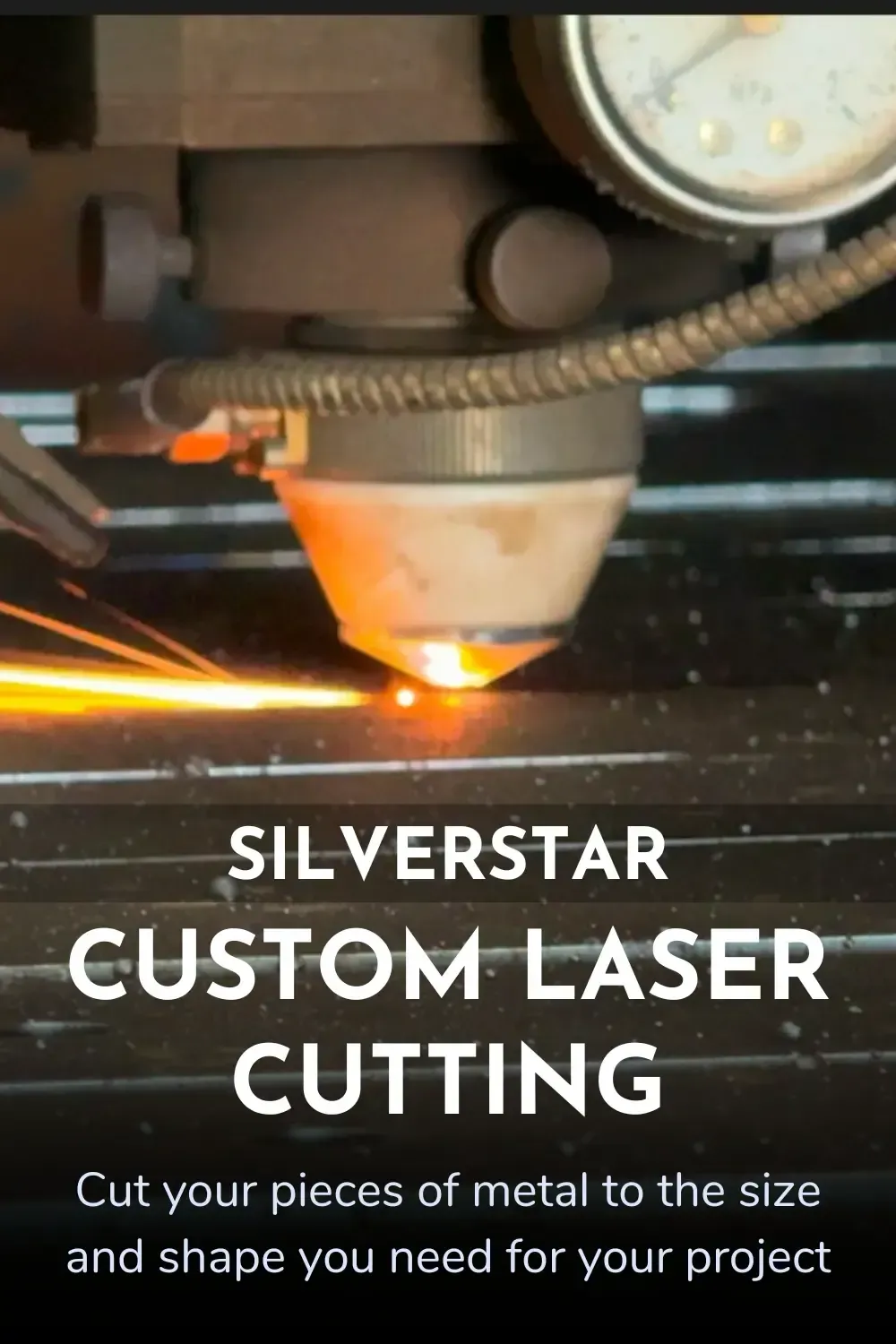
Most standard equipment uses light-gauge steel braced with complex, multi-piece brackets that are difficult to reach and impossible to weld in the field. Our fabrication reduces part count by using single-piece, laser-cut high-strength plate steel with "baked-in" bracing.
Fewer seams to crack. Fewer bolts to vibrate loose.
By prioritizing massive, greaseable pivot points and open-access hydraulic routing, we ensure that a 15-minute maintenance check stays 15 minutes, rather than requiring the removal of five protective shrouds just to reach a single zerk.
Complexity is usually a mask for weak materials.
We use the quality of the metal to do the work that other manufacturers try to do with complicated linkages, making our attachments virtually bombproof and easily repairable with a standard shop welder.
The Cold Planer That Forced Us to Rethink Everything
The shift really hit home during a project where we were building a custom high-flow cold planer for a contractor doing heavy-duty asphalt repair.
Early on, we followed industry standard: we used a complex series of adjustable mechanical linkages and hydraulic cylinders to control the tilt and depth of the drum. On paper, it was a marvel of precision.
On the job site, it was a maintenance nightmare.
The vibration from the asphalt teeth was so violent that fine-thread adjustment bolts would rattle loose every two hours. The delicate hydraulic sensors were getting blinded by extreme heat and dust.
We had to completely rethink the design mid-project.
We stripped away the adjustable linkages and replaced them with a tapered, solid-steel "rocker" frame. Instead of using a cylinder to find the angle, we engineered the bottom of the attachment with a specific radius that allowed the operator to find the perfect cutting depth simply by tilting the loader's quick-attach plate.
By using the geometry of the frame itself to dictate the cut, we eliminated twelve moving parts and four hydraulic leak points.
The contractor went from stopping every two hours for calibration to running full ten-hour shifts without touching a wrench.
If you can solve a problem with a single piece of shaped AR400 steel, it will always outlast a "smart" system with ten moving parts.
Too Simple to Be Stupid
The contractor was initially skeptical when we showed him the redesigned cold planer. He looked at the massive, curved slab of steel with no dials, no adjustment pins, and no precision knobs.
"This looks like a boat anchor, not a planer."
He'd been conditioned to believe that more levers equaled more control. The simplicity felt like a downgrade in capability.
The trust only came when he hit the asphalt.
In the old design, he had to constantly peek out the cab to see if his mechanical pins had vibrated out of alignment. With the radial rocker frame, he realized he could feel the depth through the resistance of the loader's arms.
Because the geometry was fixed, once he found the sweet spot by tilting his quick-attach plate, the machine held that depth naturally.
He went from a morning of fiddling to an afternoon of production. By the end of the day, his nervous skepticism had turned into quiet relief.
He didn't need a smart machine. He needed a machine that was too simple to be stupid.
The shift happens the moment we stop talking about features and start talking about leverage and line of sight. We don't ask customers to trust our engineering. We ask them to look at the attachment from the operator's seat.
We point to a specific blind spot on a standard, complex unit where all those dials and linkages are hidden under a protective shroud. Then we show them our open-geometry design.
"With that other unit, you're guessing your depth based on a sticker that's covered in asphalt dust. With this design, you're watching the actual strike point of the steel against the ground."
We didn't just remove parts. We moved the intelligence from a mechanical linkage that can vibrate loose to the operator's own eyes and hands.
Passive Complexity: When Metal Thinks for Itself
That philosophy is now the north star for every build, but it has taught us a vital distinction: complexity is only allowed if it's passive.
A job site is a graveyard for anything that requires a delicate touch. If a task truly demands a multi-stage function, we look for ways to make that complexity happen automatically within the metal rather than requiring an operator to toggle a switch or calibrate a sensor.
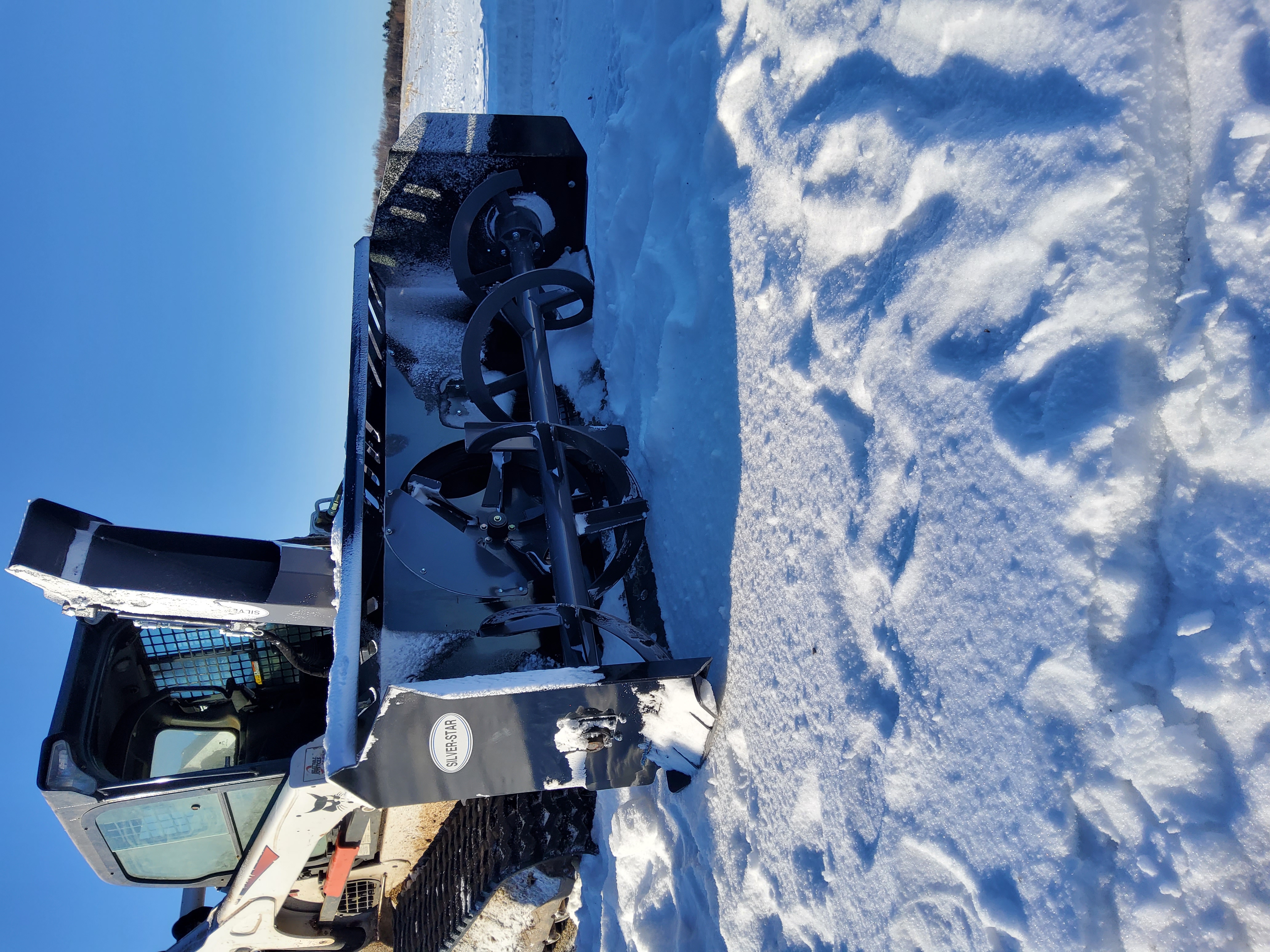
A standout example is the self-leveling high-momentum snow pusher with a built-in oscillating hitch.
In a standard pusher, the operator has to constantly feather the tilt cylinders to keep the cutting edge flat against uneven pavement. Tilt too far forward, and you dig into the asphalt. Too far back, and you leave a layer of packed snow behind.
To solve this without adding sensors or hydraulic leveling valves, we engineered a floating mechanical linkage directly into the steel mounting plate.
How the metal intelligence works:
The Slotted Hitch: Instead of a rigid connection, we laser-cut vertical oscillation slots into the 1-inch thick AR400 mounting ears. This allows the entire 1,500-pound box to move independently of the loader's arms.
The Gravity-Reset Geometry: We weighted the bottom of the side-skis so that the attachment's own center of gravity naturally pulls the cutting edge into the optimal strike angle.
The Result: When the loader hits a dip or a manhole cover, the attachment floats over the obstacle using its own mass and the play in the steel slots.
The metal performs a sophisticated real-time adjustment, compensating for ground contours and operator error, purely through calculated physics.
The operator just drops the arms and drives. The geometry handles the finesse that used to require a decade of experience to master.
The Silence in the Cab
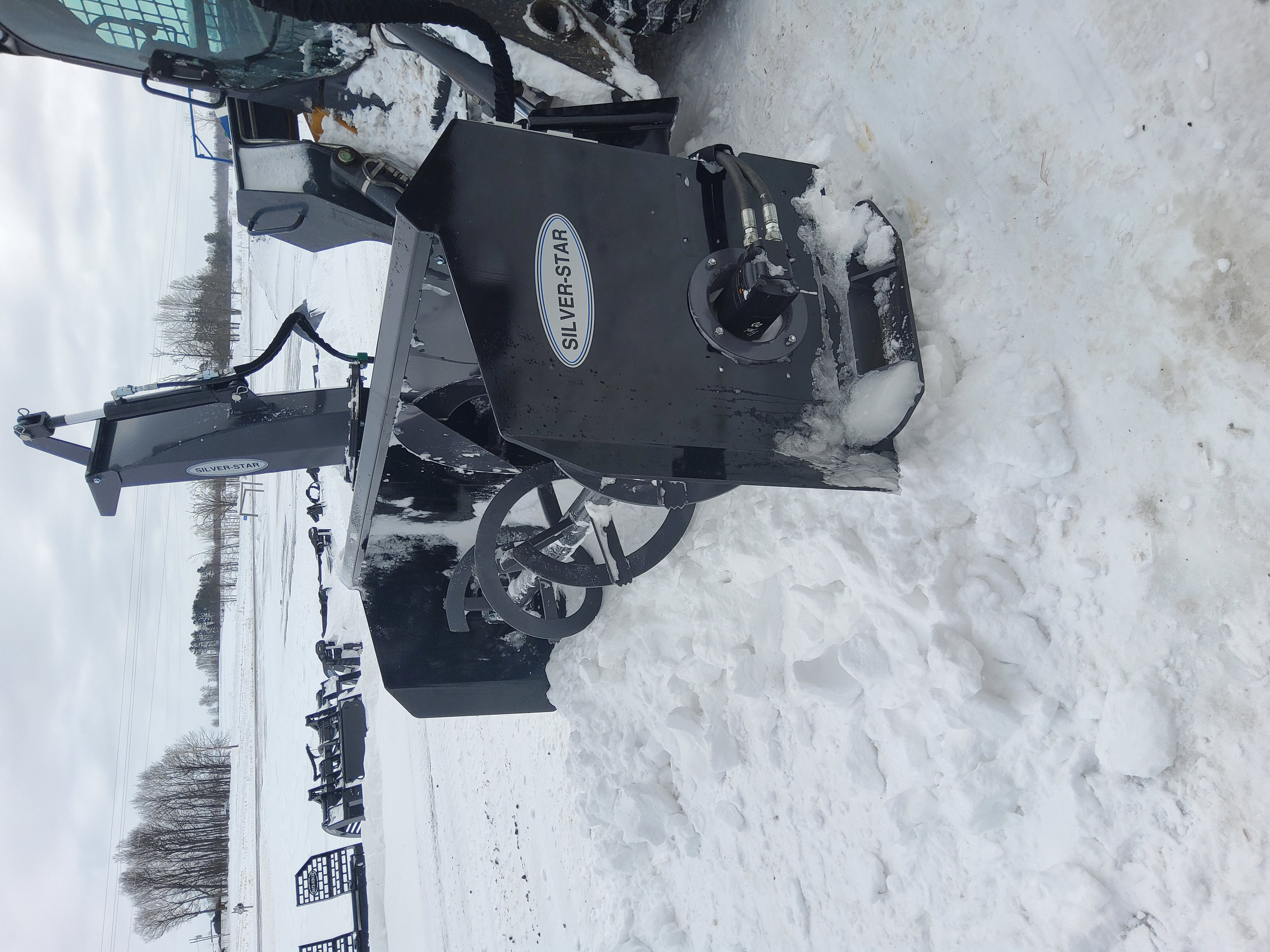
When we delivered that first self-leveling pusher to a customer, the first thing he noticed wasn't the clearing quality or the lack of blade dive.
He jumped out and said, "I didn't hear the relief valves screaming once."
In a traditional rigid pusher, every time you hit a high spot or a manhole cover, that impact energy has nowhere to go but back into the loader's hydraulic system. This forces the pressure relief valves to chatter or pop as they try to protect the cylinders.
Because our slotted hitch and gravity-reset geometry allowed the attachment to physically lift and float independently of the arms, those high-pressure spikes were eliminated.
He pointed out an advantage we hadn't fully quantified: operator fatigue.
Because the metal was thinking for him, he didn't have to keep his hand white-knuckled on the joystick all night to prevent a jarring impact.
The passive intelligence of the steel didn't just protect the pavement. It protected the loader's expensive hydraulic seals and the operator's lower back.
It turned a high-stress finesse job into a simple drive-straight task. He could put a less experienced driver in that machine without worrying about a $5,000 repair bill by morning.
Fatigue-related productivity losses cost employers between $1,200 to $3,100 per employee annually. Ergonomic injuries result in 38% more lost workdays compared to the average workplace injury.
The Invisible Costs on Every Quote Sheet
We stop talking about the price of the steel and start talking about the price of the operator's wrist.
Standard equipment quotes never account for micro-adjustments: the thousands of tiny corrections an operator has to make every hour to compensate for a tool that doesn't think for itself.
With a rigid, cheap attachment, you aren't just buying a piece of metal. You're buying a high-stress job for your best driver.
Every time that relief valve pops because a rigid blade hit a manhole, it's not just a hydraulic spike. It's a physical shock that travels through the pins, into the arms, and straight into the operator's seat.
We ask potential customers to calculate what happens when their operator calls in with back pain after a twelve-hour snow removal shift. Or when the hydraulic seals on their $80,000 loader start leaking after a season of constant pressure spikes.
Or when they have to bring in a less experienced driver because their best operator is burned out from fighting equipment all night.
Those costs never show up on a quote sheet. But they show up in your bank account.
The math changes when you factor in the real cost of ownership over three to five years. While custom fabrication carries higher upfront costs, the total cost of ownership typically favors custom design once you account for maintenance, downtime, and operator retention.
What We've Learned About Building Equipment That Lasts
After years of building custom fabrications for contractors who learned the expensive way, we've identified patterns that determine when customization makes financial sense.
The decision isn't about budget. It's about understanding what actually breaks down on your job site and what that breakdown costs you.
Standard equipment is designed for mass appeal, not specific applications. This one-size-fits-all approach forces you to design around the component's limitations rather than for optimal function.
This manifests as reduced equipment efficiency, increased wear on adjacent parts, and performance that consistently falls short of theoretical maximum.
Custom fabrication following the Simplified Strength principle replaces complex assemblies with intentional geometry and oversized mechanical components. By reducing part count and using single-piece construction, there are fewer failure points.
The attachments become virtually bombproof and easily repairable with a standard shop welder.
We've learned that if you can solve a problem with shaped steel and calculated physics, it will outlast any system that requires calibration, adjustment, or electronic monitoring.
The intelligence belongs in the geometry, not in sensors that fail when covered in mud, dust, or asphalt debris.
And most importantly, we've learned th
at the $1,800 you save on standard equipment can cost you $20,000 when it fails at the worst possible moment.
The contractors who come back to us after catastrophic failure all say the same thing: they wish they'd asked about the reinforced steel first.
We build attachments where a $10 bolt protects a $15,000 transmission. Where the metal thinks for itself. Where the operator gets their control back from machines that were over-complicating their job.
That's not marketing language. That's what happens when you engineerequipmenttoo simple to be stupid.
Frequently Asked Questions About Custom Fabrication
When does custom fabrication make more financial sense than a standard attachment?
Custom fabrication pays off whenever your ground conditions, machine specs, or vegetation type chew through standard-gauge steel faster than expected, or when a standard product simply doesn't exist for your machine.
What is a "mechanical fuse" in attachment design?
It's a sacrificial component, like a hardened shear bolt, engineered to fail first at a known stress point so the energy from an impact doesn't travel back into expensive parts like hydraulic pumps or lift arms.
Does custom fabrication cost more upfront than buying standard equipment?
Usually yes, but the total cost of ownership over three to five years often favors custom design once you account for reduced downtime, fewer repairs, and better operator retention.