







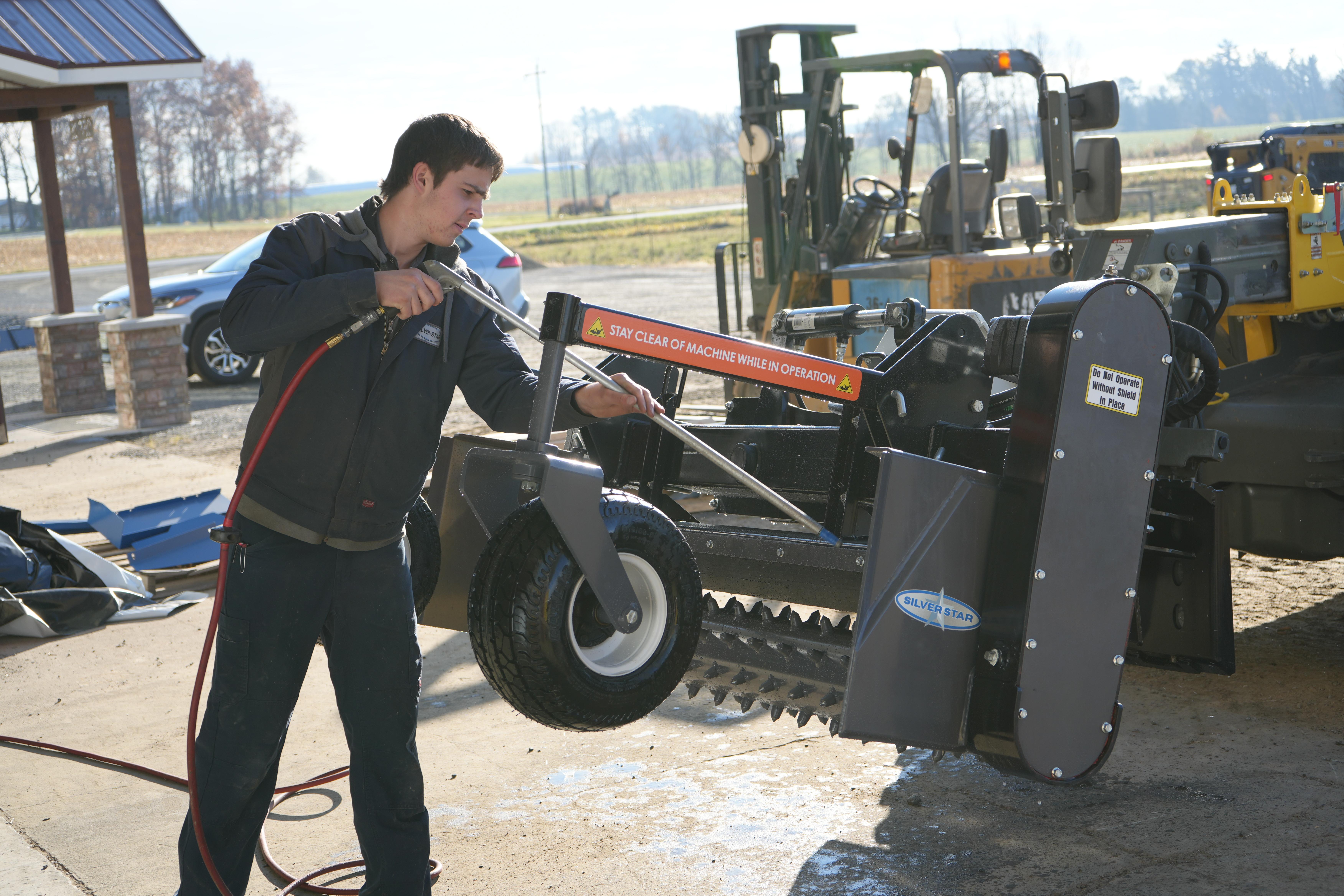
The Precision Grading Boom: What Rising Demand Tells Us About American Infrastructure

Over the past 18 to 24 months, something shifted in the grading equipment market.
Demand stayed strong even after supply chains stabilized. Rental rates held firm when they should have dropped. Used equipment started turning faster on dealer lots instead of aging unsold.
These aren't the signals of a temporary spike. They're the markers of a sustained shift in how contractors approach grading work.
We've been watching this evolution closely at Silver Star Metals, and what we're seeing goes beyond equipment sales trends. The data points to fundamental changes in project economics, operator techniques, and infrastructure timelines that are reshaping the grading phase of construction work.
The Numbers Behind the Surge

Highway construction spending reached a seasonally adjusted annual rate of $141.6 billion in October 2025. State and local governments spent $141 billion on highways and streets in 2024, making it the single largest infrastructure category.
That level of investment creates consistent workloads, not short-term backlogs.
Contractors are continuing to place orders despite improved equipment availability. Rental utilization for earthmoving and grading attachments has remained high without the usual drop in pricing that happens when fleets get overbuilt.
The U.S. rental penetration rate hit 57% in 2024, marking the fourth consecutive year of increase and surpassing the pre-pandemic peak. The construction and general tool rental industry is projected to reach $87.5 billion in 2025.
When rental utilization stays high but pricing doesn't soften, it signals something important.
Contractors aren't just renting equipment to get through a temporary backlog or seasonal burst of work. They're relying on it to support steady project timelines they know will continue.
In most short-term demand spikes, increased fleet availability pushes rental rates down within a few quarters as supply catches up. Instead, contractors are willing to accept stable or even slightly higher rates because the equipment is tied directly to ongoing grading and site preparation work that can't be delayed without impacting schedules or budgets.
This behavior reflects confidence that upcoming projects will sustain their need for grading equipment, making it worthwhile to secure rentals now rather than risk downtime later.
What Changed in Project Economics

Grading and site preparation are now directly tied to schedule-driven milestones where delays create far bigger financial consequences than the cost of renting or upgrading equipment.
Construction labor costs represent 50-60% of total construction expenses on many project types. A full-time construction employee costs $100,880 in total compensation, with $69,950 in wages and $30,930 in labor burden costs.
Every hour saved translates to real cost reduction beyond just the base hourly rate.
Labor costs have continued to rise and crews are harder to keep fully utilized. Contractors are placing more value on attachments that help them complete surface prep or leveling work faster with fewer people on site.
Many infrastructure and land development projects are operating on fixed timelines with penalty clauses or downstream trades scheduled closely behind the grading phase. Falling behind can quickly erode margins through idle labor or rescheduling costs.
When equipment that improves efficiency helps prevent those delays or allows a crew to move on to the next phase sooner, the additional rental expense becomes easier to justify because it protects overall project profitability.
The Real-World Math on Labor Savings

A mid-sized sitework contractor preparing building pads for a small residential development was originally using a standard bucket setup on a skid steer for final grading.
On average, they had a three-person crew spending roughly two full days fine-tuning each pad to meet elevation specs. That put them at about 48 labor hours per site once you factor in rework and checking grades.
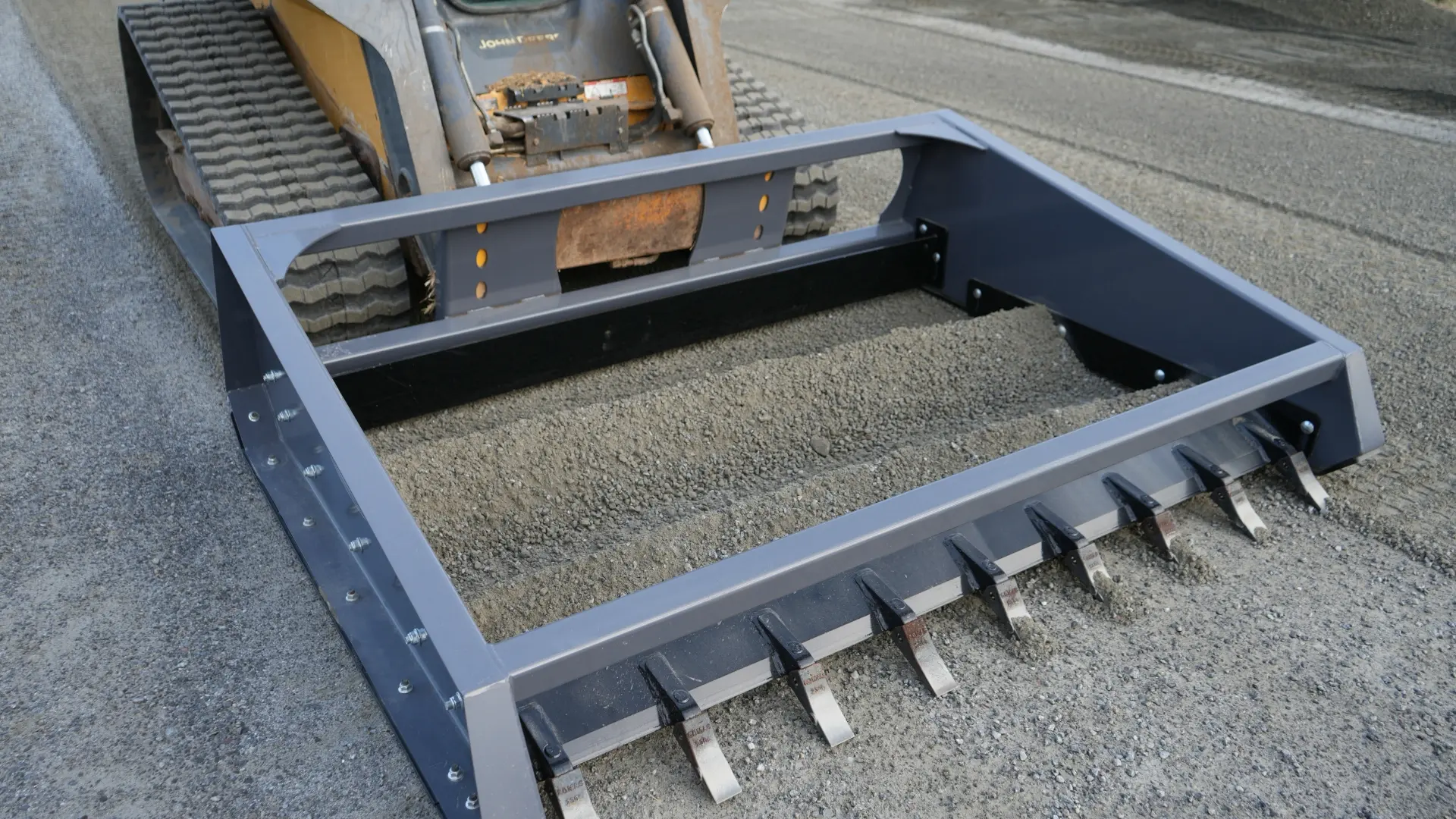
After upgrading to a dedicated driveway grader attachment with integrated grade control capability, that same crew was able to complete the final pass in closer to a single day with fewer corrections needed, bringing total labor time down to around 24 to 28 hours per pad.
Even if the upgraded attachment added a few hundred dollars in rental or ownership cost per project, the reduction of nearly 20 labor hours at prevailing wage rates quickly offset that expense.
Over the course of a multi-pad project, this translated into several thousand dollars saved in labor alone and helped compress the grading phase by nearly a full week. Follow-on trades could mobilize earlier, keeping the overall build schedule intact without adding overtime or additional crew members.
Why Some Contractors See Results While Others Don't
The biggest difference comes down to how the attachment is actually integrated into the contractor's workflow rather than just being added onto an existing machine and expected to deliver instant results on its own.
Contractors who see meaningful labor savings tend to pair the right grading attachment with proper operator training and adjust their process around it. They reduce manual checks, limit rework passes, and use the attachment for finish work instead of treating it like a bulk material tool.
They're also more likely to deploy it on projects where precision grading is critical to keeping the schedule on track. Time savings translate directly into fewer labor hours and less downtime between trades.
Contractors who don't see the same return often continue using the same grading methods they relied on before the upgrade, or assign the attachment to operators who aren't familiar with how to maximize its efficiency.
Job selection plays a role as well.
The return is much more noticeable on multi-lot developments or large surface prep projects than on one-off small-scale work where setup time can offset productivity gains.
Contractors who treat the upgrade as a process improvement rather than just a hardware swap are the ones who end up seeing the labor and timeline benefits that justify the investment.
The Technique That Separates High-Performing Operators

One of the most important adjustments is learning how to maintain a consistent grading plane by controlling travel speed and pass overlap instead of constantly making manual tilt or lift corrections on the fly.
Operators who get the biggest time savings tend to set their attachment to the target grade and make longer, smoother passes while slightly overlapping each run. This allows the cutting edge to do the work of leveling rather than forcing the operator to chase high and low spots with repeated short movements.
This reduces the number of corrective passes needed and helps eliminate the stop-and-check cycle that eats up labor hours during finish grading.
Operators who skip this approach often rely on frequent joystick adjustments to fix imperfections as they go, which can lead to overworking sections of the pad and creating more rework later.
By focusing on steady forward movement and letting the attachment maintain grade across the surface, experienced operators complete the final finish in fewer passes with less need for follow-up touch-ups.
That's where a significant portion of labor time reduction actually comes from.
The Hidden Cost of the Stop-and-Check Habit

On a typical finish grading job, that stop-and-check cycle can quietly take up anywhere from 20 to 30 percent of the total timeline, especially on projects where elevation accuracy matters and operators feel the need to constantly get out of the cab to verify their work.
Each time the machine pauses for a visual check or a manual measurement, you're not just losing the minute or two it takes to step out and confirm grade. You're also breaking the operator's flow, which often leads to additional corrective passes once work resumes.
Many contractors didn't fully recognize how much time this habit was costing them until they began comparing projects side by side after introducing attachments or grading systems that allowed for more consistent pass control with fewer interruptions.
Once they tracked how many times operators were stopping per pad or per section and multiplied that across an entire development, it became clear that what felt like quick quality checks were adding hours of non-productive time over the course of a job.
In several cases, simply reducing the frequency of these interruptions helped crews finish grading phases days earlier than expected.
How Contractors Shift Crew Standards Without Creating Resistance

When contractors talk about standardizing better practices, it rarely means telling experienced operators they've been doing it wrong for years. That approach almost always creates resistance.
What it usually looks like instead is bringing real job data into the conversation and framing the change around performance goals that benefit everyone on the crew.
A foreman might review how long a recent pad took compared to one completed using a smoother pass method and fewer stop checks, then walk through the measurable differences in labor hours and machine time.
Rather than mandating a new technique overnight, they often start by running side-by-side comparisons on a few lots, allowing operators to see for themselves how adjusting travel speed, pass overlap, or grade verification methods affects the finish time.
Experienced operators tend to respond better when they're involved in refining the process rather than being told to replace it, especially if the improvement reduces fatigue, cuts down on unnecessary rework, or helps the crew wrap up earlier in the day.
Over time, those small adjustments get written into jobsite expectations.
Setting guidelines for maximum corrective passes or defining when grade checks should occur gradually turns what used to be personal habit into a shared standard that protects schedule and margin without undermining operator experience.
The Moment Operators Buy In

For most experienced operators, the turning point isn't the spreadsheet or the project report.
It's the moment they finish a section using the smoother method and realize they didn't have to go back over it again to fix washboarding or chase low spots.
When they see that the surface is already within tolerance after fewer passes and they're not being asked to hop out of the cab to double-check grade every few minutes, it starts to click that the adjustment is actually making their job easier rather than taking control away from them.
There's also a practical side to it. Finishing earlier without sacrificing quality often means less end-of-day cleanup work or fewer callbacks from the foreman, which builds confidence that the new approach isn't just about saving the company money but also about reducing frustration on site.
Once an operator experiences a full shift where they're moving continuously instead of stopping to correct their own work, the skepticism tends to fade quickly.
The benefit shows up in real time through smoother finishes and fewer rework requests.
What's Driving the Industrywide Shift Right Now

When you step back and look at the broader market trends, what's really driving the industrywide move toward precision grading right now is a combination of evolving project requirements, tighter margins, and technology becoming both more accessible and more trusted.
Over the past few years, there's been a noticeable increase in complex site development work where elevations and tolerances matter much more than they used to. Large-scale residential subdivisions with engineered stormwater solutions, renewable energy pads that require exact surface profiles, and infrastructure jobs where downstream trades are scheduled tightly behind grading.
These kinds of projects don't tolerate rework. They place a premium on getting it right the first time.
Labor costs have continued to climb and skilled operators are harder to find and retain than they were five years ago. Contractors are under pressure to get more done with fewer people.
That environment makes tools and techniques that reduce wasted time and improve consistency suddenly very attractive rather than optional.
Another important factor is that digital grade control systems and dedicated attachments that previously were expensive or perceived as niche are now much more widespread across rental fleets and dealer offerings. This lowers the barrier to trying them on a job site.
When equipment and training become more available, adoption accelerates because contractors can cost-justify the improvement more easily than they could in the past.
The shift we're seeing right now isn't just about one piece of equipment or one trend in attachments. It's the intersection of project complexity, economic pressure on crews and schedules, and the maturation of tools that enable precision work without a steep learning curve, all aligning at the same time.
What Contractors Are Underestimating About Infrastructure Work Ahead

The one thing many contractors are underestimating is how compressed and performance-driven the early phase of those projects is going to become once they actually break ground.
A lot of firms still view grading as the front-end activity that sets the table for everything else. But on these multi-year infrastructure jobs, the grading phase is increasingly being treated as a critical path operation with strict sequencing tied to utilities, paving crews, structural teams, and inspection windows.
That means tolerances are tighter, documentation is heavier, and there's far less room for iterative rework than there used to be.
As funding moves from allocation to execution, agencies and developers are watching timelines and compliance more closely. This puts pressure on contractors to deliver finished subgrades that meet spec immediately rather than after several adjustments.
The evolution isn't just about moving dirt efficiently.
It's about integrating grading into a more data-driven and schedule-locked environment where verification, coordination, and precision matter as much as production volume.
Contractors who still approach grading as a flexible phase that can absorb delays may find themselves squeezed, while those who adapt to tighter control, clearer process standards, and more consistent finish quality will be better positioned as these infrastructure projects scale up.
Where to Start Tomorrow

If you're realizing your grading approach needs to adapt but you're not sure where to begin, start with one practical step.
Pick a single upcoming project and track how many times your operators stop to manually check grade during the finish phase. Count the interruptions. Time them. Multiply that across the entire job.
You'll likely find that 20 to 30 percent of your grading timeline disappears into those pause-and-verify cycles.
Once you have that baseline data, run a side-by-side comparison on the next similar project. Have one operator use the smoother pass method with controlled travel speed and minimal stops. Compare the labor hours, the number of corrective passes, and the finish quality.
Let the data speak for itself.
When your crew sees measurable differences in how long it takes to complete a section and how much rework is needed, the conversation shifts from "this is how we've always done it" to "this is what actually works better."
That's where real process improvement starts. Not with mandates or equipment purchases alone, but with clear evidence that a different approach delivers better results with less frustration.
The grading work ahead is going to demand tighter tolerances, faster timelines, and more consistent quality. The contractors who recognize that shift now and start making small adjustments to how their crews work will be the ones who stay ahead when those multi-year infrastructure projects break ground.
We've built Silver Star Metals on the principle that dependable equipment supports better work. But even the best attachments only deliver results when they're paired with operators who understand how to use them efficiently and contractors who treat process improvement as seriously as equipment investment.
The precision grading boom isn't coming. It's already here. The question is whether you're positioned to meet it.