






Why Equipment Downtime Costs More Than You Think

When a grading attachment goes down mid-job, most contractors see the repair bill and move on. A $500 fix. A few hours of lost time. Nothing catastrophic.
But that's not where the real cost lives.
The true financial impact shows up in what happens next—the crew waiting, the paving team pushed back, the inspection rescheduled, the material delivery extended. Unplanned downtime creates a ripple effect that spreads across entire project timelines, quietly eroding margins in ways that never appear on an equipment invoice.
The cost isn't in the repair. It's in everything that stops moving when the equipment stops working.
The Hidden Multiplier Behind Every Breakdown

Take a typical grading crew of three operators earning a blended rate of $50-60 per hour per person. Add a skid steer billing internally at $100-150 per hour. A half-day of downtime translates into $600-900 in idle labor and another $400-600 in lost machine productivity before you factor in schedule disruption.
If that delay pushes material delivery, forces an extended equipment rental, or causes downstream crews like paving or utility installation to wait or remobilize, the cost climbs quickly into the $2,000-3,000 range.
From a $500 repair.
On larger sites where work is tightly sequenced, even a few hours of lost grading time can ripple into inspection rescheduling or overtime later in the week to catch up. Contractors who track these incidents find that the real cost of a short interruption ends up being 3-5 times the visible repair expense once labor inefficiencies and timeline impacts are factored across the job.
Research confirms this pattern. Unscheduled downtime saps 11 percent of annual revenues from the world's 500 biggest companies—a total of $1.4 trillion. In construction specifically, unplanned downtime rates in the range of 20-30 percent are common across the industry.
The collateral damage costs more than the repair itself.
What Changed in the Market

Contractors are finally connecting these dots because of three converging factors.
Projects got bigger and more complex. Tighter sequencing between grading, utilities, pavement, and inspections means fewer soft buffers in the schedule to absorb delays. When base prep pushes back, everything downstream stacks up.
Labor got more expensive and harder to retain. Every hour an operator sits idle because of equipment downtime hits the bottom line harder than it did when crews were easier to shift between tasks. With skilled labor shortages driving up costs, idle time becomes visible in ways it wasn't five years ago.
Digital tools made the consequences visible. Basic utilization tracking and job costing tools let contractors spot patterns they couldn't see before—how frequently finish grading gets paused due to attachment issues, how many labor hours are spent waiting on a single machine, how often crews return to sections because grade tolerances were missed the first time.
When those lost hours start appearing consistently across multiple projects, the conversation shifts from purchase price alone to total impact on productivity.
Contractors can now connect equipment reliability directly to schedule performance and crew efficiency in black and white.
The Data Contractors Are Finally Tracking

What many contractors are seeing in their data is not just how often a machine breaks down, but how those interruptions cluster around key phases of work and quietly extend the overall timeline of a job.
The metrics that matter:
Downtime frequency during critical phases (finish grading, final prep)
Pass count per finished section (how many corrective runs to hit spec)
Gap between planned machine hours and actual productive hours
Labor hours tied to regrading or touch-ups
Crew wait time when equipment goes offline
When those lost hours appear consistently across jobs, it becomes clear that lower upfront equipment costs can be offset by reduced uptime or inconsistent performance.
That visibility is shifting the conversation from "what does it cost" to "how does it perform over time."
Heavy-Duty vs Budget: What the Field Data Shows
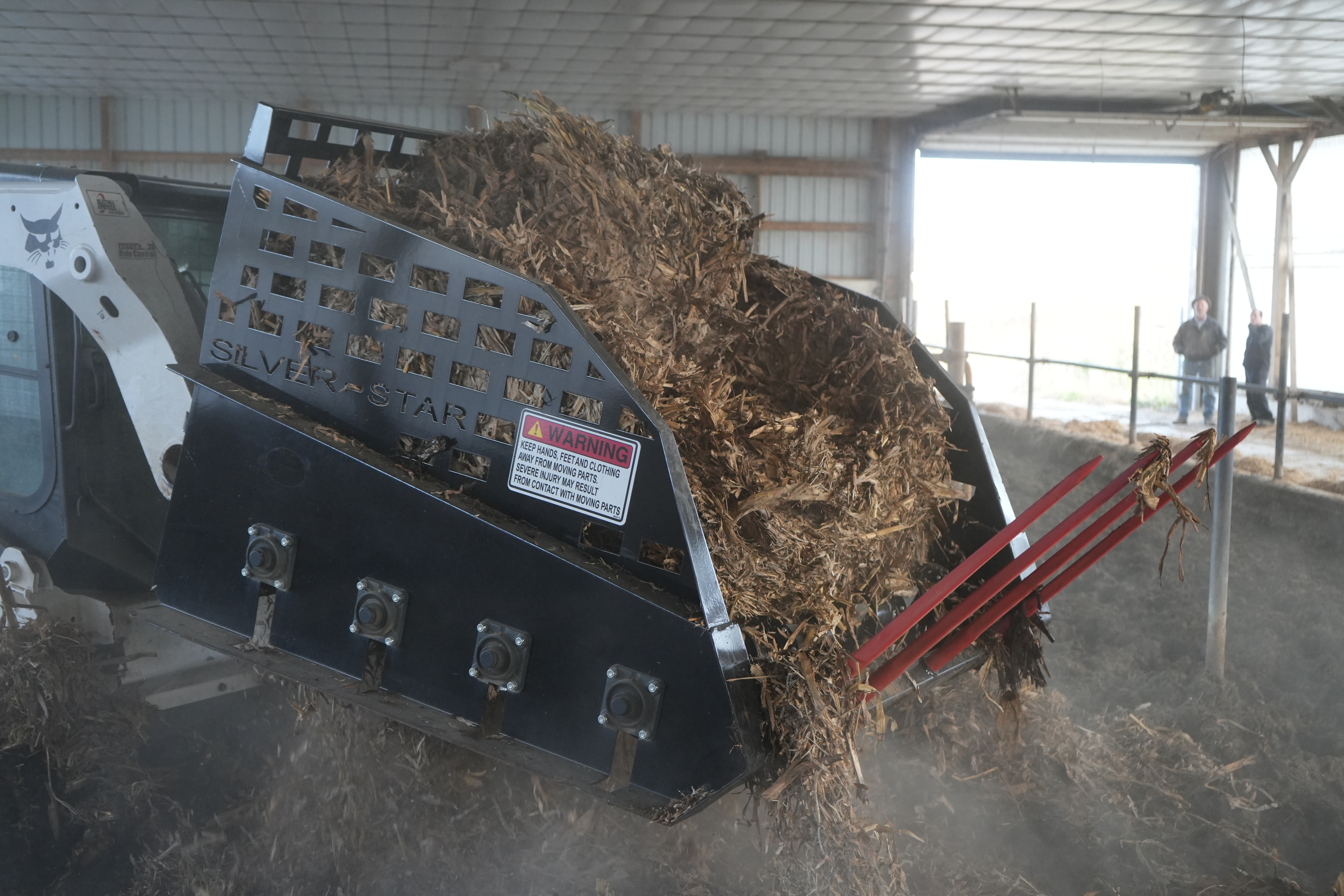
When contractors compare heavy-duty attachments to budget options using actual field performance data, the differences show up quickly.
A more rigid, well-built grading attachment typically holds a consistent cutting edge across the surface. Operators complete finish work in two or three controlled passes instead of four or five lighter corrective runs often needed with budget units that flex or ride inconsistently over material.
That alone cuts rework hours significantly.
Fewer low spots. Less washboarding. Fewer sections requiring touch-ups after the first pass.
Productive hours per day improve because operators spend less time adjusting tilt or reworking previously finished sections. They stay in motion longer and complete more surface area within a shift.
Contractors report gaining an extra 1-2 hours of effective grading time per day simply by reducing corrective passes and interruptions.
Over a 5-day workweek, that's roughly 20 extra working hours per month. Over a 7-8 month busy season, that translates into the equivalent of 2-3 additional small site prep jobs or several more lots completed within the same labor footprint.
Without adding headcount. Without expanding fleet size.
For contractors working on multi-lot developments, those recovered hours allow them to stay ahead of downstream trades without adding overtime, protecting margin by avoiding rushed work or weekend labor premiums.
The Questions Contractors Are Asking Now

Once contractors connect attachment performance to how many projects they can realistically complete in a season, their buying criteria shifts from upfront cost to consistency in the field.
The questions changed:
How well does it maintain grade across uneven material?
How resistant is the frame to flex under load?
How often do cutting edges need adjustment or replacement?
Does the design reduce the number of finish passes required to meet spec?
How predictable is the finish from one section to the next?
How does it impact labor efficiency and schedule reliability?
Compared to a few years ago, there's more interest in how an attachment impacts total project throughput rather than whether it meets the minimum functional requirement at the lowest purchase price.
Survey data reflects this shift. While 18 percent of contractors still prioritize price as their top factor, that's increasingly balanced against reliability concerns, with contractors comparing at least two brands before purchase and evaluating dealer relationships, warranty terms, and long-term support as critical decision factors.
What Warranty Data Reveals About Long-Term Reliability
When you look at warranty claims and field service records over time, one of the clearest differences between heavy-duty attachments and lower-cost alternatives shows up not in whether they fail, but in when and how they start to degrade under real workload conditions.
Budget units often perform adequately in the first few months. But contractors begin reporting issues tied to structural fatigue much earlier—frame flex that throws off grading consistency, uneven cutting edge wear, mounting points loosening after repeated load cycles.
Those problems rarely cause full failure right away.
They introduce subtle performance inconsistencies that increase pass count and rework long before a repair is officially logged.
By contrast, heavier-built attachments typically maintain their geometry and edge alignment deeper into their service life, preserving grading accuracy without constant adjustment.
Field service data shows that lower-cost units generate more mid-life maintenance calls related to alignment, weld stress, or blade wear within the first year of frequent use. More durable attachments push those issues further out into the lifecycle.
Over time, that difference in wear patterns translates into more predictable uptime and fewer productivity dips tied to corrective work.
Contractors who track long-term performance see durability as a way to stabilize output rather than just prevent catastrophic failure.
The Moment the True Cost Becomes Undeniable

For many operators, the realization hits not when the attachment breaks, but when they're on a job where finish tolerance really matters and they find themselves going back over the same section multiple times trying to get it right.
It happens on projects like building pads or driveway prep. The first pass looks acceptable. But once they check grade or bring in the next trade, subtle inconsistencies start showing up that require touch-ups.
When that leads to pulling the machine back onto an area that was already signed off or spending an extra hour smoothing out ridges that shouldn't have formed in the first place, it becomes clear the issue isn't operator technique.
It's how the attachment is holding up under load.
That extra time might seem minor in the moment. But when it starts happening across several lots or phases in the same week, the pattern becomes hard to ignore.
Operators who have worked with more rigid equipment recognize the difference when they notice how much more correction is needed to achieve the same finish—especially when they're staying late or adjusting their workflow just to meet spec.
That's usually the point where the conversation shifts from why the attachment was cheaper to why it's taking longer to deliver consistent results on site.
What Operators Will Demand Next

As labor costs continue to climb and project schedules become less forgiving, operators are going to expect attachments to deliver more predictable performance over longer stretches of daily use without constant adjustment or mid-job maintenance.
What that turns into over the next few years:
Structural rigidity that holds grade consistently across different soil conditions
Components that resist uneven wear deeper into the service life
Designs that reduce setup time between tasks so crews stay productive throughout a shift
Ease of inspection and serviceability in the field
Operators may not phrase it this way yet, but there's a growing expectation that attachments should help stabilize workflow rather than introduce variability that forces additional passes or rework.
As timelines tighten, equipment that helps crews maintain finish quality without slowing down becomes more valuable.
Manufacturers that focus on durability, consistent performance, and reduced operator intervention will stand out as contractors look for ways to protect productivity without expanding headcount.
The One Insight That Changes Everything

The true cost difference between two attachments rarely shows up on day one.
It shows up in how many additional passes it takes to consistently hit finish grade six months into regular use.
When an attachment begins to lose rigidity or edge alignment—even slightly—operators compensate without realizing it by slowing down, making more corrective runs, or revisiting sections that should have been completed on the first attempt.
That change might only add 10-15 minutes per pad or surface area. But multiplied across an entire project or season, it quietly translates into dozens of lost labor hours that never appear on an equipment invoice.
Contractors who track pass count per finished section or productive grading hours per shift find that small differences in attachment performance lead to measurable drops in daily output long before a repair is needed.
Once that connection between consistency and crew productivity becomes visible, the decision stops being about what the attachment costs upfront.
It becomes about how reliably it helps the operator complete work within tolerance on the first pass.
That's where the real operational savings come from.
What Operations Look Like After the Shift

Contractors who evaluate equipment based on consistency and long-term performance rather than upfront price run operations that are noticeably more predictable from both a scheduling and profitability standpoint.
Their crews spend more time moving forward and less time correcting finished work. They complete grading phases closer to planned timelines and avoid the overtime or weekend work that eats into margins.
Over the course of a season, that stability shows up as:
Fewer delayed handoffs to downstream trades
Less idle labor waiting on rework
Ability to transition crews between projects without stacking unfinished tasks
Capacity to close out more lots or take on additional contracts
Maintained bid competitiveness without expanding fleet or workforce
Compared to competitors who prioritize the lowest upfront attachment cost, these operations experience fewer productivity dips tied to mid-life wear or alignment issues.
That helps them protect margins on tighter bids and build a reputation for staying on schedule.
That consistency positions them as a more reliable partner for developers and general contractors looking for subcontractors capable of meeting performance expectations without introducing delays into the build sequence.
Built for Performance That Lasts


We engineer heavy-duty skid steer attachments with one goal in mind—helping you complete more work with fewer interruptions.
Our attachments maintain structural rigidity and edge alignment deeper into their service life because we build them with materials and fabrication methods designed to withstand real workload conditions season after season.
When your attachment holds grade consistently across different soil conditions, you spend less time making corrective passes and more time moving to the next section. That's how 1-2 extra productive hours per day compound into 2-3 additional jobs per season.
We stand behind every attachment we build with warranties backed by field performance data—not just promises.
Because we know the real cost isn't in the purchase.
It's in the passes.
If you're ready to evaluate equipment based on how it impacts your entire operation—not just the sticker price—we're here to help you make that shift.