




Why Mini Attachments Are Dominating Urban Job Sites and Tight-Space Operations
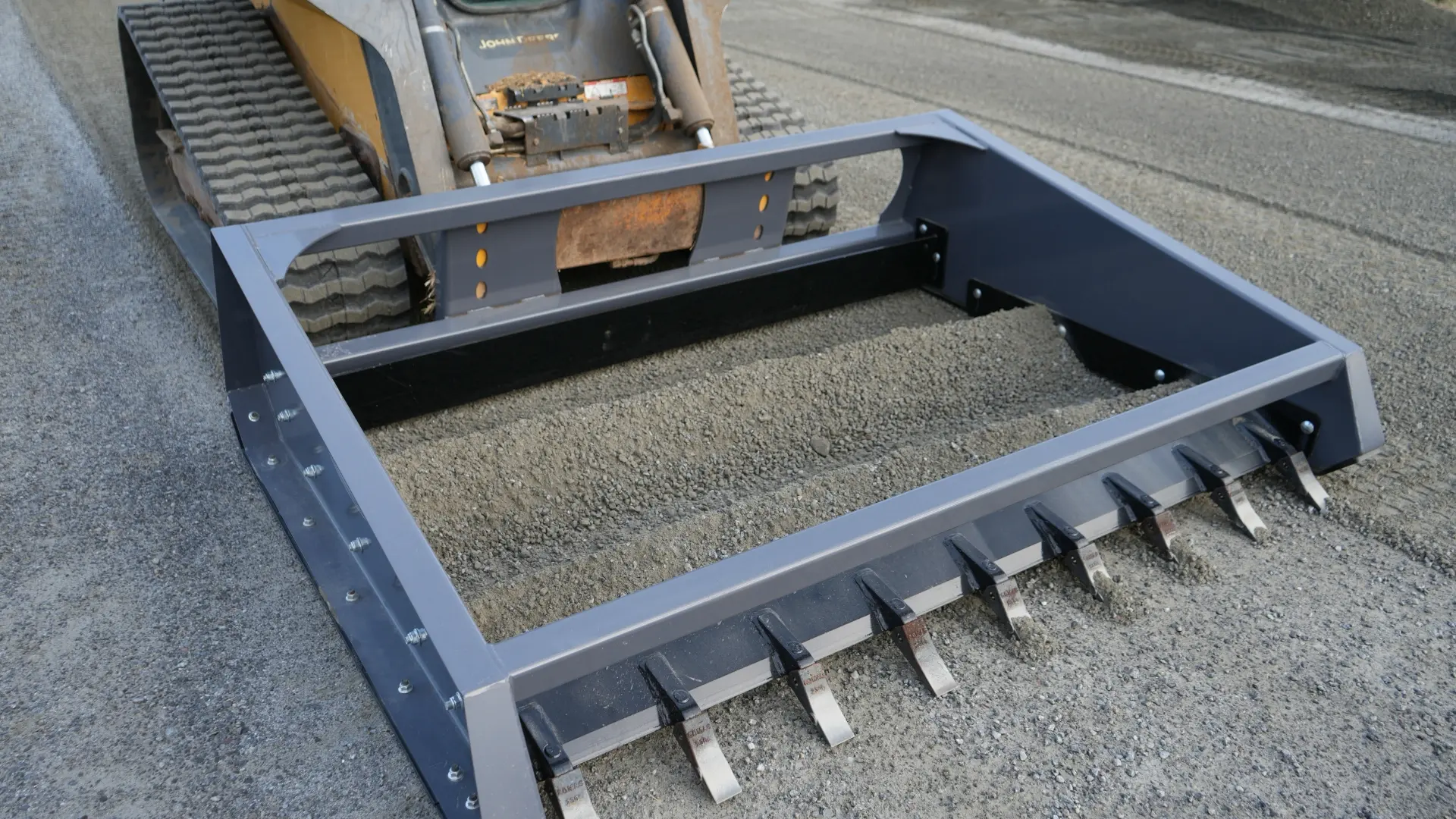
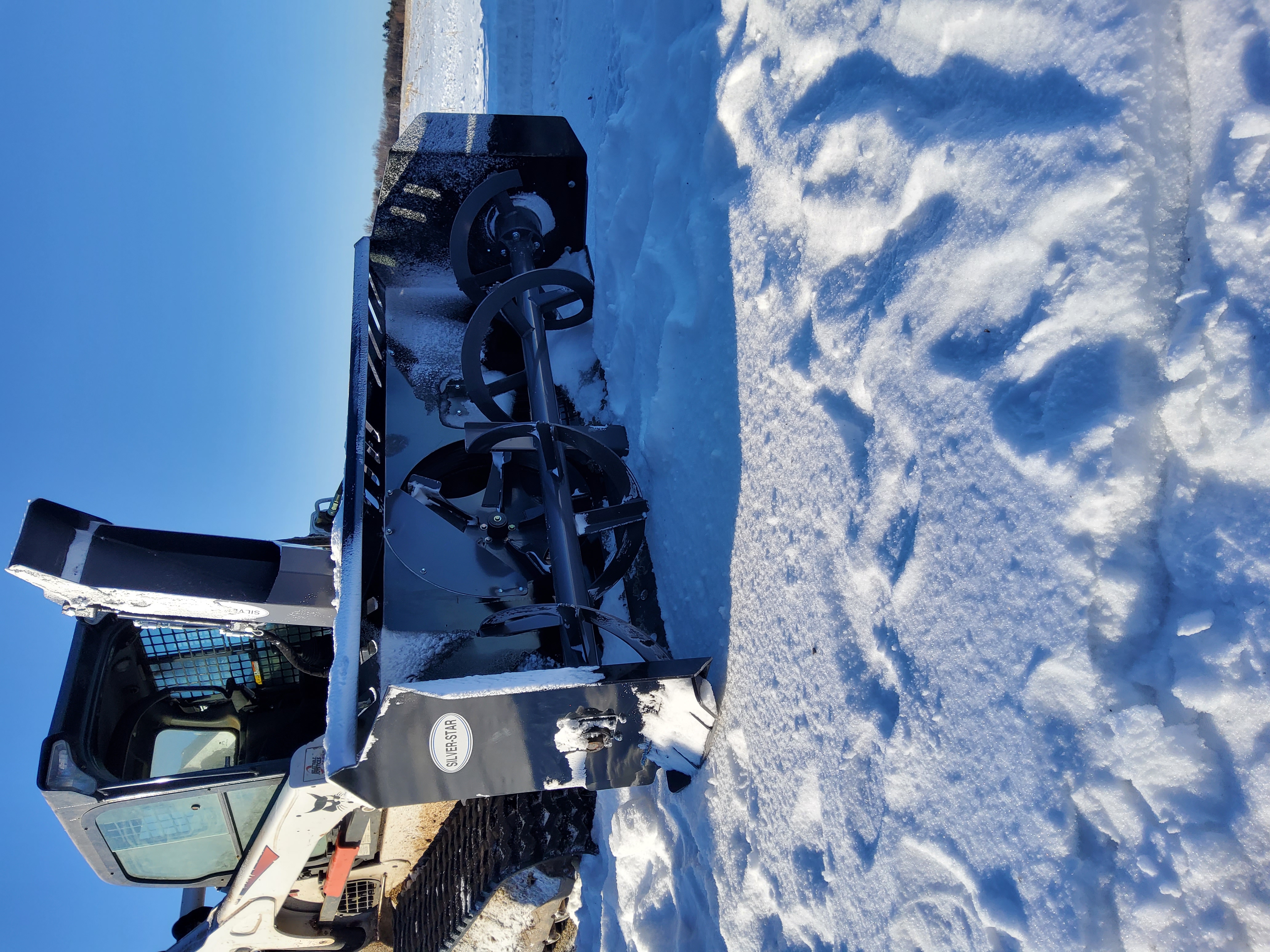
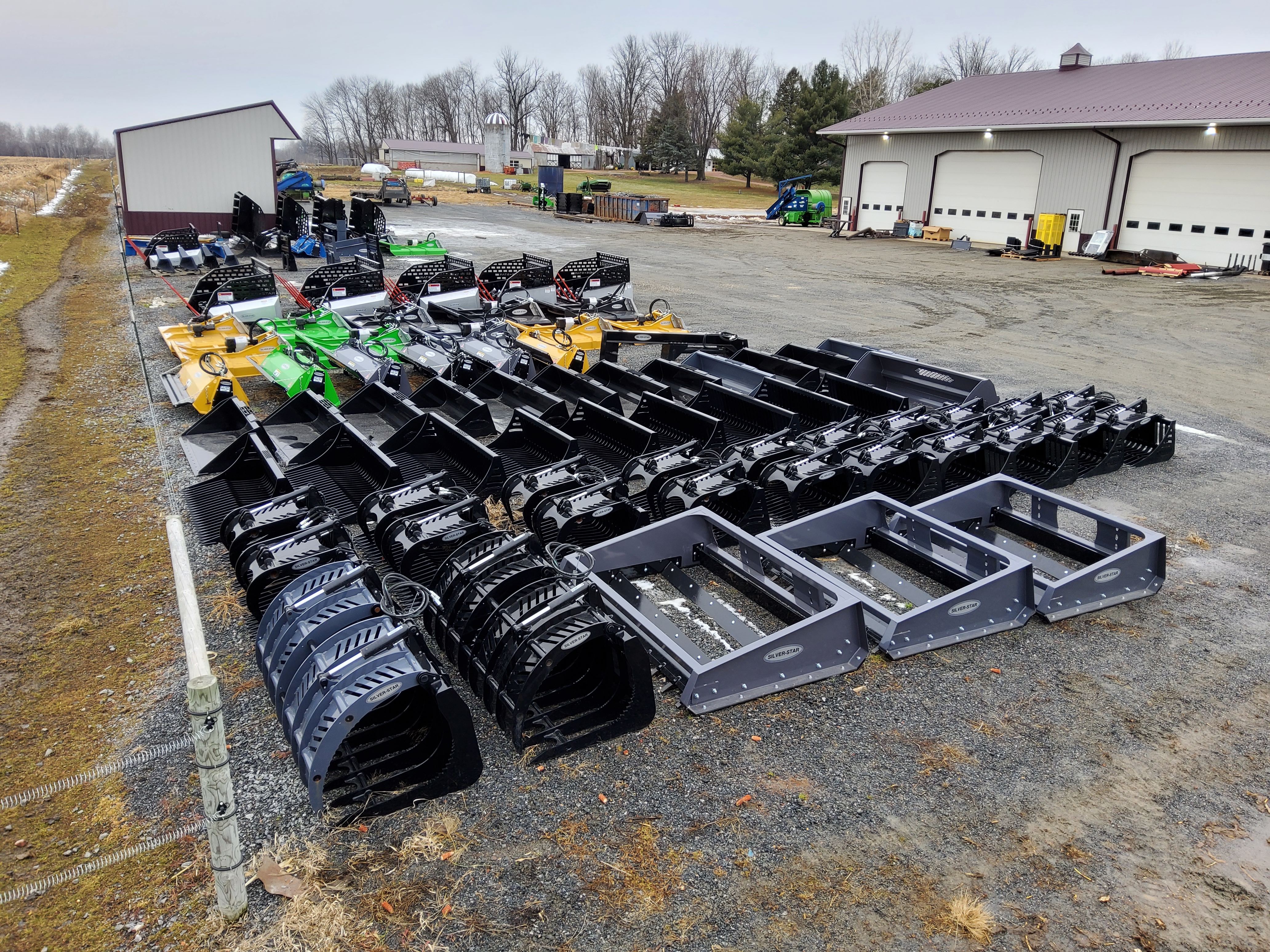
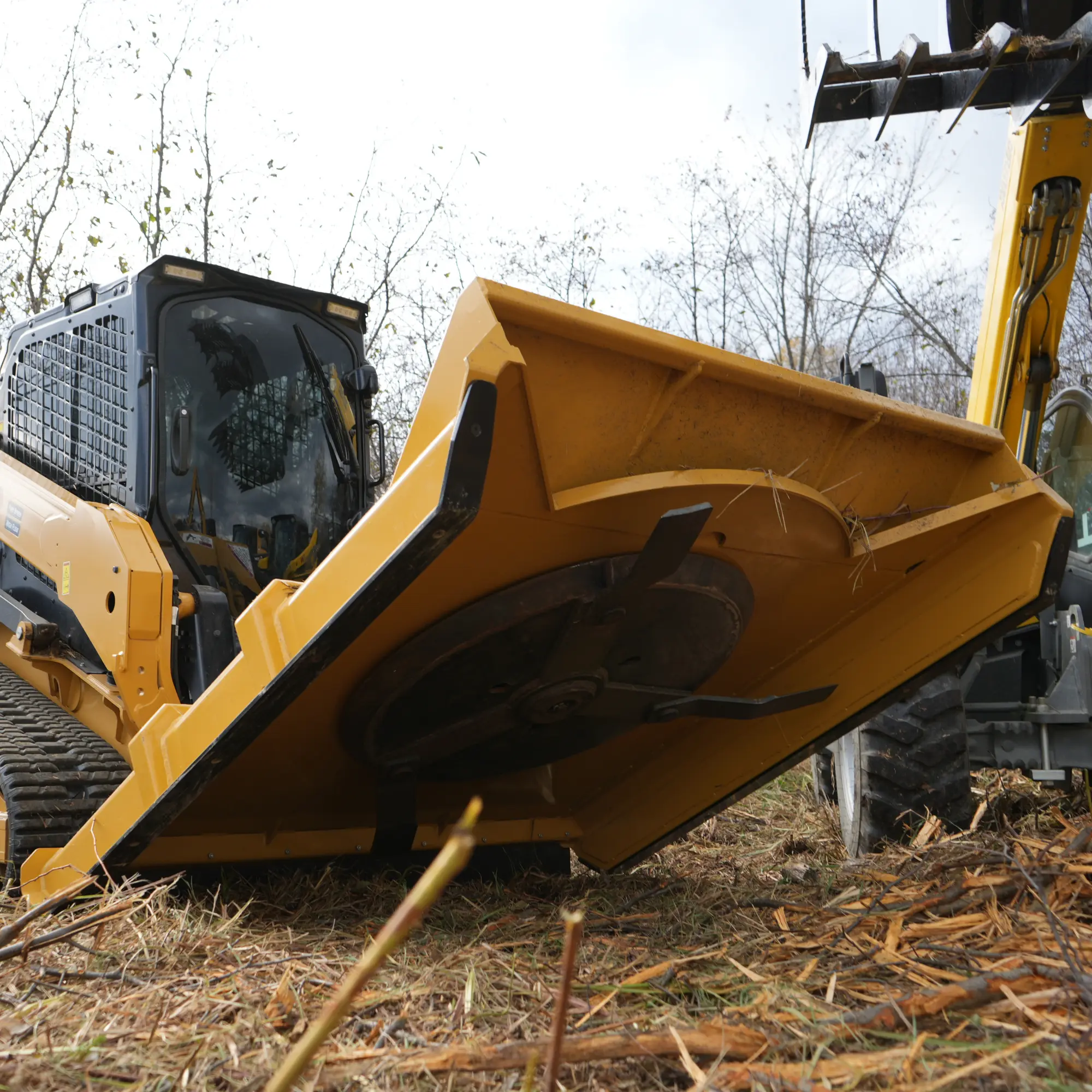
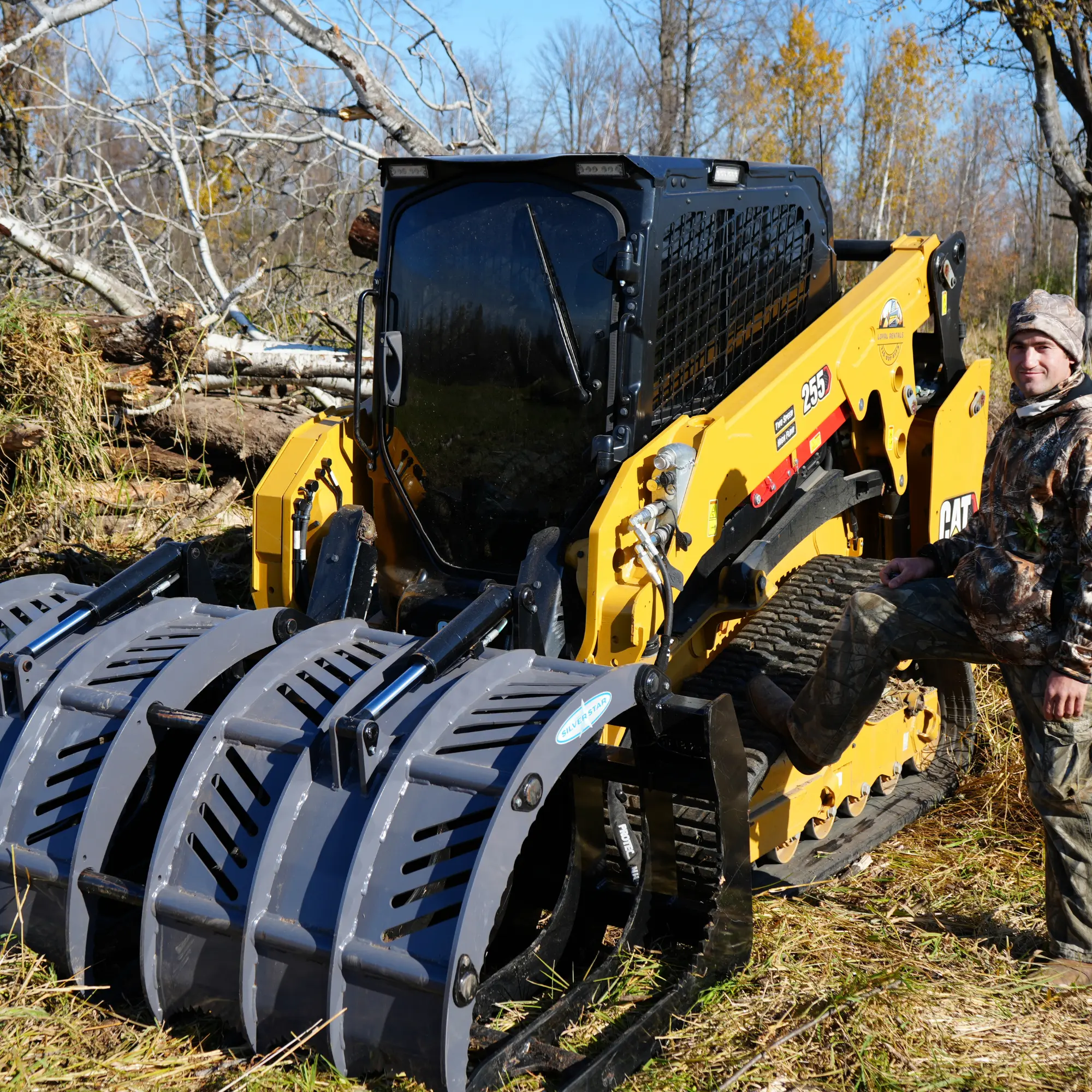
Mini attachments are dominating urban job sites and tight-space operations because their compact size lets contractors work in spaces a full-size skid steer simply can't reach. They fit through standard gates and doorways, maneuver in backyards, alleys, and fence lines, and put less pressure on lawns and pavement than larger machines. That combination makes them the go-to choice for residential landscaping, utility work, and any job site boxed in by fences, buildings, or property lines.
Contractors are switching to mini attachments to cut labor time by up to 75% and labor cost by up to 80% on small jobs, while accessing gated backyards, playgrounds, rooftops, and historic districts that 68-74 inch machines simply cannot enter. The compact construction equipment market has grown from $59.2B (2024) toward a projected $70.3B by 2030 as a direct result.
The Urbanization Factor Nobody Saw Coming
The United Nations projects that 68% of the world's population will live in urban areas by 2050. That massive shift creates unprecedented demand for equipment that operates in confined spaces.
Residential lot sizes are shrinking across the United States. Construction equipment dealers report a surge in compact machinery demand because contractors face "extremely tight, zero-lot lines" with houses "right next to each other."
You can't get a 68-inch or 74-inch unit back there. In some places, it's not doable.
Municipal parks departments need mini attachments for playgrounds, walking trails, and historic districts where gates and narrow paths block full-size skid steers. Golf courses use them for bunker work through cart paths. Cemeteries deal with narrow driveways and wrought-iron gates that force crews to hand-work or rent expensive track loaders.
The pattern is clear:tight access kills big machines, and mini attachments turn "impossible" jobs into routine ones.
Why Minis Work Harder Than Full-Size Units
Most people assume smaller equipment means less stress. The opposite is true.
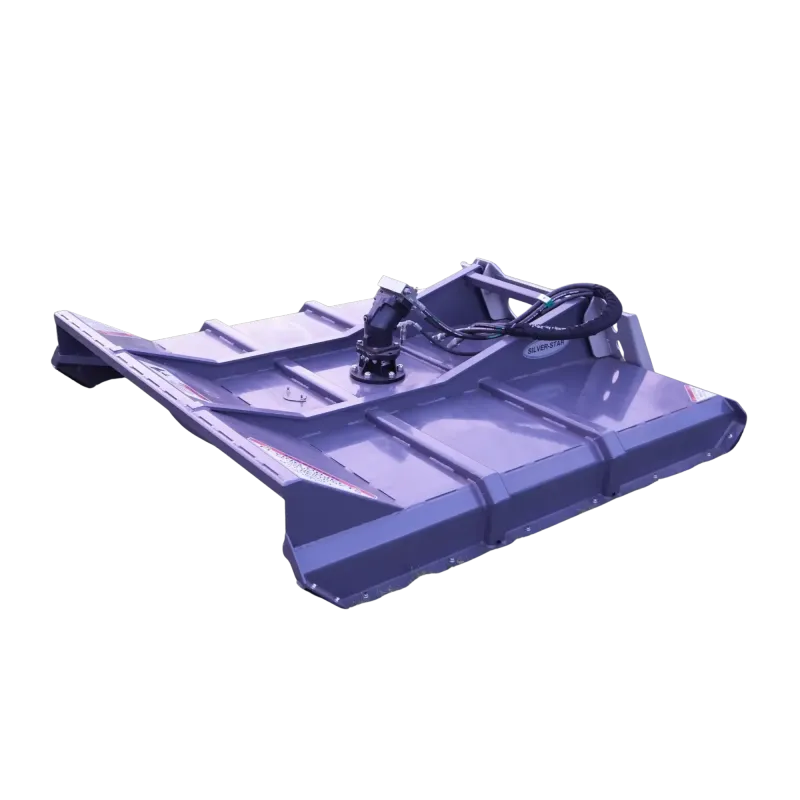
In a residential backyard, a contractor constantly maneuvers a mini skid steer in tight spaces, dodging trees, fences, flower beds, and uneven ground, while running the thick brush attachment at near-max RPM to keep from stalling.
The hydraulic motor and cutter head spin faster and harder for longer stretches. Rapid start-stop cycles and sudden direction changes send amplified vibration through the compact frame.
The mini works harder because it fights constant resistance in confined chaos.Its smaller size provides less natural damping, turning every bump and cut into more intense stress on welds, bearings, and tines.
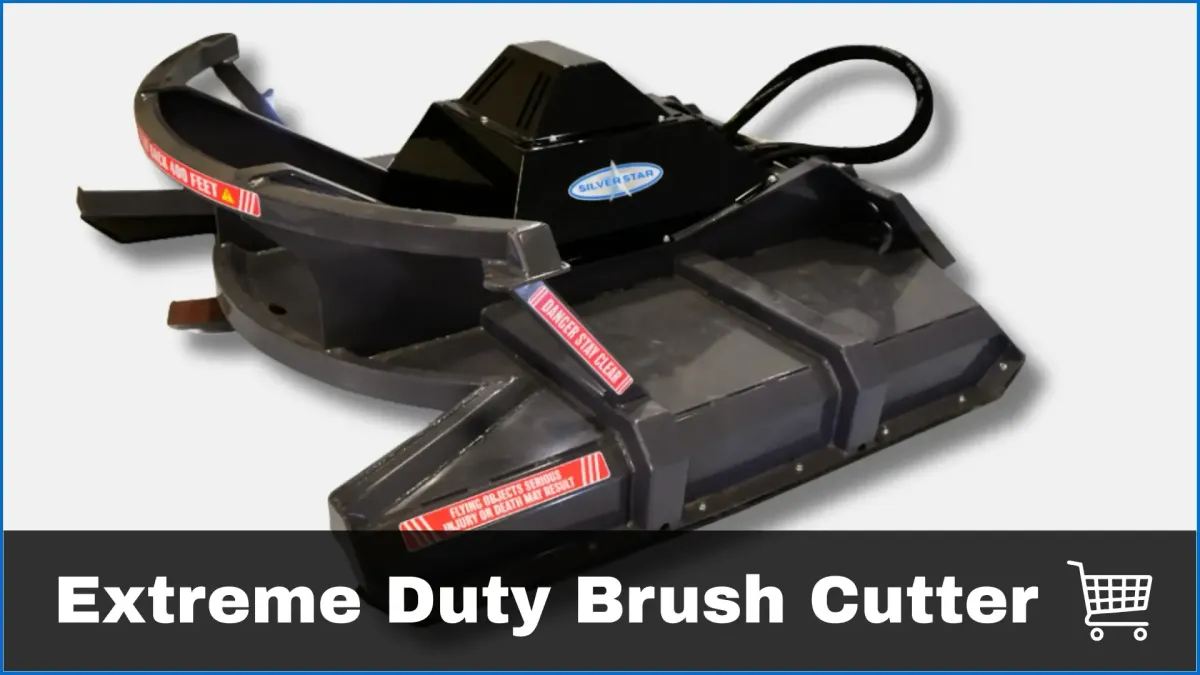
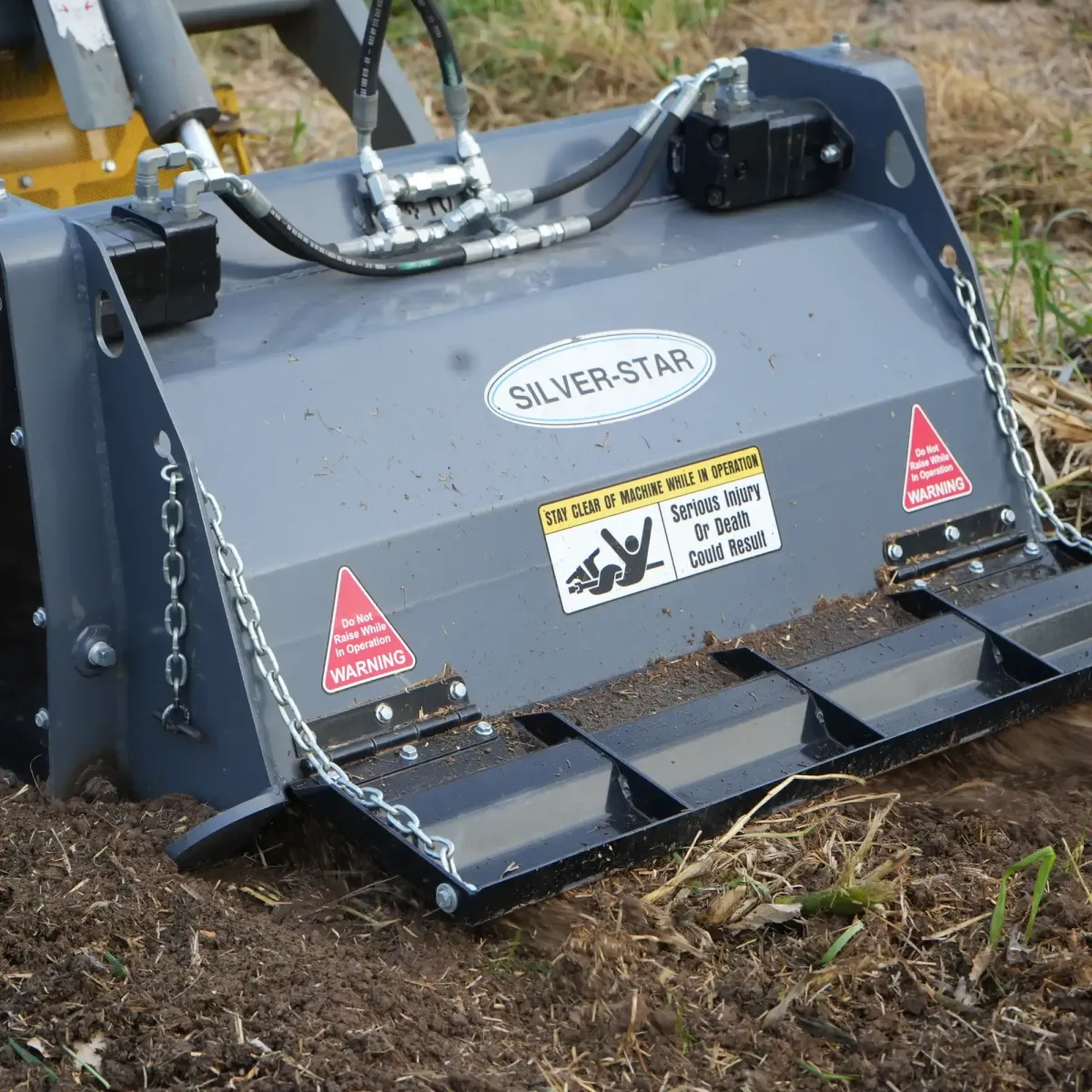
That's why we engineer our mini attachments differently. We use thicker AR400 steel for tines and frames. We scale up weld beads and add extra gussets at stress points like the quick-attach plate.
Vibration cracks welds or bends thin tines first when pushing hard against rocky ground. Bigger units just shrug it off with their beefier build.
The Economics That Flip Conservative Contractors
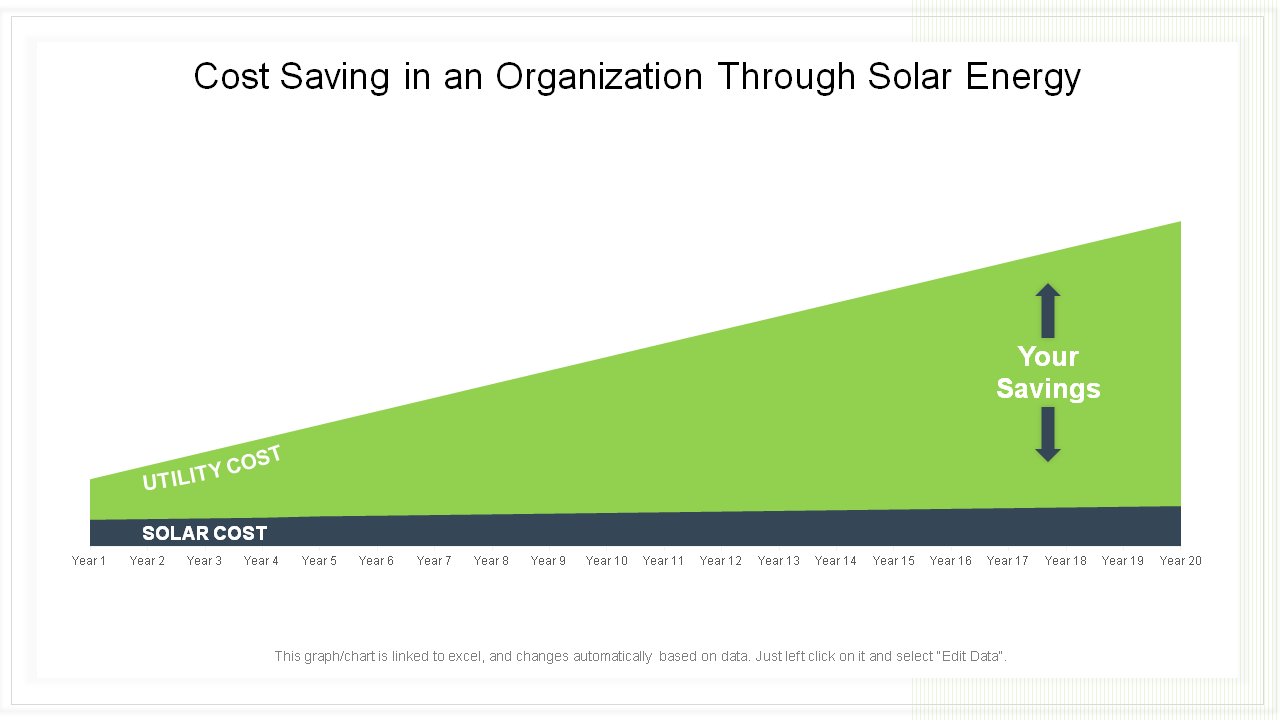
Contractors don't buy mini attachments because they're trendy. They buy them after losing a $2,000-$5,000 job to a competitor who could fit through that gate.
The numbers tell the story:
Traditional hand-tool methods: 8-12 hours, $400-$800 in labor for two or three workers
Mini attachment on mini skid steer: 2-4 hours, $100-$280 with one operator
Time savings: 75%
Labor cost reduction: up to 80%
The break-even for buying a $3,000-$5,000 mini attachment versus renting at $200-$400 per day hits after 10-20 jobs. That's 2-4 months of steady work. For landscapers doing 50+ small jobs annually, ownership is the clear winner.
The Hidden Cost of Cheap Attachments
The one thing contractors overlook when comparing attachments isweld quality and gusset reinforcementat the quick-attach plate and tine bases. Specs lists rarely mention it, but it's the hidden failure point that bites them six months in.
Cheap minis often use thin fillet welds and small gussets. Constant vibration in tight backyards cracks those welds or twists the plate, leading to slop, misalignment, and eventual failure under load.
A $1,200 import that fails early turns into $5,000+ in machine repairs plus lost job time. The "cheap" option becomes the most expensive one they ever bought.
We never cheap out on structural integrity. Thick AR400 steel, oversized gussets, and heavy cross bracing stay non-negotiable.
Commercial and Municipal Applications Outpacing Residential
The mini attachment market isn't hitting saturation. It's accelerating into a second wave: commercial and municipal adoption.
Rooftop HVAC work demands ultra-lightweight, modular designs for easy crane or elevator transport. Cities mandate low-emission equipment for public projects, and electric and hybrid compact construction equipment now offers practical alternatives to traditional diesel-powered units in urban settings.
The Rental Market Multiplier Effect
Rental penetration for U.S. construction and industrial equipment hit a record 57% in the first quarter. Equipment rental revenue is set to reach $82.6 billion in 2025.
The skid steer attachment market is valued at more than $2.5 billion in 2024, with projected growth at 2.9% to 6.4% CAGR through 2033.
The Labor Shortage Accelerator
The construction industry grapples with severe skilled labor shortages. 85% of firms worldwide report difficulty filling positions.Mini attachments aren't just space-savers. They're workforce multipliers that let one operator do the work of three laborers.
What's Next for the Mini Attachment Market
School playgrounds, historic districts, and indoor warehouse maintenance are the next wave of adoption. We're probably looking at 30-50% more volume over the next few years as commercial and municipal buyers catch up to what residential contractors already figured out.
The mini attachment revolution isn't about making things smaller. It's about making the impossible possible.
We engineer attachments that empower you to get more done, faster, safer, and with confidence, built with thick AR400 steel, oversized gussets, and full-penetration welds that spread stress across thousands of cycles.
Made in America. Engineered for results.
Frequently Asked Questions About Mini Skid Steer Attachments
What counts as a "mini" skid steer attachment?
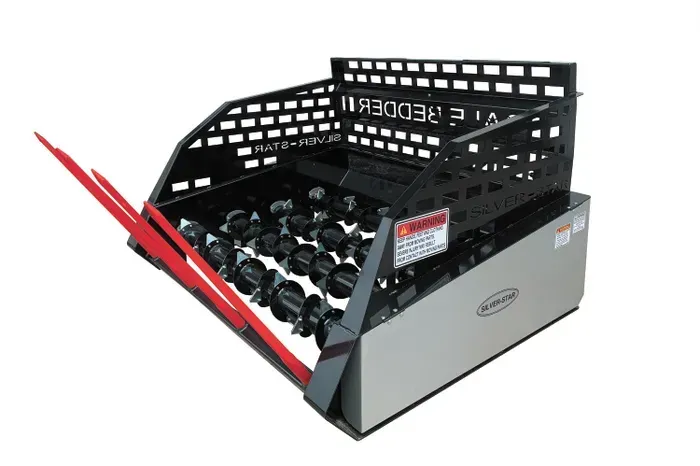
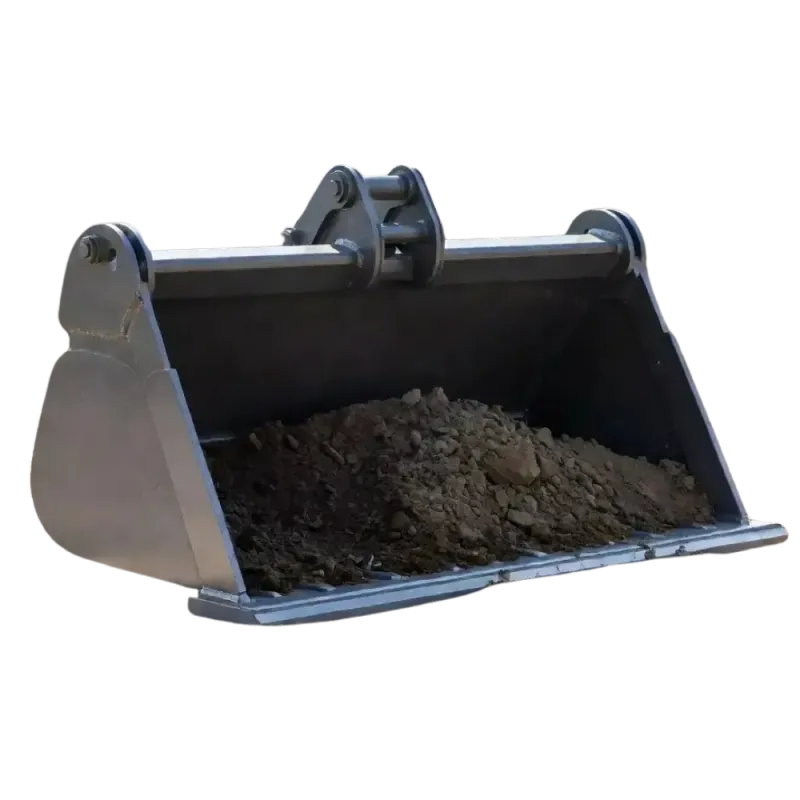
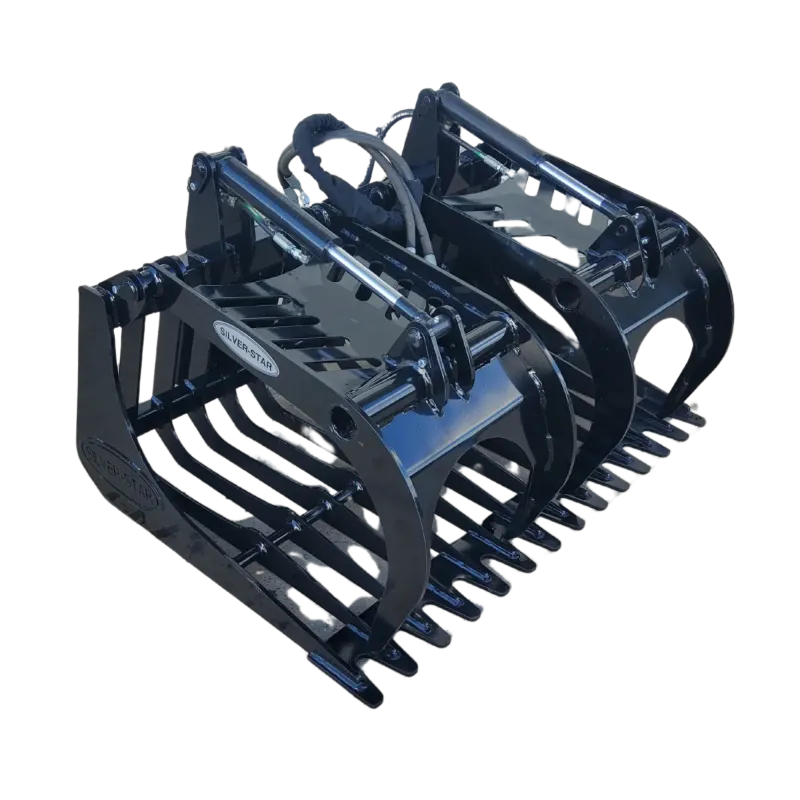
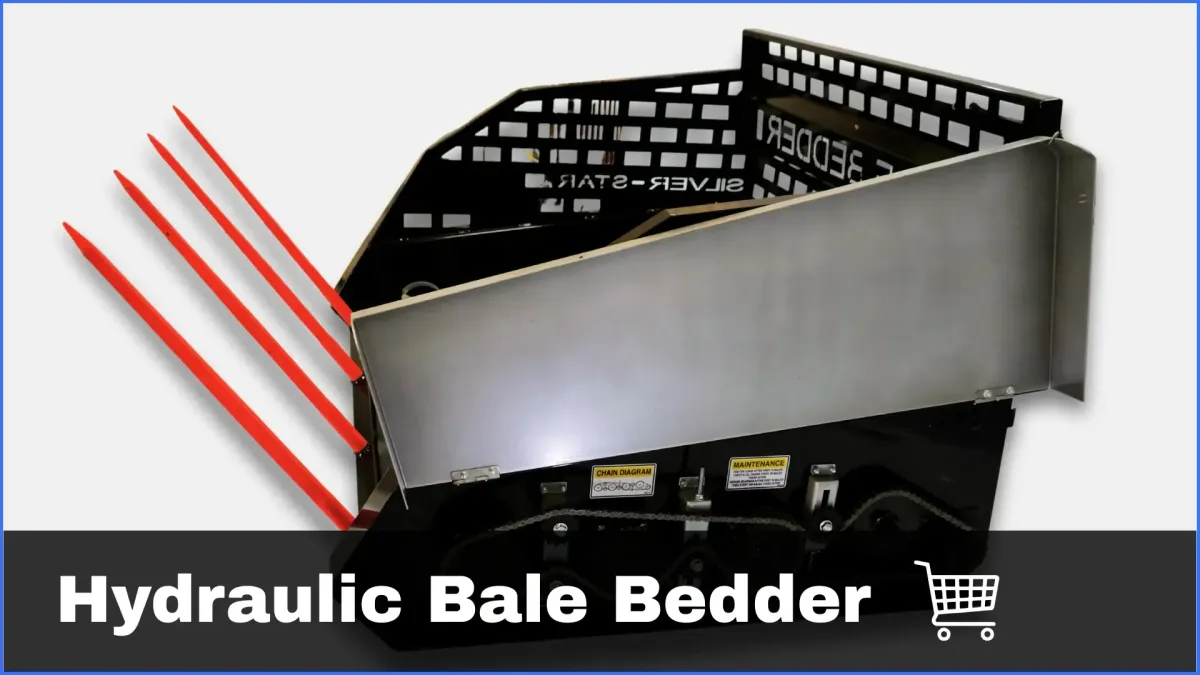
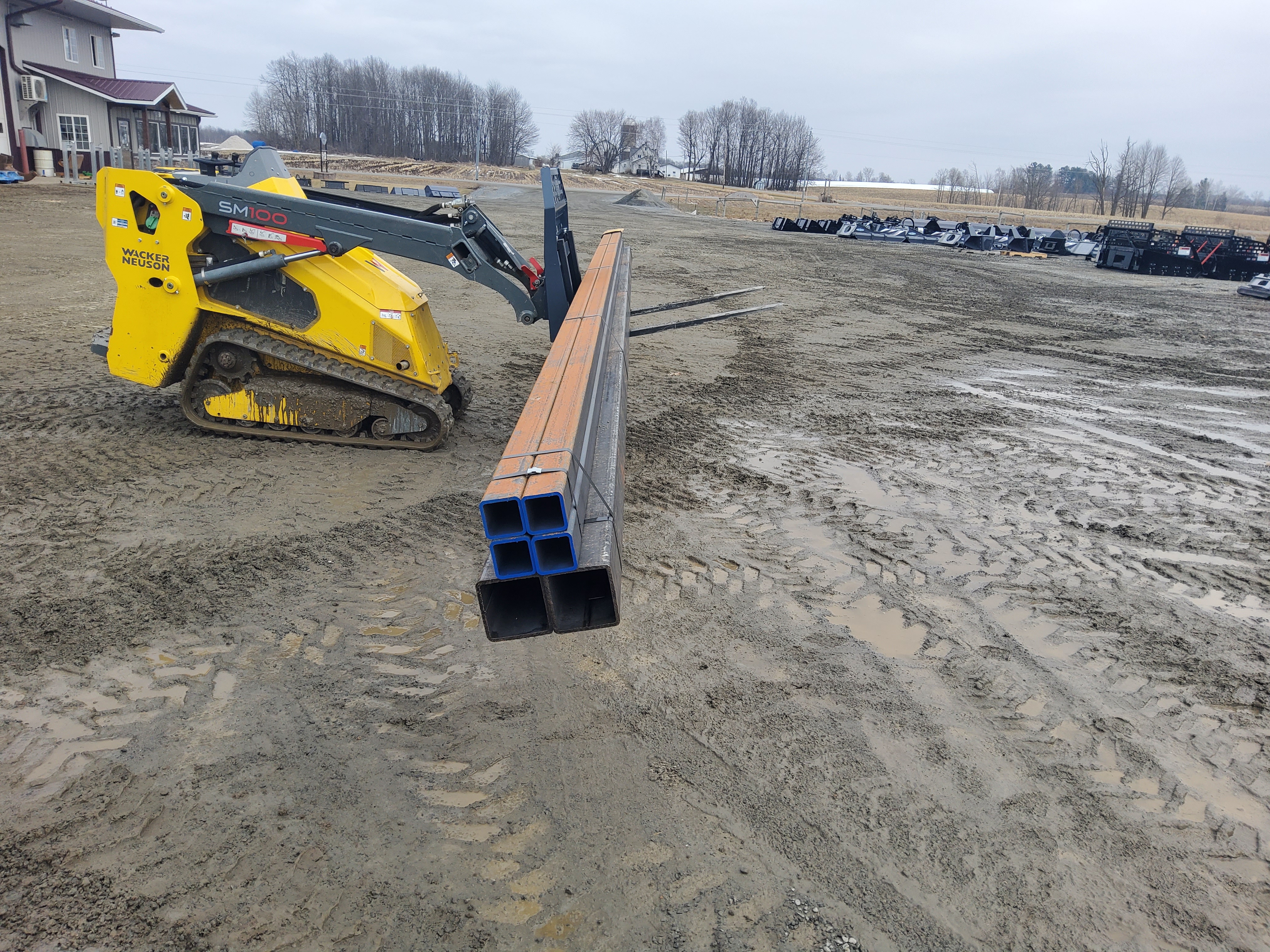
Mini attachments are scaled-down versions of standard skid steer tools, brush cutters, rock buckets, pallet forks, roto tillers, and more, built to run on compact and mini skid steer loaders narrow enough to fit through a standard gate or doorway.
Are mini attachments as durable as full-size attachments?
Yes, when they're built for it. Mini attachments actually take harder vibration loads than full-size units because tight-space work means constant starting, stopping, and direction changes with less machine mass to absorb the shock.
How much can a mini attachment save on small jobs?
Contractors report cutting labor time by up to 75% and labor cost by up to 80% compared to hand tools on small, tight-access jobs, with most buyers hitting break-even within 10-20 jobs.
Do mini attachments fit every mini skid steer?
Most mini attachments use a standard quick-attach mounting pattern that fits common compact and mini skid steer models. Always confirm your machine's hydraulic flow rate and mounting plate against the attachment's specs before buying.
Local Wisconsin skid-steer and metal-fabrication company from Withee, Wisconsin.