




Bale Bedding Attachments Explained: How Farmers Speed Up Livestock Bedding Operations
Bedding stalls or pens by hand isn't hard work in the sense of being complicated. It's hard in the sense that it never stops, twice a day, every day, for as long as you keep livestock.
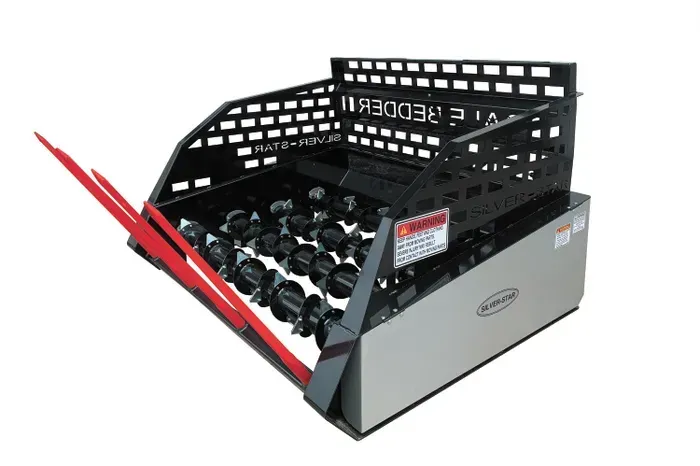
A bale bedding attachment is a skid steer implement that shreds and spreads a full bale of straw or hay in a couple of minutes, replacing the 20 to 40 minutes a crew typically spends hand-forking the same bale across stalls or a pen.
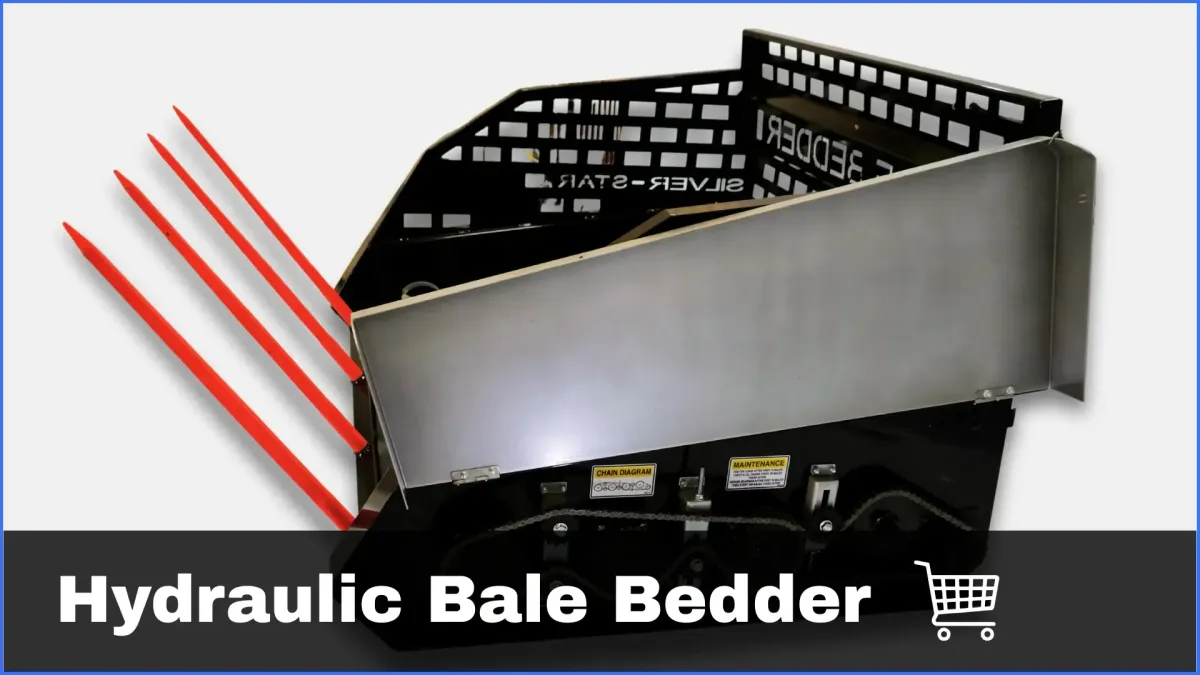
Standard versions cut and spread in one pass; hydraulic versions add remote control over spread rate and direction from inside the cab, so one operator can bed an entire barn without leaving the machine.
What a Bale Bedding Attachment Actually Does
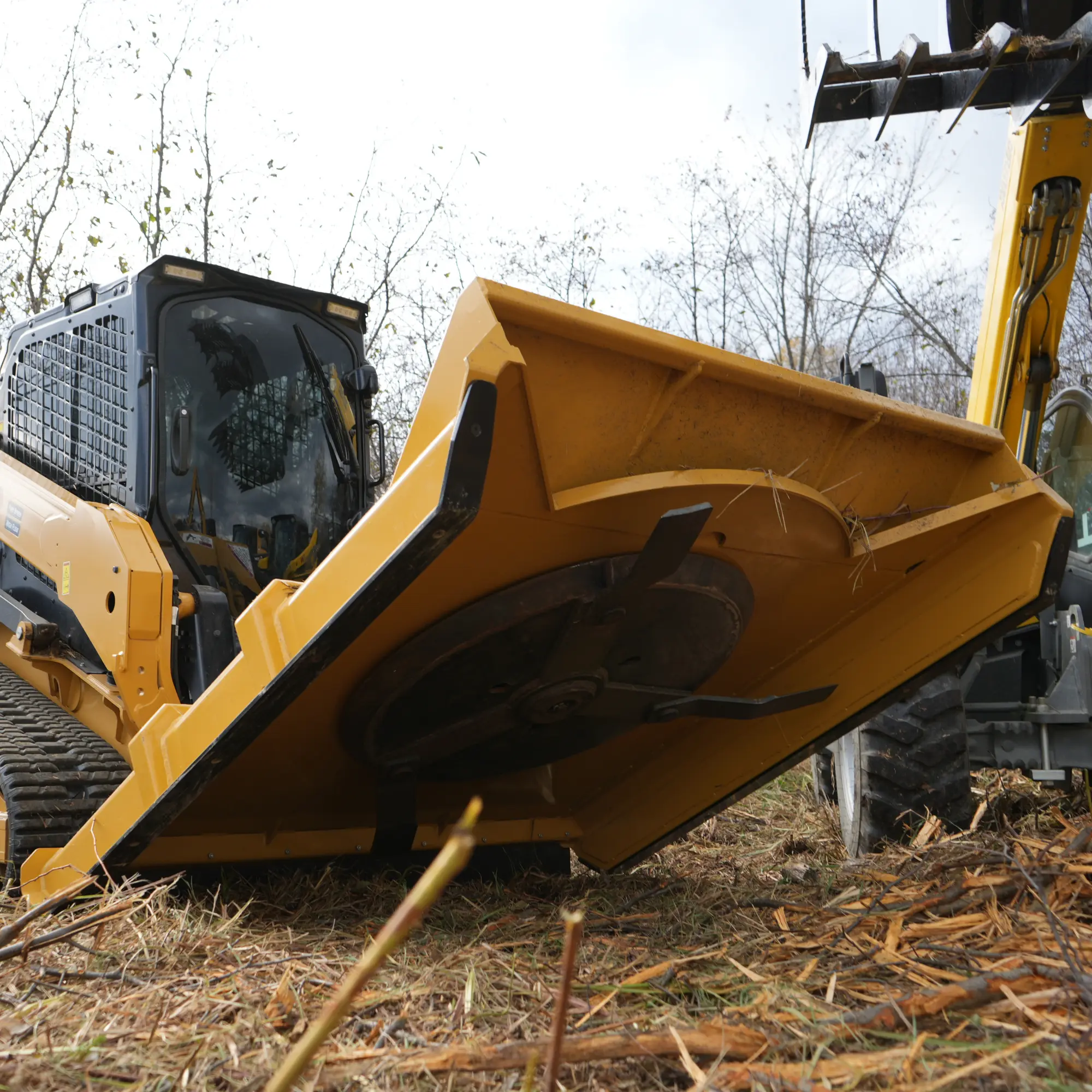
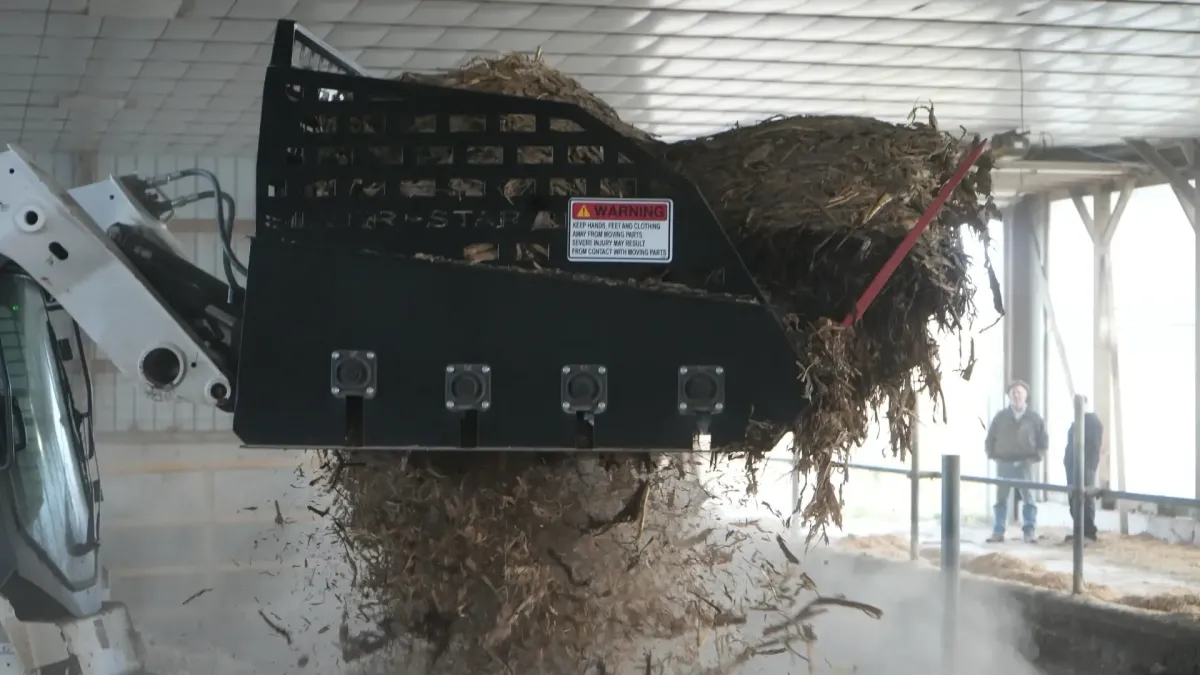
The attachment mounts to your skid steer's quick-attach plate like any other implement. You load a full bale into the hopper or cradle, and internal blades or a shredding mechanism break it apart as the unit spins, distributing the material out through a discharge chute or opening as you drive along the stalls or pen.
Standard bale bedders handle the core job: cut and spread.Hydraulic bale bedders add a level of control that matters more than it sounds like on paper, remote-adjustable spread width and direction let one operator bed a long row of stalls without repositioning the machine constantly or guessing how far the material is actually reaching. For a herd spread across multiple pens or a barn with uneven stall widths, that control difference shows up as real time saved every single day, not just on paper.
The mechanism itself is straightforward by design, and that's intentional. A bale bedder that requires frequent adjustment or careful operator technique defeats the purpose of a tool meant to speed up a repetitive daily chore. Load the bale, engage the shredding mechanism, and drive along the stalls at a steady pace, the attachment handles cutting the twine or netting resistance and breaking the compressed bale apart as it moves, so the operator's job is mostly steering and controlling speed rather than actively managing the shredding process itself.
Why This Category Exists in the First Place
This isn't a product built from a spec sheet in a design office. Silver Star's original bale bedder came directly out of a dairy farm that couldn't find a bedder on the market that actually held up to daily use, and built one with farm auction tools because nothing else solved the actual problem. That's worth knowing if you're comparing bedding attachments generally: a tool designed by people who've done the daily chore themselves tends to solve problems a purely engineered version misses, things like how the discharge chute clogs on wet straw, or how spread width needs to adjust for a narrower stall versus an open pen.
The Real Time Savings
Hand-bedding a single stall or feeding area with a full bale typically takes a crew 20 to 40 minutes: cutting twine, forking material out of the bale, walking it to the stall, and spreading it evenly by hand. Multiply that across a barn with a dozen or more stalls, done twice a day, and the hours add up fast, often two to four hours of labor daily just on bedding, before any other chores get done.
A bale bedding attachment cuts that same bale-to-stall process down to a couple of minutes per bale, most of the time spent driving between stalls rather than doing the physical work of breaking apart and spreading the material. For a mid-sized operation bedding a dozen stalls twice daily, that difference can mean recovering an hour or more of labor per day, time that goes back into other farm work instead of repetitive forking.
That labor savings compounds over a season in ways that are easy to underestimate. An hour a day recovered doesn't sound dramatic in isolation, but across a full year of twice-daily bedding, that's several hundred hours of labor freed up, equivalent to weeks of a full-time hand back on other work. For a farm running lean on labor, especially during calving, planting, or harvest when every hour matters more than usual, that's not a marginal convenience. It's the difference between bedding being a background chore and bedding competing directly with higher-priority seasonal work.
There's also a consistency argument that matters beyond raw time. Hand-bedding quality tends to drop off late in a long day, tired crews spread material less evenly, skip corners, or under-bed sections to save time and effort. An attachment doesn't get tired, so the tenth stall of the evening gets the same coverage as the first, which matters for animal comfort and bedding depth consistency in ways that are hard to quantify but real on any working farm.
Comparison: Hand-Bedding vs. a Bale Bedding Attachment
Common Objections, Addressed Honestly
"My herd is too small to justify the cost."If you're bedding one or two stalls occasionally, hand-forking may genuinely remain the more practical choice, the attachment's time savings scale with how often and how much bedding you're doing. For a small hobby operation with a handful of animals, the payback period stretches out considerably compared to a working dairy or livestock operation bedding daily across a full barn.
"I don't already own a skid steer, so this means buying two machines."That's a fair point, and it changes the math. If you're evaluating a bale bedder in isolation without an existing skid steer, the true cost comparison includes the machine itself, not just the attachment. For farms that already run a skid steer for other chores, the attachment cost alone is what matters, and that's a much easier number to justify against daily labor savings.
"Hydraulic versions seem like an unnecessary upgrade over standard."For a single, uniform pen, that's often true, a standard bedder does the job fine. The hydraulic version earns its cost specifically on operations with multiple stall widths or pens spread across a barn, where remote spread control means not having to reposition or guess at coverage from the cab.
Ready to Cut Your Bedding Time Down?
If bedding is eating two or more hours out of your day, every day, a bale bedder is one of the fastest-payback attachments in the entire skid steer lineup. Browse Silver Star's standard bale bedder or the hydraulic bale bedder to compare which fits your barn layout, or read the full buyer's guide to skid steer attachments to see how bedding equipment fits alongside everything else a skid steer can do on a working farm.
Frequently Asked Questions
How long does a bale bedding attachment actually save per day?
For an operation bedding a dozen or more stalls twice daily, farmers commonly report recovering one to two hours of labor per day compared to hand-forking the same bales, time that shifts to other chores instead.
Do I need the hydraulic version, or is standard enough?
Standard bedders handle single, uniform pens well. Hydraulic versions earn their extra cost on operations with multiple stall widths or barns where remote spread control saves repositioning the machine constantly.
Can a bale bedding attachment handle both straw and hay bales?
Most bale bedders are built to shred and spread both, though very wet or densely packed bales can be harder on any shredding mechanism regardless of brand, worth checking a specific model's rated capacity if your bales run unusually dense.
Is a bale bedding attachment worth it for a small hobby farm?
It depends on frequency. If bedding is a daily or near-daily chore across multiple stalls, the time savings add up quickly. For occasional bedding on one or two stalls, hand-forking may remain the more practical choice until the operation scales up.