




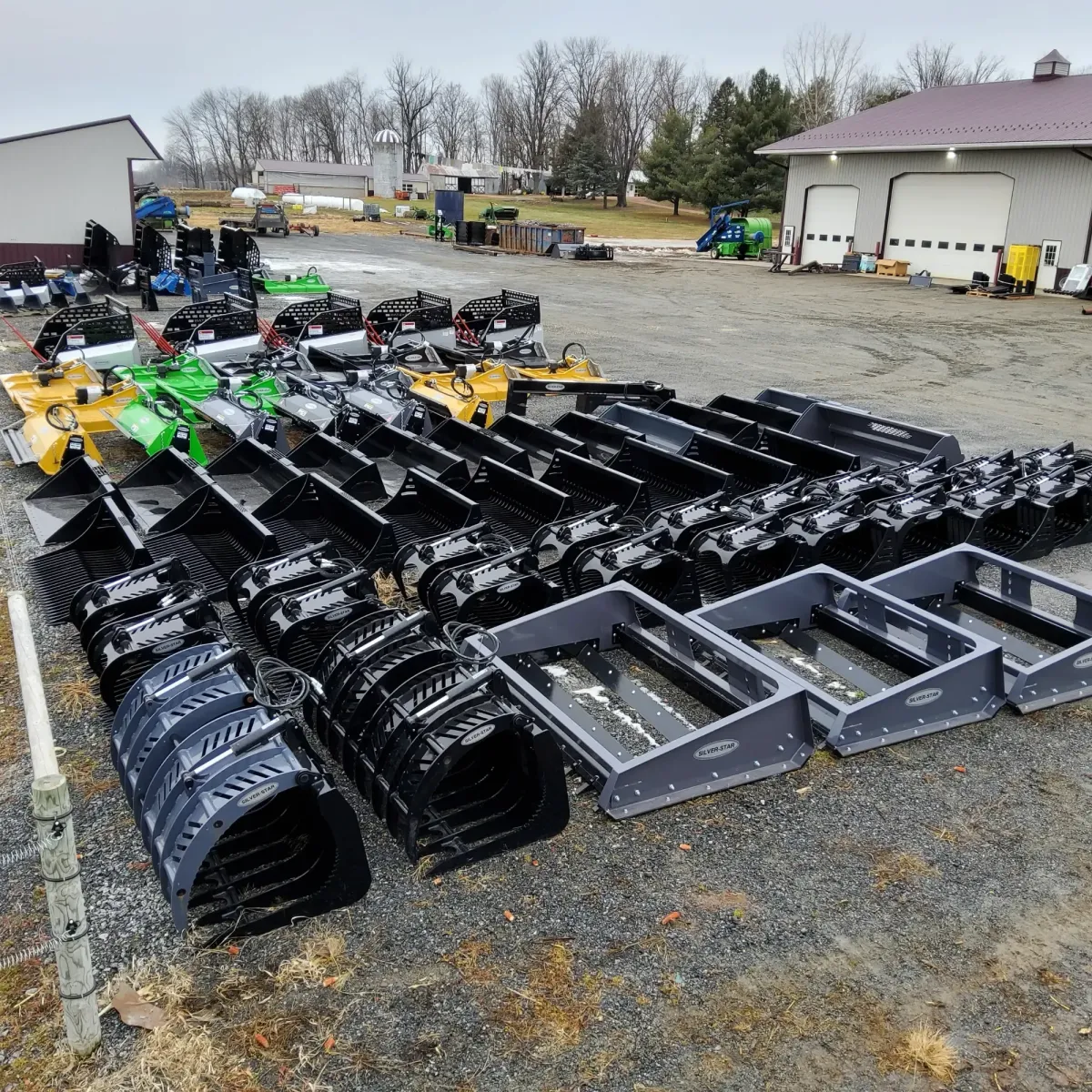
Comprehensive Guide to Skid Steer Attachments: Types, Uses, and Custom Fabrication
Buy a skid steer and you've bought a platform, not a tool. The machine itself just moves and lifts. Everything it's actually good for depends on the skid steer attachments bolted to the front of it. That's the part most first-time buyers underestimate, and it's the part that separates operators who get years of reliable production out of their equipment from the ones who are constantly renting, returning, or repairing something that never quite fit the job.
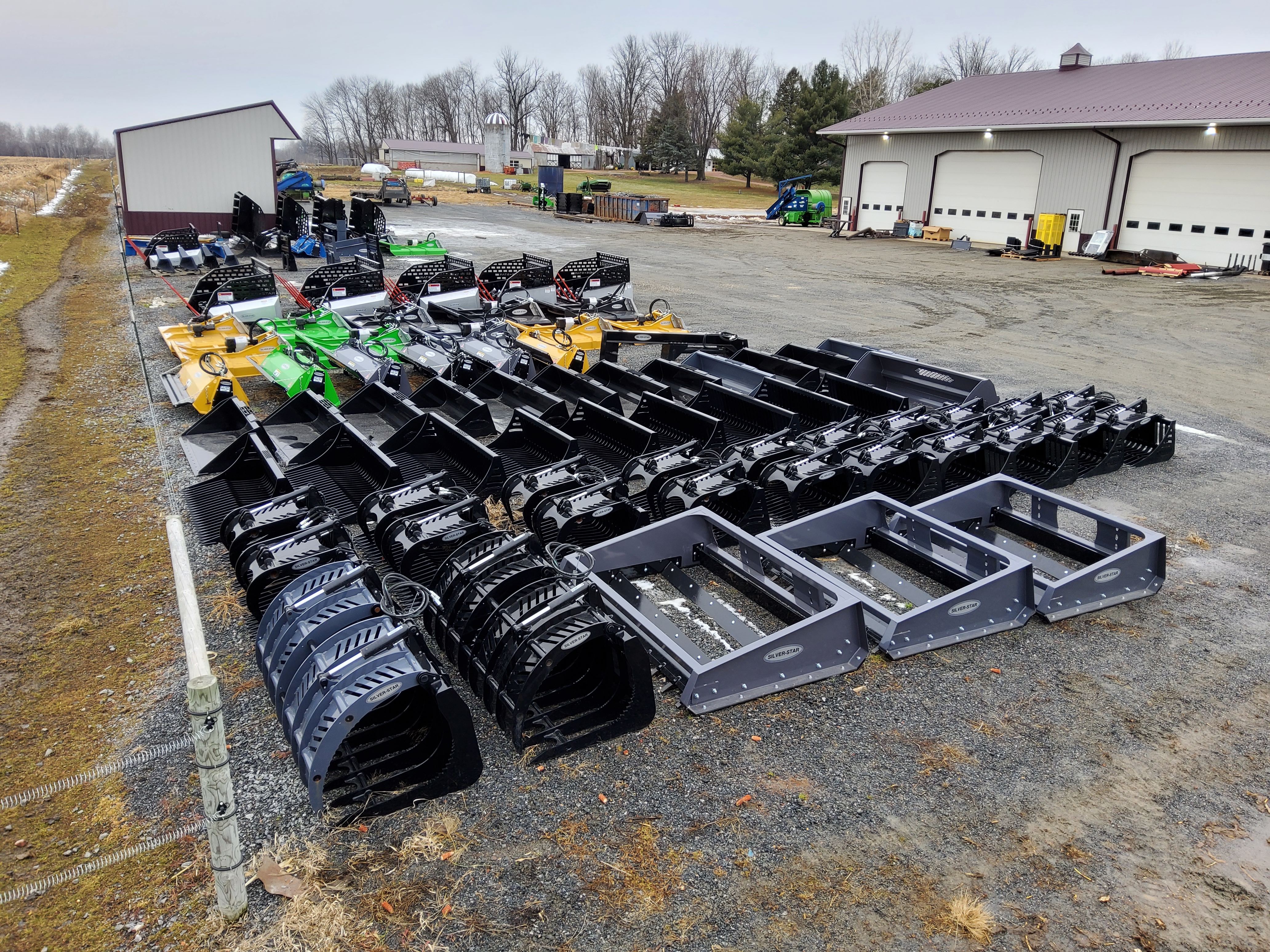
The attachment market has grown large enough that almost every task has a purpose-built tool now: brush clearing, bale handling, rock removal, driveway grading, log splitting, and dozens of niche jobs in between. That's good news for buyers, but it also means the research burden has shifted. It's no longer "does an attachment exist for this," it's "which attachment, from which manufacturer, built to what standard, and is it actually the right fit for my machine and my ground conditions."
This guide covers the full landscape of skid steer attachments: what each type is built to do, what separates a durable attachment from one that'll cost you more in downtime than it saved in sticker price, and (because not every job fits neatly into a catalog page) when it makes more sense to have something built for your exact machine, your exact ground conditions, and your exact use case instead.
What to Expect From This Guide
If you've read a basic introduction to skid steer attachments already, you know the broad categories. This guide goes a level deeper: how to judge attachment quality before you buy, how to match an attachment to your machine's hydraulic output, and (the part most buyer's guides skip entirely) what your options actually are when the full attachment line up still doesn't have exactly what your job requires.
Land Clearing and Brush Management Attachments
If you're clearing pasture, fence lines, or overgrown acreage, this is where most skid steer owners start.
Brush Cutters
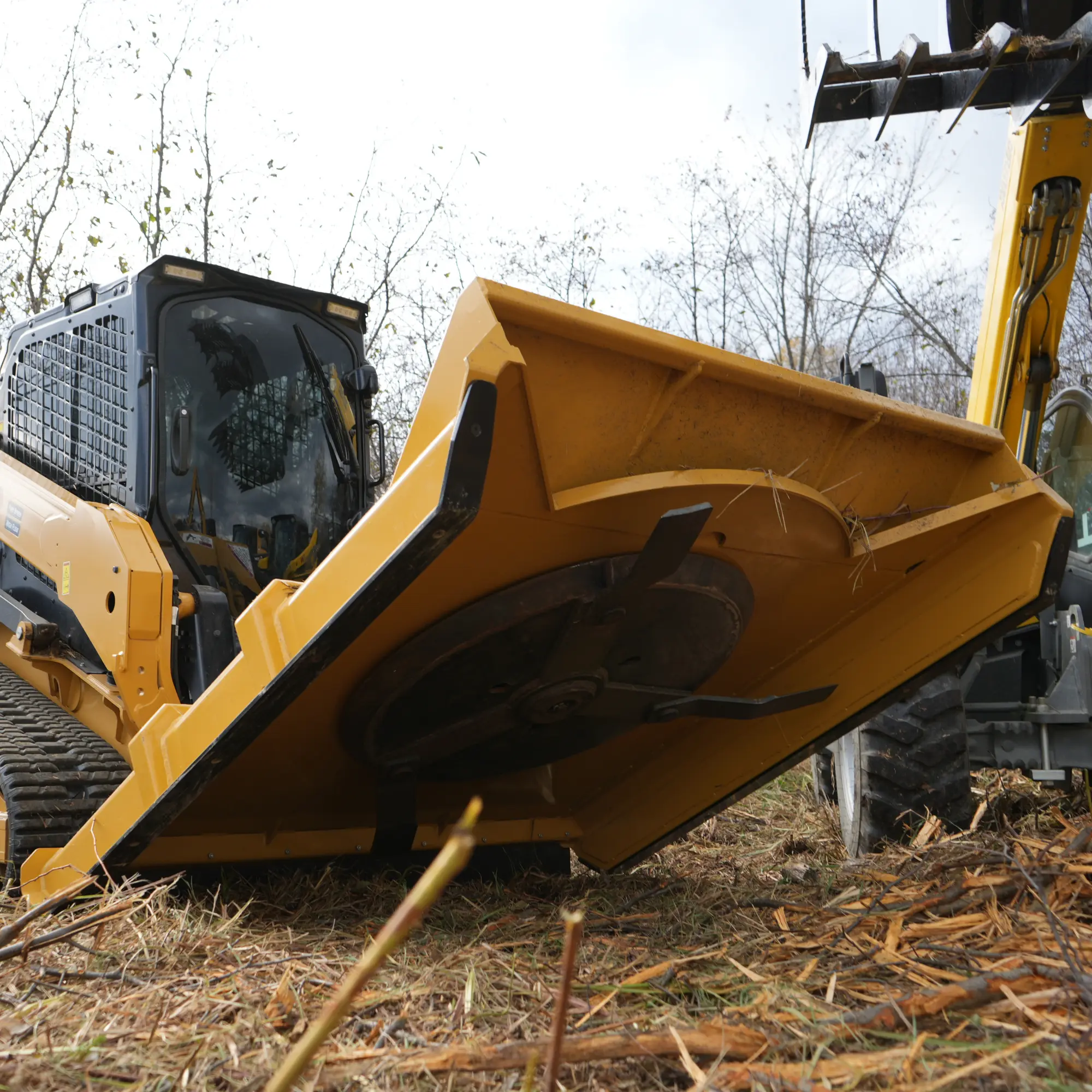
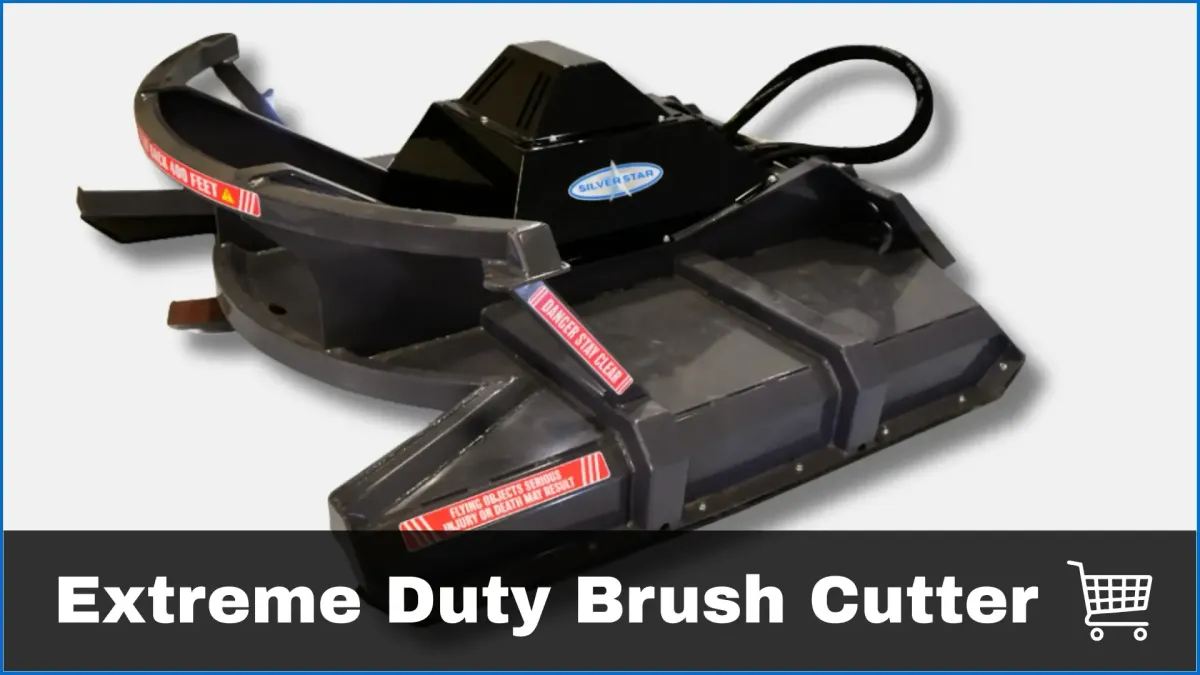
Heavy-duty brush cutters use a rotating blade assembly to shred brush, saplings, and light timber down to grade in a single pass. That's a job that would otherwise mean a chainsaw crew and a burn pile. Single-rotor units handle general brush; twin-rotor and extreme-duty models step up to small trees and stump-level material, and the difference matters more than it sounds like on paper. A single-rotor cutter that bogs down in dense growth doesn't just slow the job: it burns hydraulic fluid temperature and operator patience in roughly equal measure.
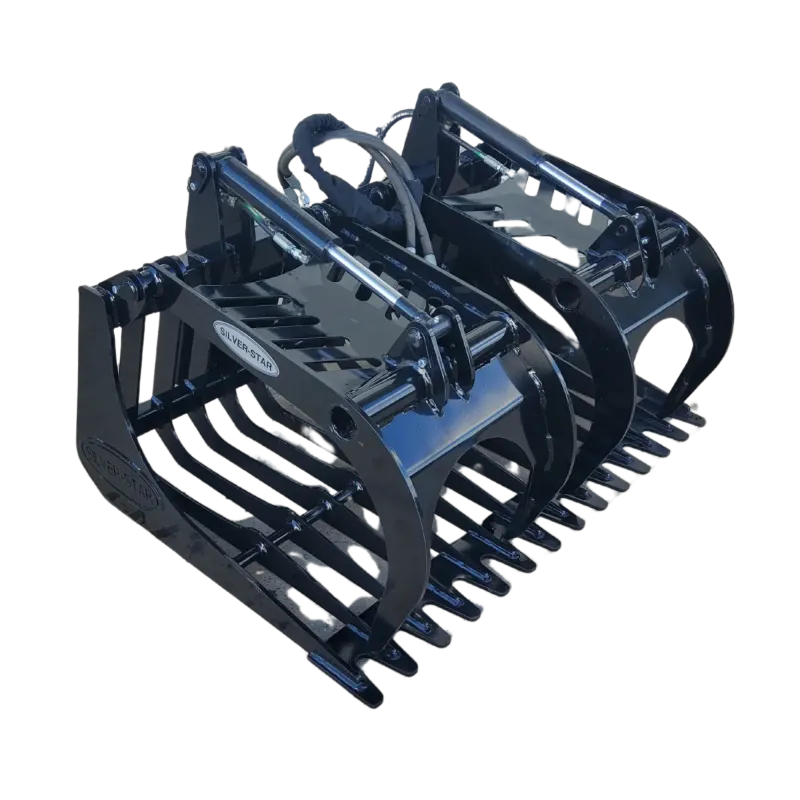
Brush Grapples
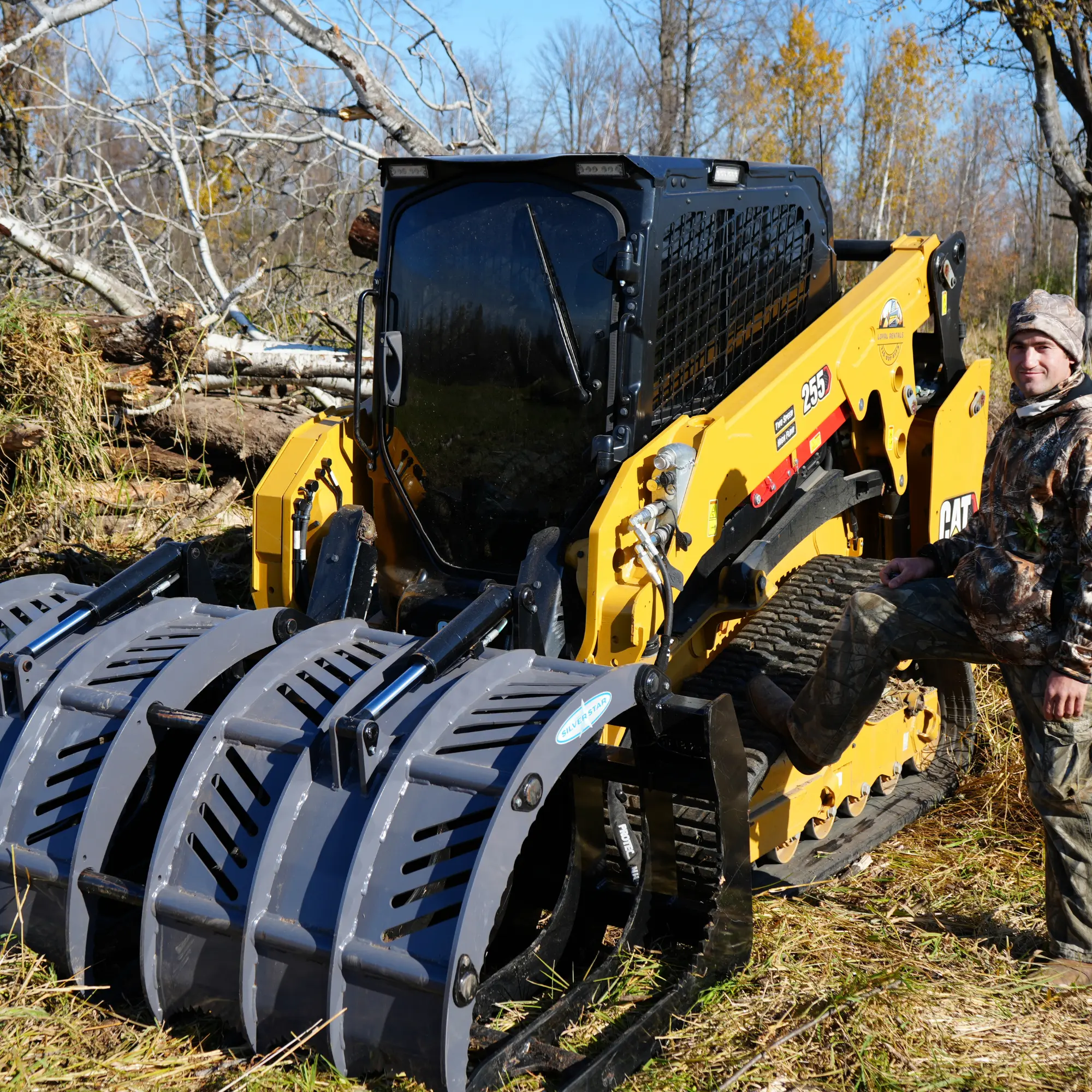
Brush grapples solve a different problem: not cutting vegetation, but picking it up and moving it. Downed timber, root balls, storm debris (anything too bulky or awkward for a standard bucket) gets a grapple instead. Most serious land-clearing operations end up owning both, since cutting and hauling debris are two separate steps in the same job, and trying to make one attachment do both usually means doing neither one well.
Rock and Material Handling Attachments
Rock Buckets
Standard buckets move dirt fine until they hit rock, and that's where a purpose-built rock bucket earns its keep. Tighter tine spacing and reinforced cutting edges let rocks and debris sift out while material stays contained: one clean pass instead of the double-digging cycle that wears out a standard bucket's edges within a season. The tine spacing is the detail worth paying attention to: too wide and fines pass through along with rock (defeating the purpose), too tight and the bucket clogs and loses the efficiency advantage entirely.
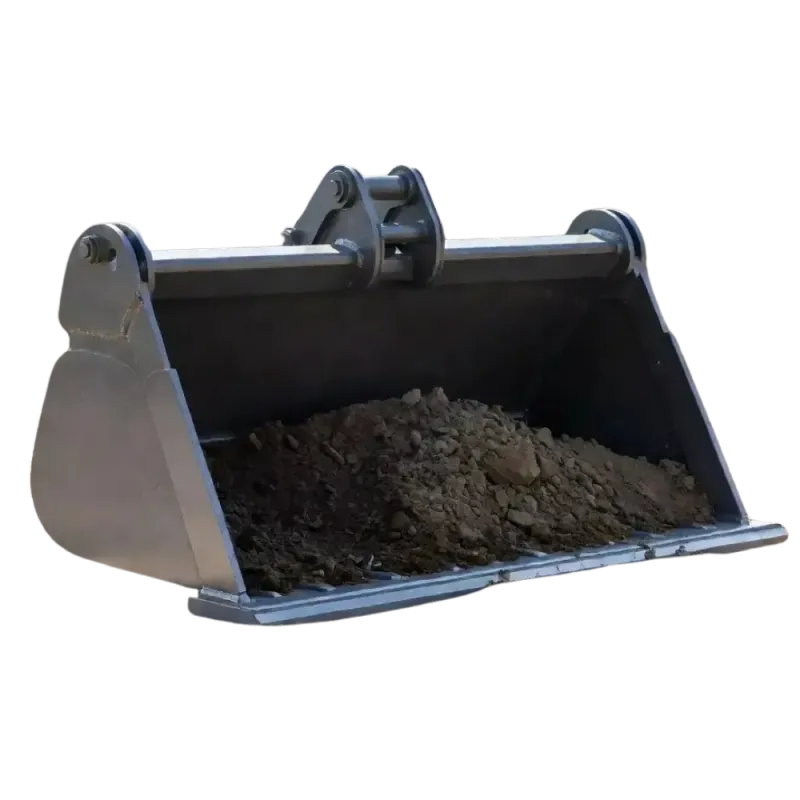
Dirt and Material Buckets
Dirt buckets and material buckets round out this category for general-purpose loading, grading, and site cleanup where rock isn't the primary obstacle. If your ground conditions are mostly clean soil with occasional rock, a standard bucket with a reinforced edge may outperform a full rock bucket on cost-per-job. That's exactly the kind of judgment call worth talking through before buying rather than after.
Bale Processing and Agricultural Attachments
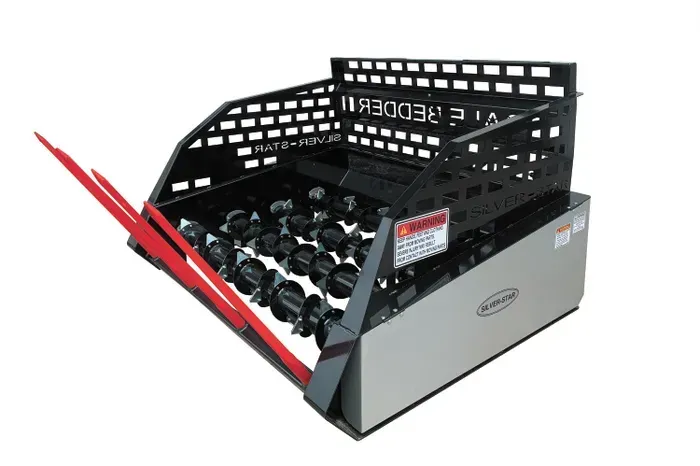
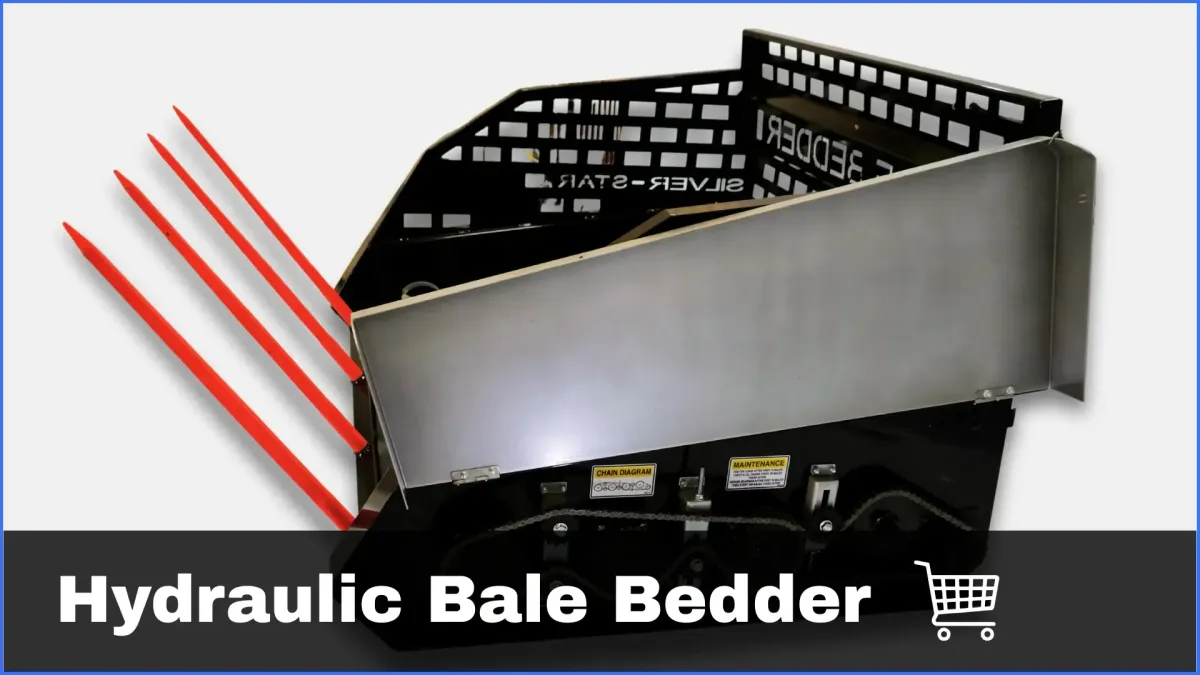
For livestock operations, bale handling attachments aren't a convenience: they're the difference between an efficient bedding routine and a full morning lost to manual labor. Abale bedder shreds and spreads bales in a fraction of the time hand-forking takes, and hydraulic versions add remote control over spread rate and direction without leaving the cab. That's a meaningful difference on a cold morning doing the same run twice a day.
This is also the category with the deepest founder-level expertise behind it in Silver Star's own lineup: the original product came out of a dairy farm that couldn't find a bedder that actually held up to daily use, built with farm auction tools because nothing on the market solved the actual problem. That's worth knowing when you're evaluating bale equipment generally: attachments designed by people who've done the daily chore themselves tend to hold up differently than ones designed purely from a spec sheet.
Ground Prep and Driveway Maintenance Attachments
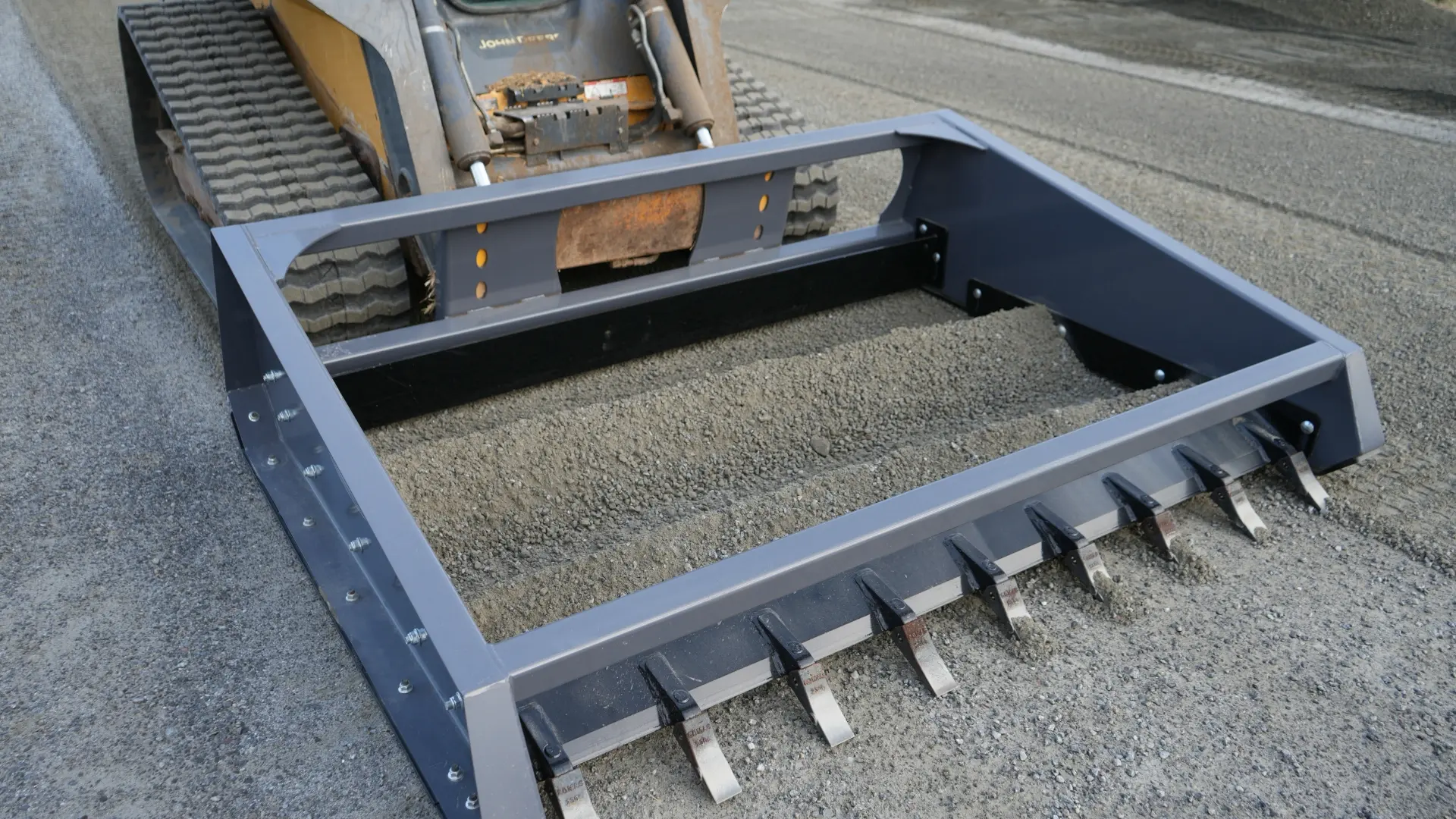
Gravel driveways, access roads, and unpaved lots need periodic regrading to stay usable, and a dedicateddriveway graderdoes in one pass what a standard bucket takes several passes to approximate. The grading blade redistributes surface material evenly instead of scraping it into uneven ridges, which matters as much for rural homeowners maintaining a quarter-mile driveway as it does for contractors grading a job site before paving.
Log Splitting Attachments
Skid steer-mounted wood splitters bring hydraulic splitting force to wherever the wood already is, instead of hauling rounds back to a stationary splitter. For firewood production or land-clearing operations generating their own timber, this eliminates an entire step in the workflow: cut, split, and stack without ever changing machines.
Mini Attachments for Tight-Access Work
Not every job site has room for a full-size machine. Residential lots, fenced yards, and HOA properties often call for mini skid steer attachments instead: scaled-down versions of the same brush cutters, rock buckets, and pallet forks built for compact skid steers narrow enough to fit through a standard gate. The tradeoff is capacity for access: a mini attachment won't clear ground as fast as a full-size one, but it can reach ground a full-size machine can't touch at all.
When Off-the-Shelf Isn't Enough: Custom Fabrication
Here's what most attachment guides don't tell you: the catalog doesn't cover everything. Unusual mounting requirements, a machine from a manufacturer most attachment makers don't build for, a job with ground conditions that chew through standard steel gauges, a repair part for equipment nobody stocks anymore: these situations come up more often than the industry likes to admit, and "buy the closest catalog match and hope" is not actually a solution.
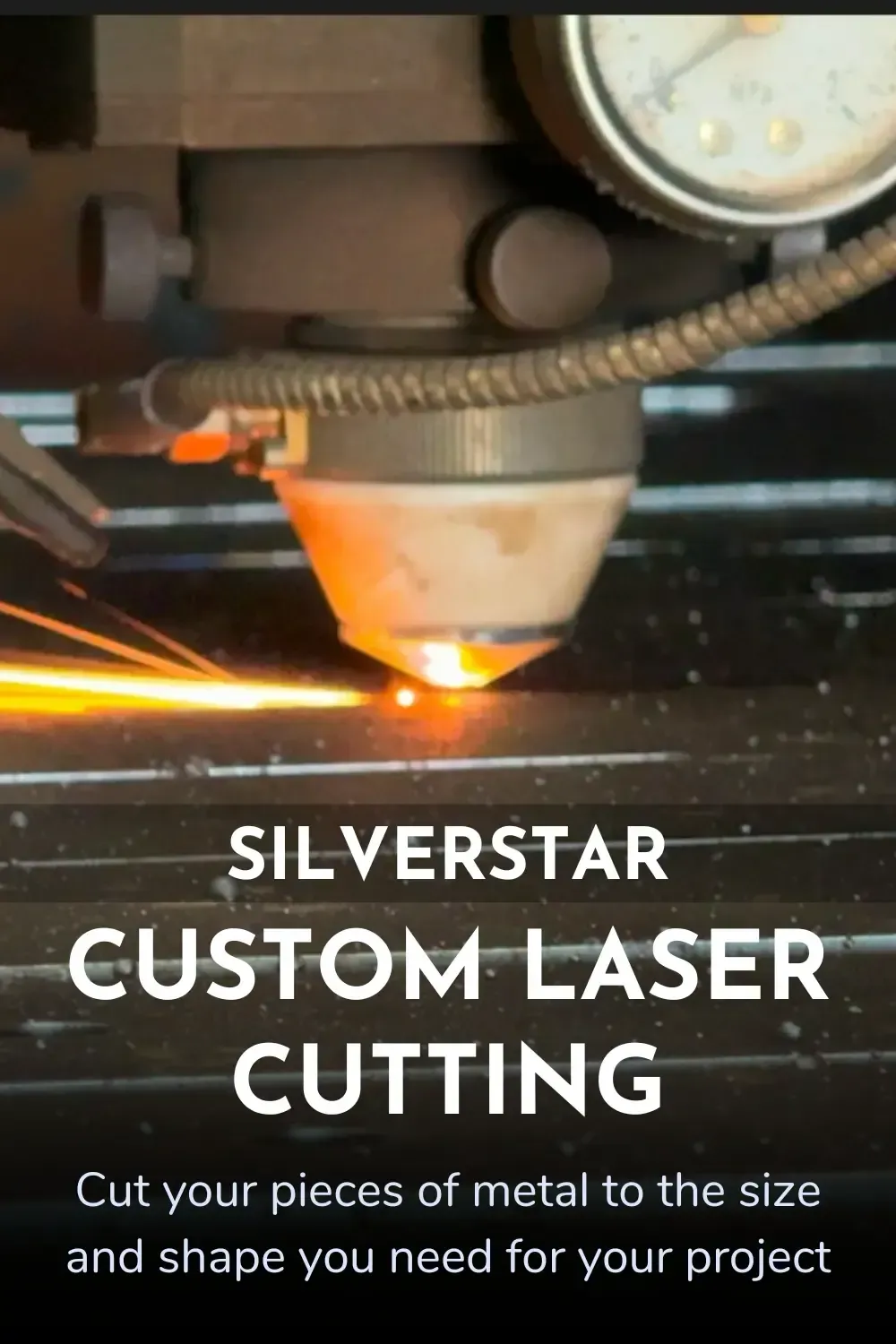
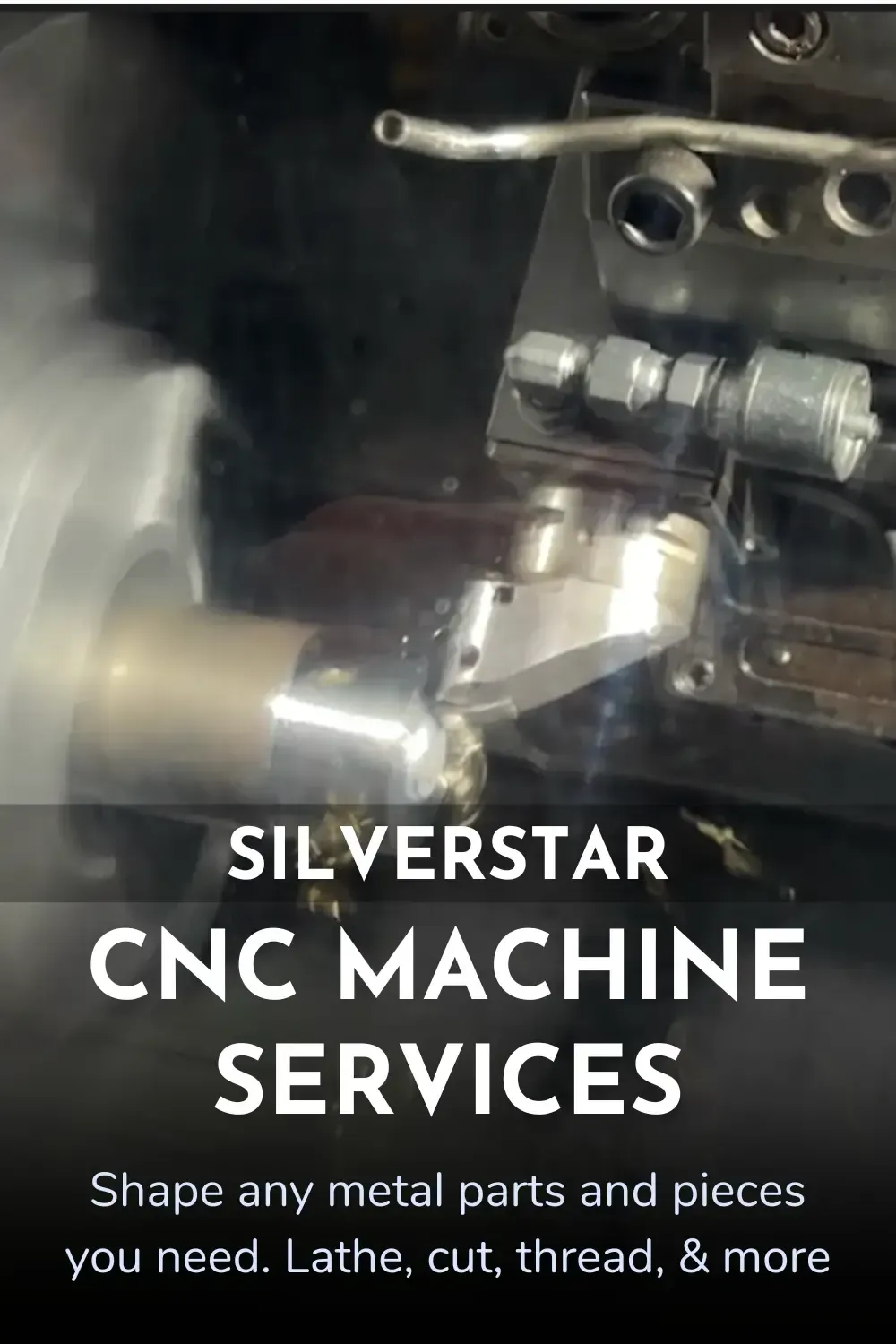
This is where custom CNC machining and precision laser cutting change the equation. Instead of adapting your job to fit an off-the-shelf attachment, a custom build starts from your machine's specs, your application, and your material conditions, and works backward to a design that actually fits. That might mean a modified mounting plate, a reinforced cutting edge in a steel grade the standard product doesn't offer, or a part built from scratch because the original manufacturer discontinued it years ago.
This isn't a niche service tacked onto a product catalog. It's the same in-house fabrication capability used to build the standard product line in the first place. The practical upside for buyers: a custom mounting adapter, a reinforced wear plate, or a one-off repair part goes through the same CNC and laser-cutting process as a catalog attachment, not a separate, slower, lower-priority workflow. For contractors running older or less common equipment, or working ground conditions that chew through standard-gauge steel faster than expected, that in-house capability is often the difference between solving the problem once and re-solving it every season.
What to Look for in Quality
Steel grade is the single biggest quality signal across skid steer attachments, and it's usually the first thing manufacturers cut corners on to hit a lower price point. AR400 and T1 steel resist wear and impact far longer than the mild steel used in budget imports. The difference shows up as months of extra service life on cutting edges, tines, and blades that take direct abuse every time they're used.
Beyond material, look at where the welds are and how the frame is built. Single-piece, laser-cut construction has fewer seams to crack under vibration than multi-piece bolted assemblies, and fewer seams means fewer places for a crack to start after a season of hard use. And don't discount who's actually building the thing: attachments designed by people who've used them in the field (not just engineered them on paper) tend to solve problems you won't notice until you're the one running the machine.
Support matters just as much once the attachment is in service. Ask what happens when a wear part needs replacing three years in: is it a standard part a dealer stocks, or a proprietary component that means downtime while you wait on a special order? American-made attachments built in-house generally have a shorter path to parts and repairs than imported units routed through multiple distributors, simply because the people who built it are the same people who can fix or rebuild it.
How to Choose the Right Skid Steer Attachment for Your Machine
Match the attachment to your skid steer's actual specs, not just its size class. Two numbers matter most:
Hydraulic flow rate (GPM):Attachments with rotating components (brush cutters, some grapples) need a minimum flow rate to run at full power. Undersized flow means a cutter that stalls in heavy material regardless of how good the blade is.
Rated operating capacity (ROC):Buckets and forks have weight limits tied to your machine's lift capacity. Overloading a light-frame skid steer with a heavy-duty attachment strains the machine, not just the attachment.
Quick-attach plate compatibility is the other check: universal mount patterns cover most machines, but older or specialty equipment sometimes needs a modified plate, which is a common, low-cost custom fabrication request rather than a reason to rule out an attachment entirely.
Weight class matters too, particularly for mini and compact skid steers. A mini attachment sized for a compact machine won't perform the same job on a full-size loader, and running an oversized attachment on an underpowered machine strains hydraulics that weren't built for the load. When in doubt, match the attachment's rated weight class to your machine's operating capacity first, then evaluate features second. A perfectly-specced attachment that's the wrong size class for your machine isn't actually the right attachment.
Key Questions to Ask Before You Buy
What steel grade is the cutting edge or wear surface made from?
What's the minimum hydraulic flow rate this attachment needs to perform at full spec?
Is this attachment rated for my skid steer's operating capacity, or am I sizing up/down from the "standard" fit?
If this doesn't fit my machine or my job exactly, is a custom modification available, and from whom?
What does support look like if a part wears out or breaks in year three, not year one?
Final Recommendations by Use Case
The right skid steer attachments depend less on your industry and more on what you actually do with your machine week to week:
Farmers and Ranchers
Start with a bale bedder for daily livestock work, and add a brush cutter or grapple if fence line and pasture maintenance is a recurring task rather than a one-time clearing job. If your operation runs older equipment that's hard to find standard attachments for, ask about custom mounting compatibility before assuming you're stuck renting.
Landscaping and Land-Clearing Contractors
A heavy-duty or extreme-duty brush cutter plus a grapple covers most contract work; add a rock bucket if job sites regularly include rocky or debris-heavy ground. Contractors billing by the job should weigh attachment durability against billable hours lost to downtime. A cheaper attachment that fails mid-contract rarely turns out to be the cheaper choice by the time the job is finished.
Construction Contractors
Driveway graders and rock buckets handle most site-prep work; if jobs involve non-standard machines or tight specs, get a custom fabrication conversation started before the job is scheduled, not after equipment shows up short and the crew is standing around waiting on a part.
Rural Property Owners
A single versatile attachment (often a bucket or grader) covers most one-time or seasonal needs without justifying a full attachment library. If you're maintaining a long driveway or clearing a modest lot, one well-chosen attachment usually outperforms owning several mediocre ones.
Ready to Find the Right Fit?
Browse the full attachment line upto see every standard skid steer attachment built for durability and American-made steel. If your machine, job site, or application doesn't fit the standard catalog, start a custom fabrication conversation instead. It's often a faster path to the right tool than trying to make an approximate fit work.
Frequently Asked Questions About Skid Steer Attachments
How do I know if I need an off-the-shelf attachment or a custom build?
If your machine uses a standard quick-attach plate and your job matches a common use case, an off-the-shelf attachment almost always fits. Custom fabrication makes sense for non-standard mounts, unusual ground conditions, or discontinued parts.
What's the most important quality signal when comparing attachments?
Steel grade. AR400 and T1 steel hold up to wear and impact far longer than the mild steel used in budget imports.
Do all skid steer attachments fit all skid steers?
Most use a universal quick-attach mounting pattern, but always confirm hydraulic flow rate (GPM) and rated operating capacity against your specific machine before buying.