




Home / Blog /
Skid Steer Log Splitter vs. Standalone Splitter

Skid Steer Log Splitter vs. Standalone Splitter: Which Is Right for Your Property?

October 01, 2026•7 min read

A pile of rounds doesn't split itself, and whether you reach for a skid steer attachment or a standalone splitter usually comes down to one question before any other: do you already own a skid steer, or would buying one just for this job be overkill?

If you already own a skid steer for other property work, a skid steer log splitter attachment is usually the better choice, it brings splitting force to wherever the wood already is, skips the fuel and maintenance of a second engine, and adds a capability to a machine you're already running.

If you don't own a skid steer and firewood production is your only need, a standalone splitter is almost always the more practical and affordable choice, since buying a skid steer solely to run a splitter attachment rarely makes financial sense.

Quick Verdict

  • Choose a skid steer attachment if:you already run a skid steer for other work, and you'd rather bring splitting force to scattered rounds than haul wood to a fixed location.

  • Choose a standalone splitter if:firewood is your primary or only need, you don't already own a skid steer, or you want dedicated splitting power without tying up a multi-purpose machine.

  • It's close if:you're clearing land regularly and generating your own timber, in that case the skid steer is often already on-site doing the clearing work, making the attachment the more natural add-on.

Mobility: Bringing the Splitter to the Wood, or the Wood to the Splitter
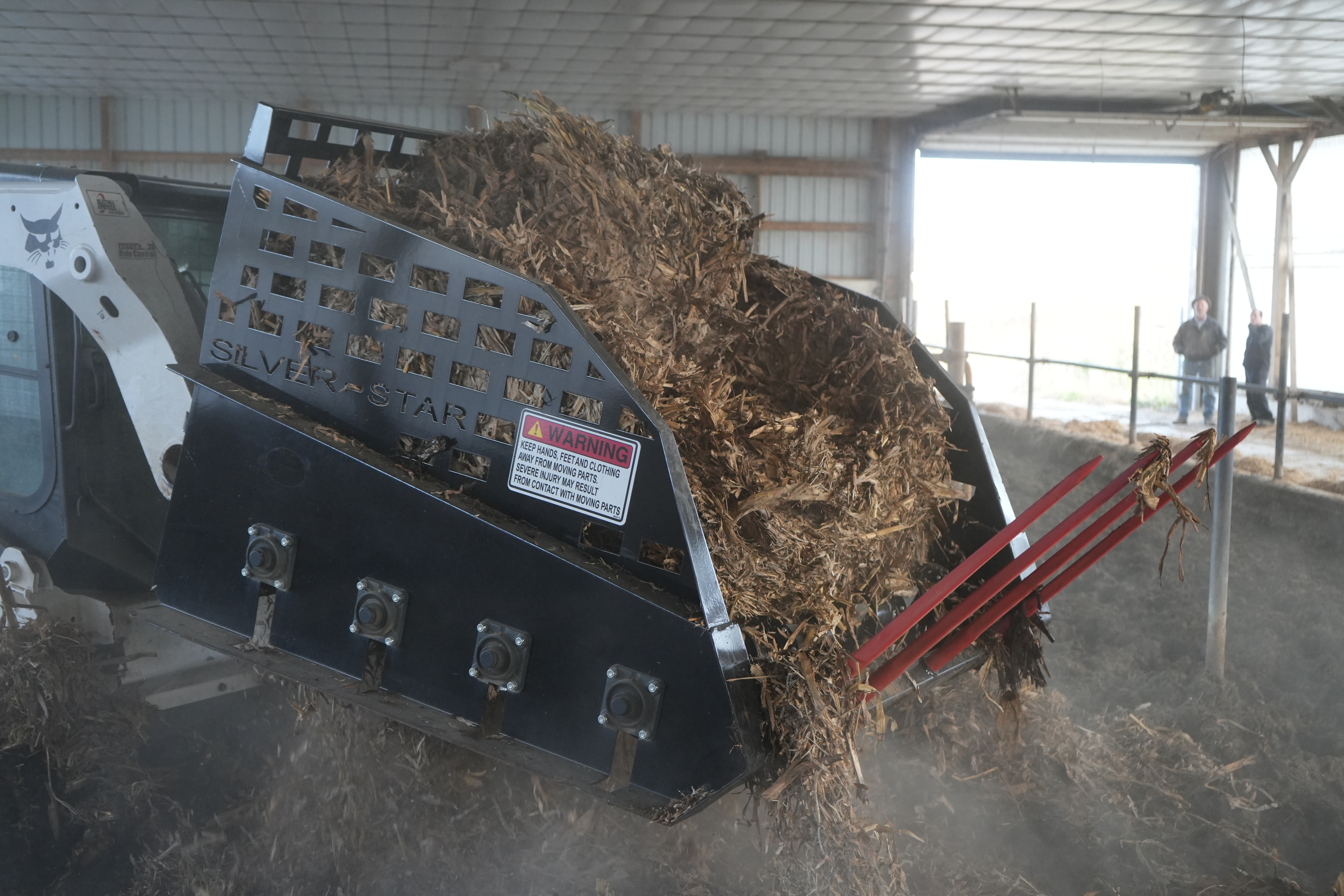
wood collected stripper

This is the single biggest practical difference between the two, and it's the one most comparisons skip past. A skid steer log splitter attachment moves with the machine. If you're clearing a fence line, working through a windfall, or processing timber scattered across acreage, you drive the splitter to each pile rather than loading and hauling rounds back to a fixed location.

A standalone splitter, even a portable towable model, is stationary once it's set up for a session. That means every round gets carried, rolled, or driven to the splitter rather than the other way around. For a small stack near the house, that's a minor inconvenience. For rounds scattered across several acres of land-clearing work, it becomes real added labor and time that a skid steer attachment simply skips by going to the material instead of the other way around.

Consider a property owner clearing a half-acre of storm-damaged timber. With a standalone splitter, every fallen tree needs to be cut into rounds, then those rounds hauled, often by hand or with a separate trailer, back to wherever the splitter is set up. With askid steer log splitter attachment, the machine drives directly to each downed tree, splits on the spot, and moves to the next one. The difference isn't just convenience, it's the elimination of an entire hauling step that a stationary splitter makes unavoidable.

Splitting Force and Cycle Speed

Standalone splitters, particularly gas-powered towable models, are purpose-built for one job and often deliver strong splitting force (20 to 30+ tons on higher-end consumer models) with a fast, consistent cycle time since the entire machine is engineered around that single function.

Skid steer attachments draw hydraulic power from the host machine rather than a dedicated engine, so splitting force and cycle time depend partly on your skid steer's own hydraulic output. A high-flow skid steer running a well-matched splitter attachment performs comparably to a strong standalone unit; a lower-flow machine may see slower cycle times on particularly large or dense rounds. This is worth checking against your specific skid steer's hydraulic specs before assuming performance parity with a dedicated standalone unit.

It's also worth noting that cycle speed on a standalone splitter tends to stay consistent regardless of what else is happening on the property that day, since the machine has no other job to do. A skid steer attachment shares the host machine's hydraulic system, which means splitting performance is generally steady but won't exceed what the base machine is rated to deliver, there's no equivalent to upgrading a standalone splitter's engine if you find yourself wanting more force down the line.

Cost: Upfront Price and What You Already Own

A standalone splitter is typically the lower total-cost option for someone without an existing skid steer, since the entire machine cost goes toward one function. A quality towable gas splitter represents a complete, self-contained investment with no other equipment required to operate it.

A skid steer log splitter attachment costs less than a standalone splitter in isolation, since it's only the attachment, not a full machine with its own engine. But that comparison only makes sense if you already own the skid steer. Buying a skid steer solely to run a splitter attachment costs dramatically more than buying a standalone unit outright, so this dimension really only favors the attachment for operations that already have the base machine doing other work.

Setup, Storage, and Year-Round Use

A standalone splitter, once positioned, stays in one place for the duration of a splitting session, which some operators prefer for a dedicated, repeatable workflow: same spot, same setup, every time. It also needs its own storage space and its own maintenance schedule independent of any other equipment.

A skid steer attachment stores like any other implement, on a rack or in a shed, and only needs attention when it's actually mounted and in use. For an operation already maintaining a skid steer and a rotation of attachments, adding a splitter to that existing routine is simpler than managing an entirely separate piece of equipment with its own engine, fuel, and service schedule.

There's a seasonal-use angle worth considering too. Firewood production tends to cluster in specific windows, late summer through fall for most operations preparing for winter heating. A standalone splitter sits unused the rest of the year, taking up storage space and occasionally needing fuel stabilizer or engine upkeep just to stay ready for its one annual job. A skid steer attachment, by contrast, sits alongside your other attachments and only asks for basic upkeep (grease points, hydraulic connections) regardless of how often it's actually splitting wood, since the host machine is presumably getting regular use for other tasks year-round anyway.

Skid Steer Log Splitter vs. Standalone Splitter: Side-by-Side Comparison

Custom HTML/CSS/JavaScript

Who Should Choose Which

If you already run a skid steer for land clearing, general property work, or attachments like a brush cutter or grapple, adding a log splitter attachment is a natural extension. You're not paying for a second machine, and the attachment goes wherever the skid steer already goes, which matters most if your firewood comes from scattered land-clearing work rather than a single delivered load of rounds.

If firewood is your only real need and you don't already own a skid steer, a standalone splitter is almost certainly the better financial and practical choice. Buying a full skid steer to run one attachment rarely pencils out compared to a dedicated splitter built for exactly that job.

If you're somewhere in between, occasional firewood needs with no existing skid steer, it's worth honestly sizing up how much splitting you actually do in a season before committing either direction. A rented or borrowed standalone splitter for a weekend or two a year often beats owning either option outright.

Frequently Asked Questions About Log Splitters

Is a skid steer log splitter attachment as powerful as a standalone splitter?

It can be, depending on your skid steer's hydraulic flow. A high-flow machine running a well-matched attachment performs comparably to a strong standalone unit; a lower-flow skid steer may see slower cycle times on large or dense rounds.

Does it make sense to buy a skid steer just to run a splitter attachment?

Rarely. The cost of a skid steer far exceeds the cost difference between a splitter attachment and a standalone splitter, so this only makes financial sense if you have other uses for the skid steer beyond splitting wood.

Which option handles scattered land-clearing timber better?

The skid steer attachment, by a wide margin. It drives to wherever the timber is rather than requiring rounds to be hauled to a fixed splitting location, which matters most on larger properties or active clearing jobs.

Can a standalone splitter be moved around a property too?

Portable towable models can be repositioned, but they're still stationary during an actual splitting session, unlike a skid steer attachment that moves continuously as you work through scattered material.

Ready to see whether a splitter attachment fits your setup? Browse the skid steer wood splitter to check hydraulic requirements against your machine, or read the comprehensive guide to skid steer attachments for the full picture on matching any attachment to your property's needs. If log handling in general is more your focus than splitting, the grapple bucket guide covers gathering and moving timber before it ever reaches a splitter.


Silver Star Metal

Silver Star Metal

Local Amish skid-steer and metal-working company from Withee, Wisconsin.

Back to Blog
Skid Steer Log Splitter vs. Standalone Splitter

Skid Steer Log Splitter vs. Standalone Splitter: Which Is Right for Your Property?

October 01, 2026•7 min read

A pile of rounds doesn't split itself, and whether you reach for a skid steer attachment or a standalone splitter usually comes down to one question before any other: do you already own a skid steer, or would buying one just for this job be overkill?

If you already own a skid steer for other property work, a skid steer log splitter attachment is usually the better choice, it brings splitting force to wherever the wood already is, skips the fuel and maintenance of a second engine, and adds a capability to a machine you're already running.

If you don't own a skid steer and firewood production is your only need, a standalone splitter is almost always the more practical and affordable choice, since buying a skid steer solely to run a splitter attachment rarely makes financial sense.

Quick Verdict

  • Choose a skid steer attachment if:you already run a skid steer for other work, and you'd rather bring splitting force to scattered rounds than haul wood to a fixed location.

  • Choose a standalone splitter if:firewood is your primary or only need, you don't already own a skid steer, or you want dedicated splitting power without tying up a multi-purpose machine.

  • It's close if:you're clearing land regularly and generating your own timber, in that case the skid steer is often already on-site doing the clearing work, making the attachment the more natural add-on.

Mobility: Bringing the Splitter to the Wood, or the Wood to the Splitter

wood collected stripper

This is the single biggest practical difference between the two, and it's the one most comparisons skip past. A skid steer log splitter attachment moves with the machine. If you're clearing a fence line, working through a windfall, or processing timber scattered across acreage, you drive the splitter to each pile rather than loading and hauling rounds back to a fixed location.

A standalone splitter, even a portable towable model, is stationary once it's set up for a session. That means every round gets carried, rolled, or driven to the splitter rather than the other way around. For a small stack near the house, that's a minor inconvenience. For rounds scattered across several acres of land-clearing work, it becomes real added labor and time that a skid steer attachment simply skips by going to the material instead of the other way around.

Consider a property owner clearing a half-acre of storm-damaged timber. With a standalone splitter, every fallen tree needs to be cut into rounds, then those rounds hauled, often by hand or with a separate trailer, back to wherever the splitter is set up. With askid steer log splitter attachment, the machine drives directly to each downed tree, splits on the spot, and moves to the next one. The difference isn't just convenience, it's the elimination of an entire hauling step that a stationary splitter makes unavoidable.

Splitting Force and Cycle Speed

Standalone splitters, particularly gas-powered towable models, are purpose-built for one job and often deliver strong splitting force (20 to 30+ tons on higher-end consumer models) with a fast, consistent cycle time since the entire machine is engineered around that single function.

Skid steer attachments draw hydraulic power from the host machine rather than a dedicated engine, so splitting force and cycle time depend partly on your skid steer's own hydraulic output. A high-flow skid steer running a well-matched splitter attachment performs comparably to a strong standalone unit; a lower-flow machine may see slower cycle times on particularly large or dense rounds. This is worth checking against your specific skid steer's hydraulic specs before assuming performance parity with a dedicated standalone unit.

It's also worth noting that cycle speed on a standalone splitter tends to stay consistent regardless of what else is happening on the property that day, since the machine has no other job to do. A skid steer attachment shares the host machine's hydraulic system, which means splitting performance is generally steady but won't exceed what the base machine is rated to deliver, there's no equivalent to upgrading a standalone splitter's engine if you find yourself wanting more force down the line.

Cost: Upfront Price and What You Already Own

A standalone splitter is typically the lower total-cost option for someone without an existing skid steer, since the entire machine cost goes toward one function. A quality towable gas splitter represents a complete, self-contained investment with no other equipment required to operate it.

A skid steer log splitter attachment costs less than a standalone splitter in isolation, since it's only the attachment, not a full machine with its own engine. But that comparison only makes sense if you already own the skid steer. Buying a skid steer solely to run a splitter attachment costs dramatically more than buying a standalone unit outright, so this dimension really only favors the attachment for operations that already have the base machine doing other work.

Setup, Storage, and Year-Round Use

A standalone splitter, once positioned, stays in one place for the duration of a splitting session, which some operators prefer for a dedicated, repeatable workflow: same spot, same setup, every time. It also needs its own storage space and its own maintenance schedule independent of any other equipment.

A skid steer attachment stores like any other implement, on a rack or in a shed, and only needs attention when it's actually mounted and in use. For an operation already maintaining a skid steer and a rotation of attachments, adding a splitter to that existing routine is simpler than managing an entirely separate piece of equipment with its own engine, fuel, and service schedule.

There's a seasonal-use angle worth considering too. Firewood production tends to cluster in specific windows, late summer through fall for most operations preparing for winter heating. A standalone splitter sits unused the rest of the year, taking up storage space and occasionally needing fuel stabilizer or engine upkeep just to stay ready for its one annual job. A skid steer attachment, by contrast, sits alongside your other attachments and only asks for basic upkeep (grease points, hydraulic connections) regardless of how often it's actually splitting wood, since the host machine is presumably getting regular use for other tasks year-round anyway.

Skid Steer Log Splitter vs. Standalone Splitter: Side-by-Side Comparison

Custom HTML/CSS/JavaScript

Who Should Choose Which

If you already run a skid steer for land clearing, general property work, or attachments like a brush cutter or grapple, adding a log splitter attachment is a natural extension. You're not paying for a second machine, and the attachment goes wherever the skid steer already goes, which matters most if your firewood comes from scattered land-clearing work rather than a single delivered load of rounds.

If firewood is your only real need and you don't already own a skid steer, a standalone splitter is almost certainly the better financial and practical choice. Buying a full skid steer to run one attachment rarely pencils out compared to a dedicated splitter built for exactly that job.

If you're somewhere in between, occasional firewood needs with no existing skid steer, it's worth honestly sizing up how much splitting you actually do in a season before committing either direction. A rented or borrowed standalone splitter for a weekend or two a year often beats owning either option outright.

Frequently Asked Questions About Log Splitters

Is a skid steer log splitter attachment as powerful as a standalone splitter?

It can be, depending on your skid steer's hydraulic flow. A high-flow machine running a well-matched attachment performs comparably to a strong standalone unit; a lower-flow skid steer may see slower cycle times on large or dense rounds.

Does it make sense to buy a skid steer just to run a splitter attachment?

Rarely. The cost of a skid steer far exceeds the cost difference between a splitter attachment and a standalone splitter, so this only makes financial sense if you have other uses for the skid steer beyond splitting wood.

Which option handles scattered land-clearing timber better?

The skid steer attachment, by a wide margin. It drives to wherever the timber is rather than requiring rounds to be hauled to a fixed splitting location, which matters most on larger properties or active clearing jobs.

Can a standalone splitter be moved around a property too?

Portable towable models can be repositioned, but they're still stationary during an actual splitting session, unlike a skid steer attachment that moves continuously as you work through scattered material.

Ready to see whether a splitter attachment fits your setup? Browse the skid steer wood splitter to check hydraulic requirements against your machine, or read the comprehensive guide to skid steer attachments for the full picture on matching any attachment to your property's needs. If log handling in general is more your focus than splitting, the grapple bucket guide covers gathering and moving timber before it ever reaches a splitter.
Silver Star Metal

Silver Star Metal

Local Amish skid-steer and metal-working company from Withee, Wisconsin.

Back to Blog