





Rock Bucket vs. Standard Bucket: What Every Skid Steer Operator Needs to Know
A standard bucket handles dirt fine. It's rock that exposes the difference, and once you've fought a pile of embedded rock with the wrong bucket, you already know something needs to change.
A rock bucket is worth the upgrade over a standard bucket if your ground regularly includes embedded rock, gravel, or debris, tighter tine spacing and reinforced edges let it sift material and grip loads in one pass instead of the double-digging a standard bucket forces. If your work is mostly clean soil, sand, or loose material, a standard bucket remains the better, lower-cost choice, since a rock bucket's tines add no advantage on ground that doesn't need sifting.
Quick Verdict
Choose a rock bucket if:your ground has embedded rock, hard-packed clay, or debris more than occasionally, and you're spending real time double-digging or losing material out of a standard bucket's edges.
Choose a standard bucket if:your work is mostly clean soil, sand, mulch, or general material handling with rock as a rare exception rather than the norm.
Own both if:you run mixed ground conditions across different jobs or properties, most serious operations that work rocky sites eventually end up with one of each.
Material Handling on Rocky or Mixed Ground
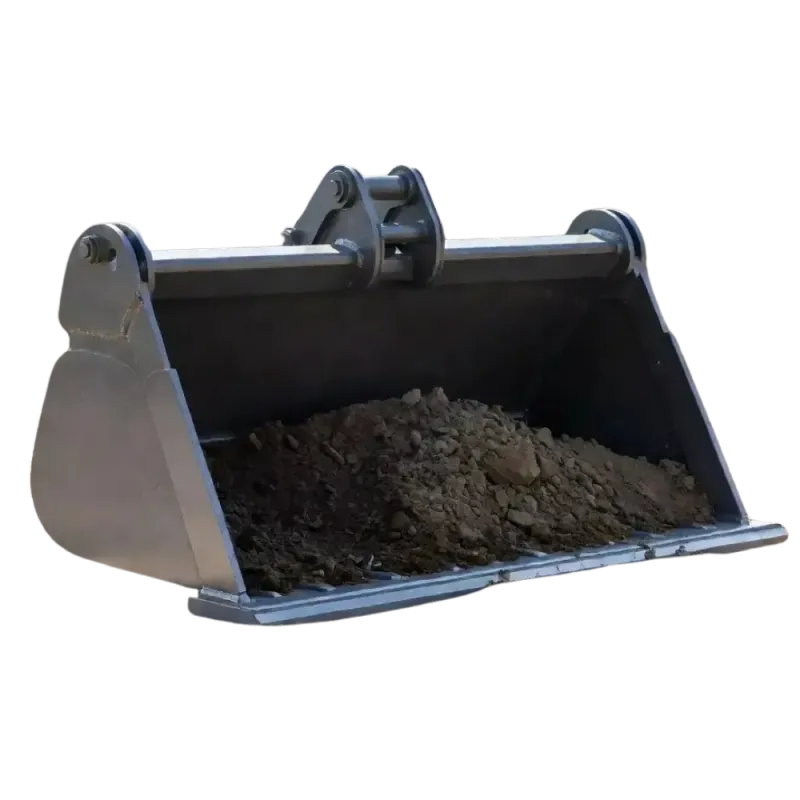
This is where the two buckets diverge the most. A standard bucket has a flat or lightly curved floor and a solid, unbroken edge, built to scoop and carry loose, uniform material cleanly. Push that same bucket into embedded rock or hard-packed, debris-laced soil, and the flat edge can't separate rock from fines. Material slips back out as you lift, forcing a second or third dig at the same spot to get a clean load.
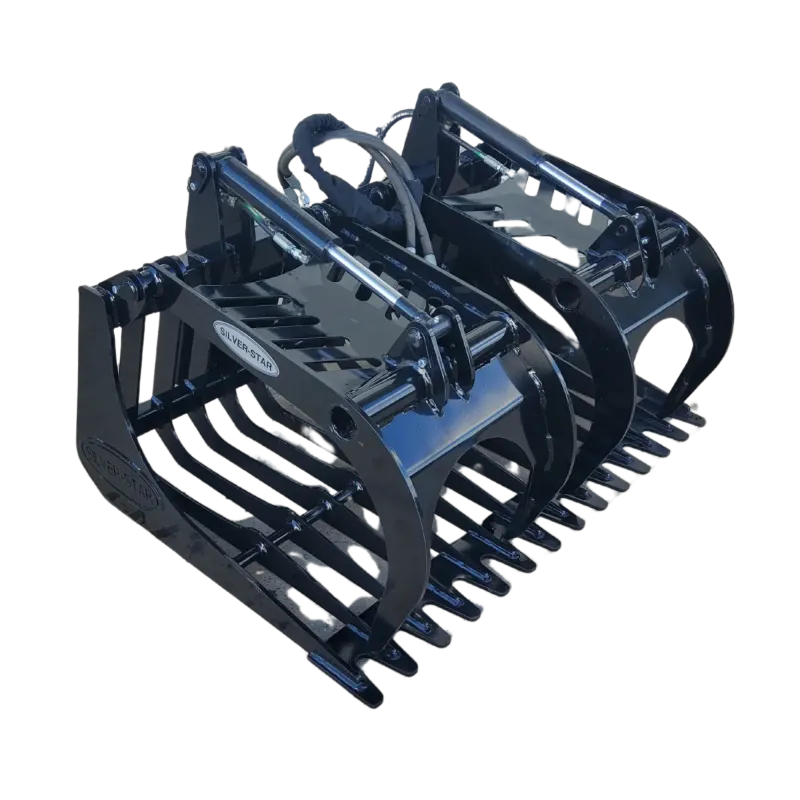
A rock bucket solves this with tighter tine spacing, typically 3 inches or so, across a reinforced cutting edge. The tines let loose soil and smaller fines sift through as you curl the bucket, while rocks and debris stay locked in behind them. On genuinely rocky ground, that difference shows up immediately: what takes a standard bucket three or four passes to clear cleanly, a rock bucket often clears in one.
On clean soil or sand, this advantage disappears entirely. There's nothing to sift, so the tine spacing adds no benefit, and a standard bucket's solid floor actually holds fine material more predictably than a tined edge does.
Consider two operators clearing similar half-acre lots. One is working clean topsoil for a landscaping job; the other is clearing a field with fist-sized rock scattered through hard-packed clay. The first operator's standard bucket performs exactly as expected, clean scoops, no spillage, no rework. The second operator, using the same style of bucket, ends up re-digging nearly every pile as rock slips out and clay sticks to the flat edge, turning what should be a half-day job into a full day of fighting the tool instead of the ground. Swap that second operator to a rock bucket, and the job goes back to looking like the first one: one clean pass per pile instead of three.
Durability and Wear Under Repeated Impact
Rock work is hard on any bucket, but it's specifically hard on the cutting edge and lip. A standard bucket's edge is built for scooping loose material, not for repeated scraping and prying against embedded rock. Push a standard bucket into that kind of work regularly, and the lip rounds off and the teeth bend or shear faster than they would on a rock bucket built with a reinforced, thicker edge for exactly that kind of abuse.
That wear difference compounds. A standard bucket used on rocky ground typically needs edge or tooth replacement every year or two under regular use; a properly built rock bucket, designed around AR400 or similarly hardened steel at the cutting edge, holds up considerably longer under the same conditions because the wear surface was engineered for impact in the first place, not adapted to it after the fact.
It's worth noting that this durability gap only matters if you're actually working rock regularly. A standard bucket used exclusively on soil or sand can last for years without any meaningful edge wear, since it was never designed to survive constant impact in the first place, and there's no reason to pay for rock-rated steel on a job that never sees rock.
Versatility for General-Purpose Work
A standard bucket wins clearly here. It's the more versatile choice for everyday material handling: loading, carrying, spreading, and general digging in soil that doesn't need sifting. A rock bucket can technically do some of this work too, but the tine spacing means finer material sifts through and gets left behind rather than carried, which makes it a poor choice for jobs like moving loose sand, mulch, or fine gravel where you actually want to retain everything you scoop.
If your work is genuinely mixed, some days clean soil, some days rocky ground, a single bucket won't cover both jobs equally well. That's the honest case for owning one of each rather than trying to find a middle-ground bucket that does neither job particularly well.
Price and Practical Payback
A rock bucket typically costs more upfront than a comparably sized standard bucket, owing to the reinforced tine construction and thicker cutting edge. Whether that upfront cost pays for itself comes down entirely to how often you're actually working rocky ground.
For an operator regularly clearing rocky lots or fields, the math tends to favor the rock bucket fairly quickly: fewer repeat passes per job, less time fighting slippage, and lower edge-replacement frequency add up to real time and repair savings within a season or two of regular rocky-ground work. For an operator who encounters rock only occasionally, that same math doesn't work in the rock bucket's favor, a standard bucket handles the rare rocky job well enough that the extra cost of a dedicated rock bucket isn't justified by how infrequently it would earn its keep.
Rock Bucket vs. Standard Bucket: Side-by-Side Comparison
Who Should Choose Which
If you can point to specific jobs where you've double-dug a pile, lost material out of a standard bucket's edges, or replaced a cutting edge more than once because of rock contact, a rock bucket is very likely worth the upgrade. The time and repair savings on genuinely rocky ground tend to justify the higher upfront cost within a season or two of regular use.
If your typical ground is clean soil, sand, or general fill, and rock is the exception rather than the rule, stick with a standard bucket. You'll get better everyday performance for less money, and a rock bucket's tined edge won't do anything for you on ground that doesn't need sifting.
If you genuinely work both types of ground across different jobs or properties, owning one of each is the honest answer, not a compromise bucket that tries to split the difference and underperforms at both jobs.
Frequently Asked Questions
Can a rock bucket replace a standard bucket entirely?
Not well. A rock bucket's tined edge lets fine material sift through rather than carry cleanly, which makes it a poor substitute for general loading, spreading, or moving loose material like sand or mulch.
How much faster is a rock bucket on genuinely rocky ground?
Operators working embedded rock or hard-packed, debris-heavy soil commonly cut a job that took multiple passes with a standard bucket down to a single clean pass with a rock bucket, largely by eliminating the double-digging a solid edge causes on that kind of ground.
Is tine spacing the same across all rock buckets?
No. Spacing varies by manufacturer and model. Tighter spacing retains more fine material along with rock, while wider spacing sifts more aggressively but can let smaller rocks pass through along with the fines, so it's worth checking spacing against the size of debris you're typically clearing.
If I only hit rock a few times a year, is a rock bucket still worth buying?
Usually not. The upfront cost premium is easiest to justify when rocky or hard-packed ground is a regular, not occasional, part of your work. For rare rocky jobs, a standard bucket handles the exception well enough that the extra cost doesn't pay for itself.
Does a rock bucket hold less material than a standard bucket of the same size?
Slightly, in practice, since the tines create gaps along the edge rather than a solid wall. For rock and debris handling this is the point, fines pass through while the load stays contained, but it does mean a rock bucket isn't the right choice for maximizing volume on loose, fine material.
Ready to see whether a rock bucket fits your ground conditions? Browse the full specs onSilver Star's rock bucket, or read the deeper breakdown on how heavy-duty rock buckets change field-clearing efficiency for real-world numbers on time saved. For the full picture across every attachment category, the Comprehensive Guide to Skid Steer Attachments covers types, uses, and custom fabrication in one place.